Search

Working for Illinois Caucus

House Downstate Democrats work for the good people of Illinois

Tag

IFTTT

Follow the Money: Natalie Phelps Finnie

https://ift.tt/2Ijpwfk

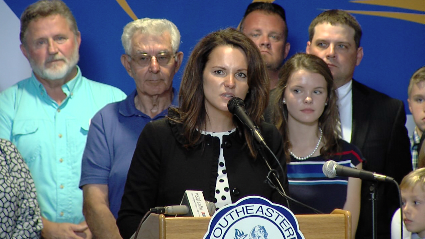
WSIL — Engaged in one of the most hotly contested house races in the state, Democratic incumbent Natalie Phelps Finnie and Republican Patrick Windhorst are battling it out to represent Illinois’ 118th district. 

Finnie has been running ads since August, costing hundreds of thousands of dollars. But she’s also been on the receiving end of more than a million dollars in campaign contributions since she took office last year, mostly from state Democrats and affiliated groups.

The campaign committees for other Illinois Democrats have donated more than $280,000 to Finnie, including more than $55,000 each from Metro East Representative Jay Hoffman and Cook County Representative Robert Martwick. 

House Speaker Mike Madigan has even jumped into the race, donating more than $750 to Finnie. 

The Illinois Democratic Party and Democratic Majority PAC, both controlled by Madigan are also big players in the race, donating close to $100,000 combined.

Windhorst has run ads connecting Finnie to Madigan, who is widely unpopular in southern Illinois.

"Natalie Phelps Finnie votes with Madigan 95 percent of the time," Windhorst says in one of his ads, "I’ll vote with southern Illinois 100 percent of the time."

He says the donations show Finnie will be loyal to Madigan if reelected. "He supports my opponent and it’ll be clear if she’s elected that she will vote for him for Speaker," Windhorst said in a phone interview.

Finnie says she hasn’t decided who she’d support for House Speaker, "Nobody can buy my loyalty. My loyalty is with the people of southern Illinois and nothing less."

Finnie’s biggest contributor — unions — which have donated nearly $500,000 over the past year. 

That includes tens of thousands of dollars from unions representing and electrical workers.

Groups affiliated with the Laborer’s International Union of North America are Finnie’s biggest donors, contributing just under $200,000.

Finnie says she’s proud of the union support because it mean’s she’s fighting for workers, "They’re what build people up, bring them out of poverty, make the middle class strong and I have been very clear and unapologetic about my support for them."

Finnie’s contributions also include more than $60,000 from special interest groups including coal and medical associations, and more than $80,000 from businesses.

"Follow the Money" is a new segment that will run through November’s election.

If there’s a politician whose finances you’d like us to profile, send an email to followthemoney@wsiltv.com.

010-Inoreader Saves,00-Pol RT,05-Z,25-Working,26-Delivered

via – WSIL-TV 3 Southern Illinois

September 27, 2018 at 06:59AM

The push is on to override the veto of House Bill 4163

https://ift.tt/2zu8BUC

Podcasts

The push is on to override the veto of House Bill 4163

Photo: Newsradio 1240 & 93.5 FM WTAX


The push is on to override the veto of House Bill 4163

Posted on by joeym

Joey McLaughlin talks with Illinois State Representative Anna Moeller about the move to override the veto of the wage equity act.


More Podcasts

Tuesday, September 25, 201809/25/2018

Joey McLaughlin talks with Illinois State Representative Anna Moeller about the move to override the veto of the wage equity act.

Tuesday, September 25, 201809/25/2018

Joey McLaughlin talks with Illinois Department of Public Health Chief Medical Officer Dr. Jennifer Layden about flu shots.

Tuesday, September 25, 201809/25/2018

Colleges and universities are wrestling with a rise in sexual assault claims, lawsuits brought by those accused of assault and conflicting direction by courts and the federal government on how to handle them.

Monday, September 24, 201809/24/2018

Lawmakers vow to override governor’s salary history bill veto

https://ift.tt/2N093xe

SPRINGFIELD, Ill. (WLS) —

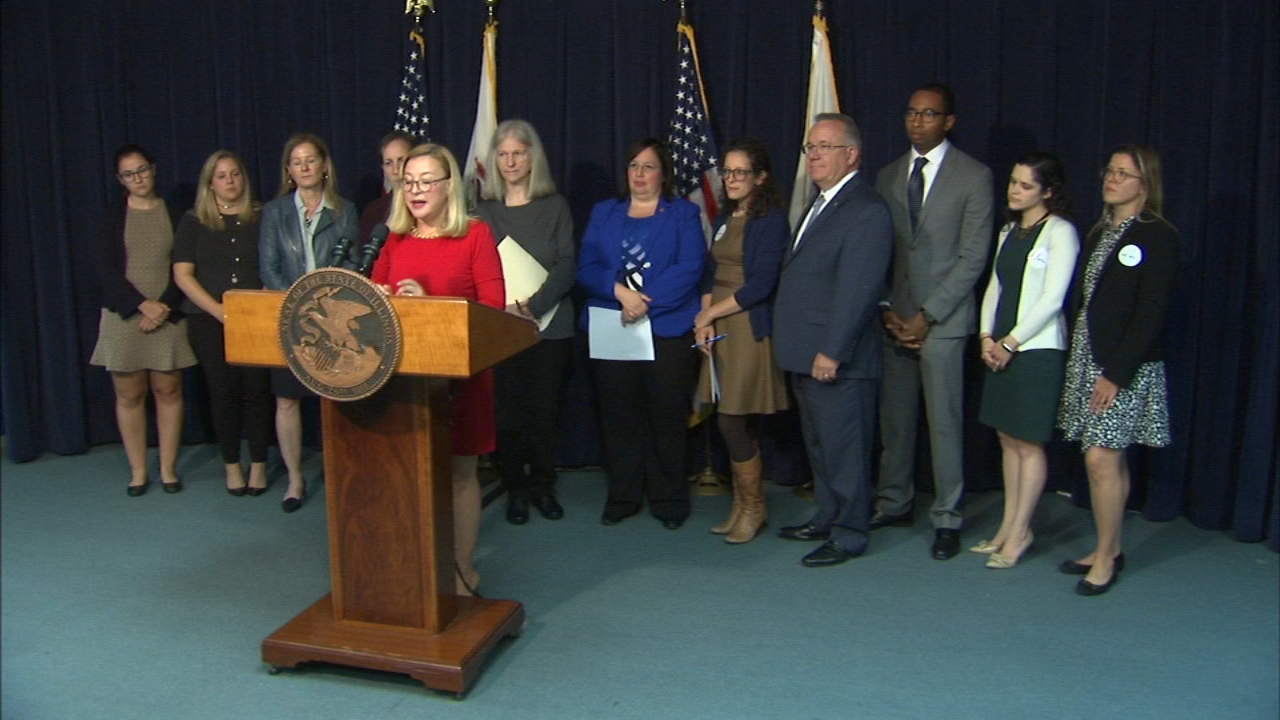
Governor Bruce Rauner is under fire for his veto of a bill that would have tightened up the state’s equal pay law by prohibiting companies from asking someone salary history

Some Democratic lawmakers said that decision will cost the governor a lot of support come Election Day.

The governor vetoed a similar bill last year but this time used an amendatory veto to rewrite the bill.

HB4163 bill is intended to help women narrow the wage gap that pays them, on average in Illinois, 79 cents for every dollar a man earns. The governor’s veto was seen by some as a slap in the face.

"Governor Rauner, in vetoing this bill a second time in two years, has shown who he really is: an out of touch and failed governor who cares very little about the economic welfare of women and families in Illinois," said State Rep. Anna Moeller (D-43rd District), one of the bill’s sponsors.

She and other lawmakers vowed to override the governor’s veto in November.

In his veto message Rauner said, "I am committed to eliminating the gender wage gap and I strongly support wage equality. I noted in my prior veto message that Massachusetts already has established a best-in-the-country approach to the issue of employers inquiring about salary history. I recommended that Illinois model its legal regime on Massachusetts’ model. Unfortunately, legislators again refused to push forward a bipartisan approach that properly balanced the interests of the business community."

"What I can tell you as a small business owner in the hiring process, the only time I’ve ever asked for prior salary is when I’m trying to negotiate paying somebody less," said Alexandra Eidenberg, small business owner.

An attorney who does work for the Illinois Chamber of Commerce, which opposed the bill, said it was too restrictive on businesses in the factors that can be used to set someone’s salary.

"So if you wanted to say a bachelor’s degree is a requirement for this job, since education is not one of the listed items in the bill, that would have to be the only basis for setting the pay. So you couldn’t use seniority or someone’s experience or years and ability you could only use education," said Sara Zorich, partner at Smith Amundsen.

But critics said the governor’s veto makes it easier for employers to get away with discrimination as long as they are working to make progress in eliminating the wage gap.

"There is no defined ‘what is progress,’ there is no defined ‘what is that self evaluation, what does it look like,’ there is none of that defined," said State Sen. Cristina Castro, (D) bill sponsor.

The original bill had plenty of support in the House to override the governor’s veto, but was five vote shy in the Senate.

(Copyright ©2018 WLS-TV. All Rights Reserved.)

010-Inoreader Saves,00-Pol RT,16-Econ,19-Legal,26-Delivered,25-Working,06-RK Email 11,RK Client

via ABC7 Chicago

September 24, 2018 at 05:12PM

Letter: Send Padilla to Springfield

https://ift.tt/2MZwBlV


Last week, I found out something new about Joan Padilla, candidate for Illinois Representative in District 71.

Already, I knew Joan enjoyed a fine, local reputation of impeccable character. Already, I knew Joan was a caring, articulate, bright, and hard-working woman. I knew, too, that she was good at budgeting, organizing, and managing evidenced by her executive director position of a vital, successful non-profit organization.

Here’s what I did not know about Joan Padilla: She holds a deep commitment to the education of our children. In spring 2013, Joan supported and marched with Dixon teachers. Her husband, Tom, is an active IEA member and high school educator. In addition to her keen awareness of teacher and student issues, Joan has full grasp of the depth of work necessary to improve our schools.

Joan is ready to get to work in Springfield for House District 71 and fight for all children. Joan Padilla believes all children should enjoy an equitable and fairly funded education. As an educator myself, I know Joan Padilla is what we need in Springfield. Remember, in November, a vote for this champion for education, Joan Padilla, is a vote for all students and educators and for a better future for Illinois.

Subscribe to Breaking News


00-Pol RT,25-Working,26-Delivered,22-Talk

Region: Northern,City: Quad Cities,Letters,Region: QC,Opinion

via qctimes.com – RSS Results in opinion/letters of type article https://ift.tt/2xGT15O

September 24, 2018 at 08:15AM

Rural broadband getting some attention from state leaders

https://ift.tt/2PWq9OM


Broadband in rural areas may be as vital as running water. One politician has seen a shortage of both in her district.

Illinois state Rep. Natalie Phelps Finnie recently witnessed Gov. Bruce Rauner sign a bill she sponsored that would address the rural broadband issue. The law creates an advisory council that will look at ways to expand internet service to those living outside metropolitan areas.

She sees the issue as a basic service to rural homes and businesses, like providing water.

“There are 90 families in Gallatin County that still don’t have water. They have to haul water to their homes every week,” said Phelps Finnie, a Democrat from the tiny southern Illinois community of Elizabethtown.

“It’s unfathomable that it’s 2018 and some people still don’t have water. We’ve let it go and said it can’t happen. No, it can happen. We just have to find a way to do it. It’s the same with broadband.”

Spotty internet service is a barrier to economic growth, say Phelps Finnie and others. That includes farms and the overall ag industry.

“Farmers are going to face the same issues rural areas everywhere in the U.S. have: Limited access to internet aside from DSL — with slow, low uploads — and satellite with low data caps and limited speeds,” said Jameson Zimmer of BroadbandNow, an association that tracks broadband trends across the United States.

Overall, Illinois is doing fairly well compared to other states. BroadbandNow ranks it 17th among the 50 states for broadband connectivity. That may be due partly to the state’s abundance of interstate highways.

“Generally, the closer you are to an interstate, the better the internet will be,” Zimmer said. “This is because the fiber lines that form the backbone of internet service are commonly buried alongside major roads.”

Still, rural areas in Illinois and other states lag behind metro regions.

“Internet is how we live our lives now,” said Wisper’s Malinda Heuring. “Internet is just part of life.”

Wisper operates through a network of radio routers mounted on tall structures throughout the Corn Belt, including water towers, grain silos and utility poles.

“Agribusinesses and farmers are going to be really instrumental in this process,” Heuring said. “We can go to a lot of areas other people can’t go to. We need help in the community to locate those tall structures.”

Phelps Finnie has made broadband expansion a mission.

“When I took office last September, one of the first things I found out when I ventured into one of our more rural counties is that we have entire counties that don’t have broadband,” she said. “We have other areas with just pockets with reliable internet.

“We need jobs in southern Illinois. But I can’t imagine we will attract any good-size company or even smaller businesses without broadband. We have to have it to function nowadays. It’s also important for schools and seniors with social needs. This is a passion of mine. We have to make this happen.”

Among other things, the advisory council will determine the feasibility of receiving grants to fund internet expansion.

“We have to figure out how do this,” Finnie Phelps said. “I won’t take no for an answer.”

So-called fixed wireless service — the type offered by Wisper and other rural providers — covers only about half the nation. The FCC grant, which was divvied between Wisper and 102 other companies, should help close the gap.

“It will really allow us to expand in rural areas,” Heuring said.

Subscribe to Daily Headlines


Nat Williams writes for Illinois Farmer Today, a Lee Enterprises sister publication of The Southern.

00-Pol RT,06-RK Email 11,16-Econ,17-Energy,19-Legal,25-Working,26-Delivered

Region: Southern,Energy,City: Carbondale,Region: Carbondale

via thesouthern.com – RSS Results in news/local/environment of type article https://ift.tt/2O20QNP

September 23, 2018 at 07:18AM

Computer error may derail political newcomer’s state house race in DuPage County

https://ift.tt/2DmVicw

NAPERVILLE, Ill. (WLS) —

An error by an embattled election commission could cost a candidate in a suburban state house race a spot on the ballot. It has also left DuPage County democrats scrambling over what to do.

It all stems from a lawsuit this week that challenged the residency status of Val Montgomery, a political newcomer, that led to her being ruled ineligible to run in the 41st District, because as it turns out she does not live in the district.

Montgomery was hoping to be part of the democrats blue wave and represent the district, which covers the heart of Naperville. She was

one of three Naperville women featured on the cover of Time magazine

and was challenging Republican incumbent Grant Wehrli. He says a few weeks ago he learned that she did not actually live in the district, and filed a lawsuit on Monday.

"The Illinois constitution has two requirements to run for office, one, you must be 21 and the second is you must live in the district for two years, it is clear that my opponent does not live in the district through no fault of her own," said State Rep. Grant Wehrli, (R) 41st District.

The DuPage County Election commission, which came under fire after ballot issues during the March primary, conceded this week that a coding error had incorrectly listed Montgomery’s subdivision in the 41st district, it is actually in the 49th.

Montgomery, who was working Friday and unavailable for an interview released a statement saying:

"Political corruption and white privilege are real and happen in too many places. The only thing I am guilty of is being a black woman in Naperville. This is not the first time a black woman in IL has run for office and suddenly issues with residency emerge."

She says she has contacted the NAACP and will fight to stay on the ballot.

The DuPage County Democratic Party said the decision will be up to Montgomery, but it is exploring options.

"So right now we’re looking for candidates in her district to see if anybody is willing to step up and have their name put on the ballot and if there is my recommendation to Val would be OK, drop out, will get somebody else on there, it’ll be clean we won’t have to worry about any lawsuit later," said Bob Pieckert, Chairman, Democratic Party of DuPage County.

Montgomery said she relied on what she now knows was the faulty DuPage County information about her residency, not the state board of elections maps. Those had the correct information about which district she lives in.

The attorney for the DuPage County Election Commission said it is ultimately up to the candidate to make sure what district they live in.

(Copyright ©2018 WLS-TV. All Rights Reserved.)

010-Inoreader Saves,00-Pol RT,19-Legal,26-Delivered,25-Working

via ABC7 Chicago

September 21, 2018 at 08:26PM

Hospice care gets a boost from legislation

https://ift.tt/2CQM87S

By Marney Simon | Enterprise Staff


Patients in need of in-patient hospice care now have more options in Illinois, following a change in state law that notably will add services to the Joliet Area Community Hospice (JACH).

Last month, Gov. Bruce Rauner signed legislation introduced in the House by State Representative Natalie Manley (D-Joliet) and the Senate by State Senator Jennifer Bertino-Tarrant (D-Shorewood), increasing the capacity of hospice inpatient units from 16 to 20.

The change was at the request of Mary Sheehan, CEO of JACH, and was supported by the Illinois Hospice and Palliative Care Organization. Both the hospice and the state’s professional organization are committed to promoting palliative and enhancing end-of-life care through education, advocacy, technical and supportive services.

Manley and Sheehan announced the change at the hospice in late August.

JACH cares for a total of 320 patients in eight counties, including those inside the 16-unit inpatient hospice in Joliet. Prior to the new legislation, the limitation meant only 240 beds were available statewide for in-patient care, a number that wasn’t reaching the need. While JACH is staffed around the clock, there have at times been a waiting list.

“We have had a lot of growth, and with that growth comes the need for more inpatient care,” Sheehan said. “The inpatient level of care is for patients who are too sick to be at home, they don’t want to be in a hospital most of the time, and they need their pain and symptoms managed. They don’t want to die at home, sometimes there are children in the home and they don’t want to be there for that.”

Sheehan and Manley said they couldn’t account for why there are bed limits in the state, but hope this is the first step to adding even more beds for inpatient care in the future.

The change is especially close to Manley, whose mother passed away at JACH in July of last year.

“It is the one thing that we all have in common, is that we will eventually at some point lose somebody who is very dear to us,” Manley said. “My mother spent the last few days of her life here, being cared for in a way that I want every person to have the opportunity to have their mother cared for in that way. Staff is amazing, they not only cared for my mother, they cared for my brother and sister and I, my mother’s sister… The professional staff, the administration, they could not have been more supportive.”

The increase statewide from 16 to 20 beds per facility means the total capacity for hospice beds will rise from 240 to 300 beds.

The number of patients in hospice care is growing. At JACH alone, the average number of patients cared for each day has increased more than 63 percent since 2016.

Sheehan noted that hospice is not a place where people give up on life, but rather, is an option for those who are prepared to die on their own terms, and to educate families on how to care for their terminally ill loved one.

“People think hospice is giving up. It’s not, at all. People think there’s no hope, and that’s not true, it’s the opposite, we just hope for different things,” Sheehan said. “We want people to be in charge of their life and their death. Our perception is, we’re living every day, we’re not dying every day. We’re living every day until we die, and we want that to be comfortable.”

JACH also provides a pediatric hospice program.

Hospice treats the physical, emotional and spiritual needs of a patient and their family, including a bereavement program which follows family members for 13 months after a patient passes away.

“We’re all going to leave this earth at some time, and we want to make it as pain free and as dignified as possible,” Manley said. “The Joliet Area Community Hospice team made that possible for my mother, and I’m sure the other hospice homes in the state do the same. It’s a great day and I thank the governor for signing the bill and letting us expand our capacity to help people.”

JACH, a not-for-profit United Way agency, opened the first free standing hospice home in the state of Illinois in 2004. The organization has provided compassionate, professional hospice and palliative care to over 30,000 terminally ill patients and their families since 1982. In just the past two years, JACH provided more than $1.3 million in charity care, community bereavement programs, unreimbursed pediatric hospice and palliative care, and community outreach.

The hospice is funded via Medicare, Medicaid and insurance payments, as well as through private donations.

The hospice will add on to their current building to support the new beds. The plan includes building space large enough to accommodate eight additional beds, for potential future changes in the law. The renovation plans will also include adding a new chapel and overall upgrades to the existing facility. Sheehan said the constriction is expected to cost roughly $3.5 million, with anticipated ground breaking next spring and completion in late 2019 or early 2020.

JACH serves patients in greater Will, Grundy, LaSalle, Livingston, and Kendall counties along with portions of Cook, DuPage and Kankakee counties.

00-Pol RT,15-Health,25-Working,26-Delivered

Local,Region: South Suburbs,Region: Joliet

via Lockport/News – Bugle Newspapers https://ift.tt/2nPUiWC

September 12, 2018 at 12:33PM

Interview with state rep candidate Jason Woolard

https://ift.tt/2Nzoh0N

Interview with state rep candidate Jason Woolard


September 11, 2018
Robert Thies

Jason Woolard visits the Morning Newswatch.

00-Pol RT,05-Z,26-Delivered,25-Working

Shows,Politics

via WJPF Morning Newswatch https://www.wjpf.com

September 11, 2018 at 09:43AM

Legislative candidate calls for reopening Tamms

https://ift.tt/2PJ2SQ9

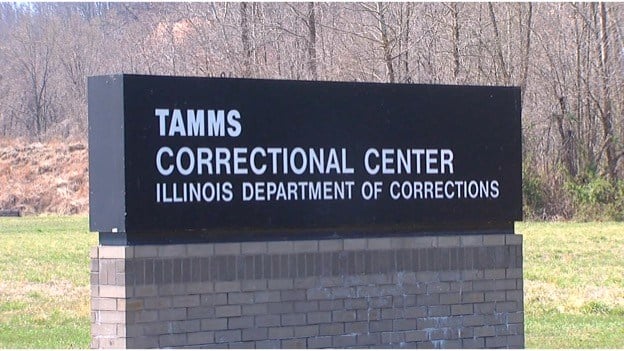
TAMMS, Ill. —  The Department of Corrections announced a new $150 million facility recently, designed to help people with mental illness.  

But that facility will be built in Joliet, several hours north, prompting a candidate for state lawmaker to ask,"Why not Tamms?"

Marsha Griffin, a Democrat running for Illinois’ 115th District, said Tamms could easily be repurposed and reopened to help inmates with mental disabilities.

"The decision to build a new facility (in Joliet)… is not only fiscally irresponsible, but shows the governor’s ignorance about the economic situation in Southern Illinois," Griffin said. "We need jobs, and there is a facility that could easily be opened and repurposed currently sitting vacant."

She said southern Illinois needs the jobs, something officials from Tamms have been saying for years.

Lamar Houston, assistant mayor for the village of Tamms, has lived there all his life.

He remembers the excitement about the Tamms Supermax Prison before it was built in the 90s.

"And then all at once, it left," Houston said. "And it left the city with it. It left us with nothing."

Former Gov. Pat Quinn announced the closure of Tamms in 2012, angering several southern Illinois politicians.

Griffin’s plea to Gov. Rauner isn’t anything new, and her opponent, State Rep. Terri Bryant (R-Murphysboro), has also called for the prison to be reopened.

"Well, it’s always going to be a hot topic when you have a facility such as the one we have here and as much money is being spent there," Houston said.

Despite closing for budgetary reasons, Illinois still spends $750,000 per year on Tamms, covering utilities, maintenance and guards.

Several groups also wanted to see Tamms closed because of inhumane conditions.

Houston said no one thought about the closure’s impact on the village.

"We all had high hopes that it was going to bring a few businesses into Tamms," Houston said. "And we can see our community growing rather than like it is now. We’re not able to get anything at all from the prison. We lost a lot. This city lost a lot."

Since the closure in early 2013, lawmakers have fought about the cost of reopening Tamms, but nothing ever happened.

Despite overcrowding in the state’s prisons, it doesn’t appear to be opening back up anytime soon.

010-Inoreader Saves,00-Pol RT,16-Econ,17-Energy,25-Working,26-Delivered

via – WSIL-TV 3 Southern Illinois

September 6, 2018 at 09:56AM