Search

Working for Illinois Caucus

House Downstate Democrats work for the good people of Illinois

Tag

17-Energy

Bill would require faster reporting of opioid dispensing

http://bit.ly/2t62Kku

Pharmacies in Illinois would have less time to report dispensing opioid medications and other controlled substances under a bill making its way through the General Assembly.

The House Human Services Committee on Wednesday advanced a bill that would require pharmacies to file those reports by the end of the business day on which controlled substances are dispensed. Current law gives them until the end of the following business day.

“It ensures that medical providers have a complete picture of what their patients are taking so that they’re not over-prescribing opioids to patients who misuse or, actually, frequently then sell the fraudulent medication,” Rep. Katie Stuart, D-Edwardsville, the bill’s sponsor, told the committee during testimony.

She said the bill is an attempt to prevent what she called “doctor shopping.” Under current law, she said, people trying to obtain illicit doses can visit multiple doctors over a 48-hour period and receive multiple prescriptions before any of those prescriptions are reported.

In an interview after the hearing, Stuart said the nation’s opioid epidemic has affected nearly every community, including her home community of Edwardsville.

“Some areas in my district and the surrounding area have really been hit hard, so I’ve been just talking to folks, trying to approach it from every angle that we can and look at every way we can stop this,” she said.

Although the bill passed out of the committee unanimously, some members suggested it might need technical amendments to define what constitutes a business day, and how that would apply to pharmacies that are open 24 hours a day.

E-ISVMA All,15-Health,01-All No Sub,17-Energy,02-Pol,19-Legal,24-ILGA,010-Inoreader Saves,16-Econ,25-Working,26-Delivered,RKPRS HL,HL,HL New

via Effingham Daily News

February 6, 2019 at 10:28PM

Bill would require faster reporting of opioid dispensing

http://bit.ly/2t62Kku

Pharmacies in Illinois would have less time to report dispensing opioid medications and other controlled substances under a bill making its way through the General Assembly.

The House Human Services Committee on Wednesday advanced a bill that would require pharmacies to file those reports by the end of the business day on which controlled substances are dispensed. Current law gives them until the end of the following business day.

“It ensures that medical providers have a complete picture of what their patients are taking so that they’re not over-prescribing opioids to patients who misuse or, actually, frequently then sell the fraudulent medication,” Rep. Katie Stuart, D-Edwardsville, the bill’s sponsor, told the committee during testimony.

She said the bill is an attempt to prevent what she called “doctor shopping.” Under current law, she said, people trying to obtain illicit doses can visit multiple doctors over a 48-hour period and receive multiple prescriptions before any of those prescriptions are reported.

In an interview after the hearing, Stuart said the nation’s opioid epidemic has affected nearly every community, including her home community of Edwardsville.

“Some areas in my district and the surrounding area have really been hit hard, so I’ve been just talking to folks, trying to approach it from every angle that we can and look at every way we can stop this,” she said.

Although the bill passed out of the committee unanimously, some members suggested it might need technical amendments to define what constitutes a business day, and how that would apply to pharmacies that are open 24 hours a day.

E-ISVMA All,15-Health,01-All No Sub,17-Energy,02-Pol,19-Legal,24-ILGA,010-Inoreader Saves,16-Econ,25-Working,26-Delivered,RKPRS HL,HL,HL New

via Effingham Daily News

February 6, 2019 at 10:28PM

Bill would require faster reporting of opioid dispensing

http://bit.ly/2t62Kku

Pharmacies in Illinois would have less time to report dispensing opioid medications and other controlled substances under a bill making its way through the General Assembly.

The House Human Services Committee on Wednesday advanced a bill that would require pharmacies to file those reports by the end of the business day on which controlled substances are dispensed. Current law gives them until the end of the following business day.

“It ensures that medical providers have a complete picture of what their patients are taking so that they’re not over-prescribing opioids to patients who misuse or, actually, frequently then sell the fraudulent medication,” Rep. Katie Stuart, D-Edwardsville, the bill’s sponsor, told the committee during testimony.

She said the bill is an attempt to prevent what she called “doctor shopping.” Under current law, she said, people trying to obtain illicit doses can visit multiple doctors over a 48-hour period and receive multiple prescriptions before any of those prescriptions are reported.

In an interview after the hearing, Stuart said the nation’s opioid epidemic has affected nearly every community, including her home community of Edwardsville.

“Some areas in my district and the surrounding area have really been hit hard, so I’ve been just talking to folks, trying to approach it from every angle that we can and look at every way we can stop this,” she said.

Although the bill passed out of the committee unanimously, some members suggested it might need technical amendments to define what constitutes a business day, and how that would apply to pharmacies that are open 24 hours a day.

E-ISVMA All,15-Health,01-All No Sub,17-Energy,02-Pol,19-Legal,24-ILGA,010-Inoreader Saves,16-Econ,25-Working,26-Delivered,RKPRS HL,HL,HL New

via Effingham Daily News

February 6, 2019 at 10:28PM

Illinois House bill seeks more updates on closed nuclear facilities, including lakefront plant in Zion

https://trib.in/2sPPJv3

In what she describes as an effort to ensure protections for residents and the environment from residual radioactivity, state Rep. Joyce Mason, D-Gurnee, has introduced legislation to require biannual reports on nuclear power plants going through decommissioning.

Mason, whose district includes the former nuclear reactor facility in Zion that is currently being decommissioned, is sponsoring a bill that would require the Illinois Commerce Commission to provide a biannual report to the Illinois General Assembly on the issue.

“As a state representative whose district contains a decommissioning nuclear power plant, it is especially important for me to take extra precautions for the safety of my constituents,” Mason said in a statement released Friday.

“The process of decommissioning nuclear power plants can be complex and complicated, and requiring biannual reports is one more way for us as legislators to make sure that our communities are protected,” Mason added.

01-All No Sub,02-Pol,17-Energy,19-Legal,24-ILGA,E-NRG,25-Working,26-Delivered

Feeds,News,Region: Chicago,City: Chicago,Opinion

via Home – Chicago Tribune https://trib.in/1LjWzdx

January 27, 2019 at 07:18AM

Crosby: ER nurse from Aurora partners with state legislator on bill to prevent hospital violence

https://trib.in/2TGVtTe

Sonja McCarthy had no idea the day state Rep. Stephanie Kifowit (D-Oswego) made one of her routine “constituency outreach” stops at her Aurora home in the summer of 2016 that the two would end up working together on a bill to reduce workplace violence.

McCarthy, an emergency room nurse who had just gotten off her overnight shift at Advocate Good Samaritan Hospital in Downers Grove — and, like Kifowit, a fellow Marine — was awakened by that late morning knock on her door. But the two women quickly fell into a passionate conversation when her state rep asked what issues were of most concern.

McCarthy knew a lot about workplace violence. Not only had she run into it time and again as a level one trauma nurse at Advocate Good Samaritan for 13 years, she was a founding member of the group’s committee to address an issue that was starting to be recognized as a critical problem in the industry.

The conversation went well. And because of this meeting, Kifowit was instrumental in passing a bill that would raise the penalty for assaulting a healthcare worker to a felony.

While hospitals statewide already have or are working to comply with the new law, the consensus is there is no way you can stop violence from happening. As one official noted, when you have hundreds of patients in a building with thousands going through the ER a year, “things are going to happen.”

But the idea is to continually work toward updating policies, reviewing them and giving employees as much feedback as possible to assure them they will be kept as safe as possible, officials insist.

McCarthy, who estimates she’s put “thousands of hours” into this issue, hopes to one day train others in how to recognize pre-violence indicators and de-escalate situations, as well as work with hospitals on appropriate documentation that, for example, would more quickly denote a patient’s history of violence.

While attacks, particularly verbal assaults, are still under-reported, likely because there is still fear among workers that speaking out could jeopardize their careers, McCarthy is encouraged by “significant progress” in defining the problem.

And, while she recognizes there “is still work to do when it comes to how best to report and track the violence,” she describes it “as such a proud moment” when this bill became law.

“We no longer consider it part of the job … that it’s not OK if this person is violent towards me,” she said. “I really do see how far we have come.”

dcrosby@tribpub.com

Twitter @dencrosby

01-All No Sub,02-Pol,15-Health,17-Energy,19-Legal,24-ILGA,25-Working,26-Delivered

City: Aurora,Region: W Suburbs,Opinion

via Beacon News Opinion – Aurora Beacon-News https://trib.in/2D6gBgz

January 13, 2019 at 07:12AM

Rep. Connor responds to report of coal ash pollution in Romeoville, Will County

https://ift.tt/2QdUkW9

John Connor
John Connor

State Rep. John Connor, D-Lockport, announced he is engaging owners of power plants named in a report on coal ash pollution around Illinois, including Will County.

“I originally learned about the potential dangers of the coal ash ponds present in my district after meeting with Prairie Rivers Network advocacy group last year,” Connor said in a statement. “I appreciated the meeting because they informed me of the issue of coal ash disposal in the power generating industry, and how renewable energy could help address them.”

Connor said he advocated for renewable energy and improved environmental guidelines.

“After recently meeting with NRG, who has been proactive on this topic, and the village of Romeoville to discuss the coal ash ponds and water contamination, it is clear that significant change in the handling of coal ash is coming,” Connor said. “I’m hopeful that the new administration will implement policies to protect out environment, while looking long term by choosing to invest in renewable energy sources.”

01-All No Sub,02-Pol,06-RK Email 11,17-Energy,19-Legal,25-Working,26-Delivered,24-ILGA

Feeds,News,City: Joliet,Region: Joliet,Region: South Suburbs

via The Herald-News https://ift.tt/2SHQ4f3

December 6, 2018 at 05:02PM

Newsradio WJPF interview with Jerry Costello II

https://ift.tt/2PXIwGI

Newsradio WJPF interview with Jerry Costello II


November 15, 2018
Robert Thies

Illinois State Representative Jerry Costello II (D, 116th House District) joins The Morning Newswatch.

00-Pol RT,16-Econ,17-Energy,19-Legal,25-Working,26-Delivered

Shows,Politics

via WJPF Morning Newswatch https://www.wjpf.com

November 15, 2018 at 09:37AM

Rural broadband getting some attention from state leaders

https://ift.tt/2PWq9OM


Broadband in rural areas may be as vital as running water. One politician has seen a shortage of both in her district.

Illinois state Rep. Natalie Phelps Finnie recently witnessed Gov. Bruce Rauner sign a bill she sponsored that would address the rural broadband issue. The law creates an advisory council that will look at ways to expand internet service to those living outside metropolitan areas.

She sees the issue as a basic service to rural homes and businesses, like providing water.

“There are 90 families in Gallatin County that still don’t have water. They have to haul water to their homes every week,” said Phelps Finnie, a Democrat from the tiny southern Illinois community of Elizabethtown.

“It’s unfathomable that it’s 2018 and some people still don’t have water. We’ve let it go and said it can’t happen. No, it can happen. We just have to find a way to do it. It’s the same with broadband.”

Spotty internet service is a barrier to economic growth, say Phelps Finnie and others. That includes farms and the overall ag industry.

“Farmers are going to face the same issues rural areas everywhere in the U.S. have: Limited access to internet aside from DSL — with slow, low uploads — and satellite with low data caps and limited speeds,” said Jameson Zimmer of BroadbandNow, an association that tracks broadband trends across the United States.

Overall, Illinois is doing fairly well compared to other states. BroadbandNow ranks it 17th among the 50 states for broadband connectivity. That may be due partly to the state’s abundance of interstate highways.

“Generally, the closer you are to an interstate, the better the internet will be,” Zimmer said. “This is because the fiber lines that form the backbone of internet service are commonly buried alongside major roads.”

Still, rural areas in Illinois and other states lag behind metro regions.

“Internet is how we live our lives now,” said Wisper’s Malinda Heuring. “Internet is just part of life.”

Wisper operates through a network of radio routers mounted on tall structures throughout the Corn Belt, including water towers, grain silos and utility poles.

“Agribusinesses and farmers are going to be really instrumental in this process,” Heuring said. “We can go to a lot of areas other people can’t go to. We need help in the community to locate those tall structures.”

Phelps Finnie has made broadband expansion a mission.

“When I took office last September, one of the first things I found out when I ventured into one of our more rural counties is that we have entire counties that don’t have broadband,” she said. “We have other areas with just pockets with reliable internet.

“We need jobs in southern Illinois. But I can’t imagine we will attract any good-size company or even smaller businesses without broadband. We have to have it to function nowadays. It’s also important for schools and seniors with social needs. This is a passion of mine. We have to make this happen.”

Among other things, the advisory council will determine the feasibility of receiving grants to fund internet expansion.

“We have to figure out how do this,” Finnie Phelps said. “I won’t take no for an answer.”

So-called fixed wireless service — the type offered by Wisper and other rural providers — covers only about half the nation. The FCC grant, which was divvied between Wisper and 102 other companies, should help close the gap.

“It will really allow us to expand in rural areas,” Heuring said.

Subscribe to Daily Headlines


Nat Williams writes for Illinois Farmer Today, a Lee Enterprises sister publication of The Southern.

00-Pol RT,06-RK Email 11,16-Econ,17-Energy,19-Legal,25-Working,26-Delivered

Region: Southern,Energy,City: Carbondale,Region: Carbondale

via thesouthern.com – RSS Results in news/local/environment of type article https://ift.tt/2O20QNP

September 23, 2018 at 07:18AM

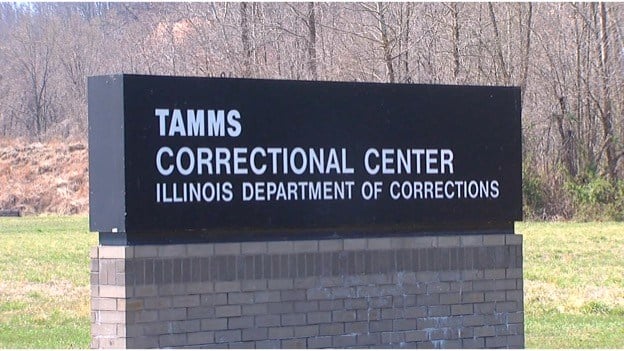
Legislative candidate calls for reopening Tamms

https://ift.tt/2PJ2SQ9

TAMMS, Ill. —  The Department of Corrections announced a new $150 million facility recently, designed to help people with mental illness.  

But that facility will be built in Joliet, several hours north, prompting a candidate for state lawmaker to ask,"Why not Tamms?"

Marsha Griffin, a Democrat running for Illinois’ 115th District, said Tamms could easily be repurposed and reopened to help inmates with mental disabilities.

"The decision to build a new facility (in Joliet)… is not only fiscally irresponsible, but shows the governor’s ignorance about the economic situation in Southern Illinois," Griffin said. "We need jobs, and there is a facility that could easily be opened and repurposed currently sitting vacant."

She said southern Illinois needs the jobs, something officials from Tamms have been saying for years.

Lamar Houston, assistant mayor for the village of Tamms, has lived there all his life.

He remembers the excitement about the Tamms Supermax Prison before it was built in the 90s.

"And then all at once, it left," Houston said. "And it left the city with it. It left us with nothing."

Former Gov. Pat Quinn announced the closure of Tamms in 2012, angering several southern Illinois politicians.

Griffin’s plea to Gov. Rauner isn’t anything new, and her opponent, State Rep. Terri Bryant (R-Murphysboro), has also called for the prison to be reopened.

"Well, it’s always going to be a hot topic when you have a facility such as the one we have here and as much money is being spent there," Houston said.

Despite closing for budgetary reasons, Illinois still spends $750,000 per year on Tamms, covering utilities, maintenance and guards.

Several groups also wanted to see Tamms closed because of inhumane conditions.

Houston said no one thought about the closure’s impact on the village.

"We all had high hopes that it was going to bring a few businesses into Tamms," Houston said. "And we can see our community growing rather than like it is now. We’re not able to get anything at all from the prison. We lost a lot. This city lost a lot."

Since the closure in early 2013, lawmakers have fought about the cost of reopening Tamms, but nothing ever happened.

Despite overcrowding in the state’s prisons, it doesn’t appear to be opening back up anytime soon.

010-Inoreader Saves,00-Pol RT,16-Econ,17-Energy,25-Working,26-Delivered

via – WSIL-TV 3 Southern Illinois

September 6, 2018 at 09:56AM