Search

Working for Illinois Caucus

House Downstate Democrats work for the good people of Illinois

Tag

19-Legal

Lawmakers vow to override governor’s salary history bill veto

https://ift.tt/2N093xe

SPRINGFIELD, Ill. (WLS) —

Governor Bruce Rauner is under fire for his veto of a bill that would have tightened up the state’s equal pay law by prohibiting companies from asking someone salary history

Some Democratic lawmakers said that decision will cost the governor a lot of support come Election Day.

The governor vetoed a similar bill last year but this time used an amendatory veto to rewrite the bill.

HB4163 bill is intended to help women narrow the wage gap that pays them, on average in Illinois, 79 cents for every dollar a man earns. The governor’s veto was seen by some as a slap in the face.

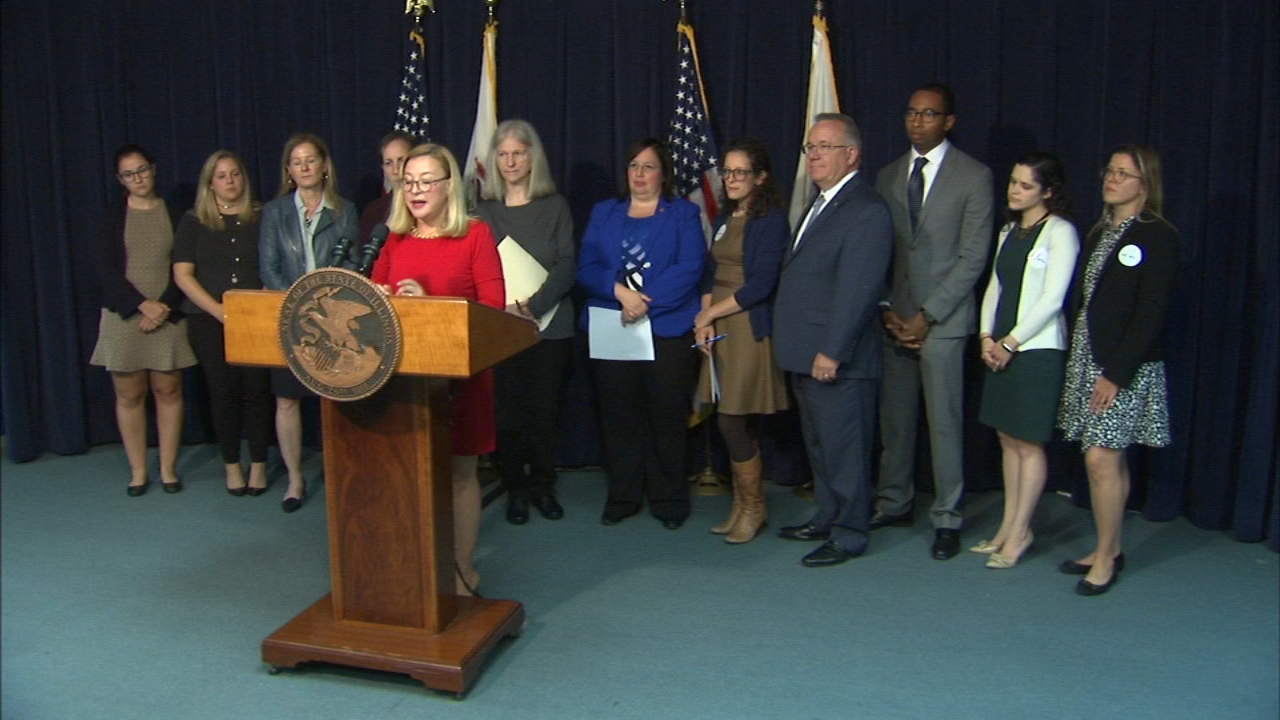
"Governor Rauner, in vetoing this bill a second time in two years, has shown who he really is: an out of touch and failed governor who cares very little about the economic welfare of women and families in Illinois," said State Rep. Anna Moeller (D-43rd District), one of the bill’s sponsors.

She and other lawmakers vowed to override the governor’s veto in November.

In his veto message Rauner said, "I am committed to eliminating the gender wage gap and I strongly support wage equality. I noted in my prior veto message that Massachusetts already has established a best-in-the-country approach to the issue of employers inquiring about salary history. I recommended that Illinois model its legal regime on Massachusetts’ model. Unfortunately, legislators again refused to push forward a bipartisan approach that properly balanced the interests of the business community."

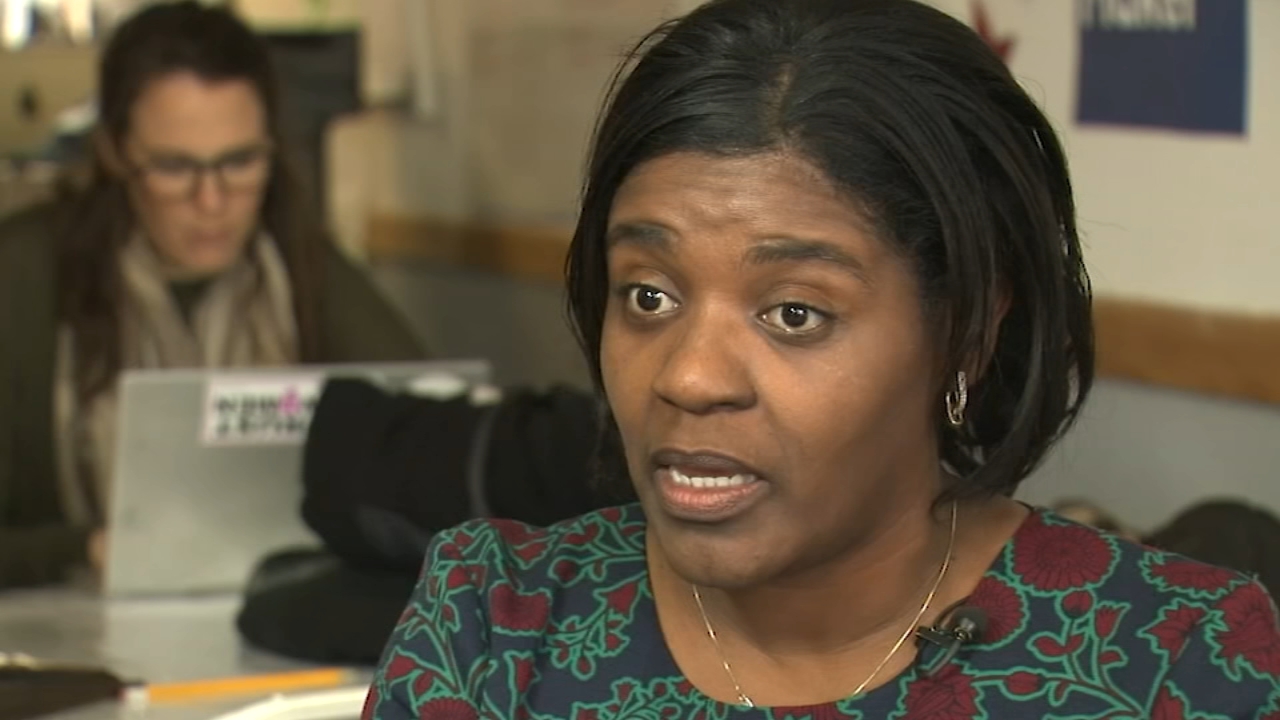
"What I can tell you as a small business owner in the hiring process, the only time I’ve ever asked for prior salary is when I’m trying to negotiate paying somebody less," said Alexandra Eidenberg, small business owner.

An attorney who does work for the Illinois Chamber of Commerce, which opposed the bill, said it was too restrictive on businesses in the factors that can be used to set someone’s salary.

"So if you wanted to say a bachelor’s degree is a requirement for this job, since education is not one of the listed items in the bill, that would have to be the only basis for setting the pay. So you couldn’t use seniority or someone’s experience or years and ability you could only use education," said Sara Zorich, partner at Smith Amundsen.

But critics said the governor’s veto makes it easier for employers to get away with discrimination as long as they are working to make progress in eliminating the wage gap.

"There is no defined ‘what is progress,’ there is no defined ‘what is that self evaluation, what does it look like,’ there is none of that defined," said State Sen. Cristina Castro, (D) bill sponsor.

The original bill had plenty of support in the House to override the governor’s veto, but was five vote shy in the Senate.

(Copyright ©2018 WLS-TV. All Rights Reserved.)

010-Inoreader Saves,00-Pol RT,16-Econ,19-Legal,26-Delivered,25-Working,06-RK Email 11,RK Client

via ABC7 Chicago

September 24, 2018 at 05:12PM

Rural broadband getting some attention from state leaders

https://ift.tt/2PWq9OM


Broadband in rural areas may be as vital as running water. One politician has seen a shortage of both in her district.

Illinois state Rep. Natalie Phelps Finnie recently witnessed Gov. Bruce Rauner sign a bill she sponsored that would address the rural broadband issue. The law creates an advisory council that will look at ways to expand internet service to those living outside metropolitan areas.

She sees the issue as a basic service to rural homes and businesses, like providing water.

“There are 90 families in Gallatin County that still don’t have water. They have to haul water to their homes every week,” said Phelps Finnie, a Democrat from the tiny southern Illinois community of Elizabethtown.

“It’s unfathomable that it’s 2018 and some people still don’t have water. We’ve let it go and said it can’t happen. No, it can happen. We just have to find a way to do it. It’s the same with broadband.”

Spotty internet service is a barrier to economic growth, say Phelps Finnie and others. That includes farms and the overall ag industry.

“Farmers are going to face the same issues rural areas everywhere in the U.S. have: Limited access to internet aside from DSL — with slow, low uploads — and satellite with low data caps and limited speeds,” said Jameson Zimmer of BroadbandNow, an association that tracks broadband trends across the United States.

Overall, Illinois is doing fairly well compared to other states. BroadbandNow ranks it 17th among the 50 states for broadband connectivity. That may be due partly to the state’s abundance of interstate highways.

“Generally, the closer you are to an interstate, the better the internet will be,” Zimmer said. “This is because the fiber lines that form the backbone of internet service are commonly buried alongside major roads.”

Still, rural areas in Illinois and other states lag behind metro regions.

“Internet is how we live our lives now,” said Wisper’s Malinda Heuring. “Internet is just part of life.”

Wisper operates through a network of radio routers mounted on tall structures throughout the Corn Belt, including water towers, grain silos and utility poles.

“Agribusinesses and farmers are going to be really instrumental in this process,” Heuring said. “We can go to a lot of areas other people can’t go to. We need help in the community to locate those tall structures.”

Phelps Finnie has made broadband expansion a mission.

“When I took office last September, one of the first things I found out when I ventured into one of our more rural counties is that we have entire counties that don’t have broadband,” she said. “We have other areas with just pockets with reliable internet.

“We need jobs in southern Illinois. But I can’t imagine we will attract any good-size company or even smaller businesses without broadband. We have to have it to function nowadays. It’s also important for schools and seniors with social needs. This is a passion of mine. We have to make this happen.”

Among other things, the advisory council will determine the feasibility of receiving grants to fund internet expansion.

“We have to figure out how do this,” Finnie Phelps said. “I won’t take no for an answer.”

So-called fixed wireless service — the type offered by Wisper and other rural providers — covers only about half the nation. The FCC grant, which was divvied between Wisper and 102 other companies, should help close the gap.

“It will really allow us to expand in rural areas,” Heuring said.

Subscribe to Daily Headlines


Nat Williams writes for Illinois Farmer Today, a Lee Enterprises sister publication of The Southern.

00-Pol RT,06-RK Email 11,16-Econ,17-Energy,19-Legal,25-Working,26-Delivered

Region: Southern,Energy,City: Carbondale,Region: Carbondale

via thesouthern.com – RSS Results in news/local/environment of type article https://ift.tt/2O20QNP

September 23, 2018 at 07:18AM

Computer error may derail political newcomer’s state house race in DuPage County

https://ift.tt/2DmVicw

NAPERVILLE, Ill. (WLS) —

An error by an embattled election commission could cost a candidate in a suburban state house race a spot on the ballot. It has also left DuPage County democrats scrambling over what to do.

It all stems from a lawsuit this week that challenged the residency status of Val Montgomery, a political newcomer, that led to her being ruled ineligible to run in the 41st District, because as it turns out she does not live in the district.

Montgomery was hoping to be part of the democrats blue wave and represent the district, which covers the heart of Naperville. She was

one of three Naperville women featured on the cover of Time magazine

and was challenging Republican incumbent Grant Wehrli. He says a few weeks ago he learned that she did not actually live in the district, and filed a lawsuit on Monday.

"The Illinois constitution has two requirements to run for office, one, you must be 21 and the second is you must live in the district for two years, it is clear that my opponent does not live in the district through no fault of her own," said State Rep. Grant Wehrli, (R) 41st District.

The DuPage County Election commission, which came under fire after ballot issues during the March primary, conceded this week that a coding error had incorrectly listed Montgomery’s subdivision in the 41st district, it is actually in the 49th.

Montgomery, who was working Friday and unavailable for an interview released a statement saying:

"Political corruption and white privilege are real and happen in too many places. The only thing I am guilty of is being a black woman in Naperville. This is not the first time a black woman in IL has run for office and suddenly issues with residency emerge."

She says she has contacted the NAACP and will fight to stay on the ballot.

The DuPage County Democratic Party said the decision will be up to Montgomery, but it is exploring options.

"So right now we’re looking for candidates in her district to see if anybody is willing to step up and have their name put on the ballot and if there is my recommendation to Val would be OK, drop out, will get somebody else on there, it’ll be clean we won’t have to worry about any lawsuit later," said Bob Pieckert, Chairman, Democratic Party of DuPage County.

Montgomery said she relied on what she now knows was the faulty DuPage County information about her residency, not the state board of elections maps. Those had the correct information about which district she lives in.

The attorney for the DuPage County Election Commission said it is ultimately up to the candidate to make sure what district they live in.

(Copyright ©2018 WLS-TV. All Rights Reserved.)

010-Inoreader Saves,00-Pol RT,19-Legal,26-Delivered,25-Working

via ABC7 Chicago

September 21, 2018 at 08:26PM

New hope for Hardin County Work Camp

https://ift.tt/2N1mMbv

New hope for Hardin County Work Camp

Plans are being developed to reopen the Hardin County Work Camp as a new detention center. The work camp was closed in January 2016 and local leaders have been working since then to reopen the facility. If reopened as a detention center, it would house 75 to 100 inmates and employ approximately 35 to 40 workers.

00-Pol RT,16-Econ,19-Legal,25-Working,26-Delivered

Feeds,News,Region: Southern,City: Paducah, KY,Region: Carbondale

via WPSD Local 6WPSD Local 6 https://ift.tt/2LmFExz

August 31, 2018 at 06:37AM

State Rep. Yingling blasts Rauner for Lake County assessor bill veto

https://ift.tt/2LC3QLz

A bill that passed the state legislature with wide bipartisan support for a referendum question in Lake County — asking if the county assessor should be an elected office — was killed this week when Gov. Bruce Rauner issued an amendatory veto.

His action, opening up the referendum question to other counties with an appointed assessor, means the question will not be on the November ballot.

State Rep. Sam Yingling, D-Grayslake, said Rauner, a Republican, was ignoring thousands of taxpayers who called on him to sign the bill as is.

“He’s killed the ability of county residents to vote on this, end of story,” Yingling said.

00-Pol RT,19-Legal,25-Working,26-Delivered

Feeds,News,Region: Chicago,City: Chicago,Opinion

via Home – Chicago Tribune https://ift.tt/1LjWzdx

August 28, 2018 at 04:09PM

Elgin leaders already concerned about citizenship question on 2020 census

https://ift.tt/2Byq15t

Though the count is still two years away, Elgin officials and civic leaders are concerned a citizenship question on the 2020 U.S. census could dissuade some residents from responding and hurt the tally’s accuracy.

Illinois State Rep. Anna Moeller (D-Elgin) said one of the big concerns is a question the Donald Trump administration plans to have on the form that would ask for the citizenship status of household members.

“This is purely politically motivated, and the Census Bureau itself has said this is not good public policy,” Moeller said during a panel discussion this month at the Gail Borden Public Library.

The census, taken every 10 years, helps determine how federal dollars are allocated at the local level.

“It is critical that every voice is heard, so that the count can truly capture the demographic representation of Elgin. Any misrepresentation could mean fewer federal dollars to support essential programs, including but not limited to housing, mental health and infrastructure,” Elgin Communications Specialist Molly Center said.

Jaime Garcia, executive director of Elgin’s Centro de Informacion, said there is a growing fear among immigrants and other groups about answering the citizenship question.

To that point, Illinois Attorney General Lisa Madigan is part of a coalition of 18 states, the District of Columbia, nine cities, four counties, and the U.S. Conference of Mayors that filed a lawsuit to block the citizenship question from being included with the 2020 census.

In a prepared statement, Madigan said, “The Census is critical to ensuring immigrants in Illinois and across the country are represented fairly and accurately.”

The lawsuit contends the federal government’s intent to ask for citizenship would depress census responses in states with large immigrant populations and threaten the fair representation of those states in Congress and the Electoral College, as well as cost those states federal funds.

Illinois lost one congressional seat after the 2010 census, bringing the state’s count to 18. The 2020 census could cost Illinois another seat or possibly two, some experts have speculated.

With funding on the line, Elgin Mayor Dave Kaptain said he wants to make sure everyone is counted. Participation in neighborhoods with a high number of Latino residents went from 50 percent in 2000 to 68 percent in 2010, Kaptain said.

“People felt more comfortable answering in 2010, but I’m afraid we might be taking a step backward this time,” Kaptain said.

Other challenges include getting a handle on the number of homeless and senior citizens, Kaptain said. Seniors are another group that might be reluctant to open the door to a census-taker or to answer a phone call.

Seniors might also be less tech-savvy, Kaptain said. The Census Bureau is hopeful most households will fill out the 2020 document online.

Kaptain said he recently attended a discussion with Census Bureau staff and believes cities will need to publicize the census and its importance. Kaptain said that could mean Elgin spending money out of its own budget on the effort.

City staff already is looking into providing city-issued lanyards to census-takers so residents know people coming to their doors are legitimate.

In 2010, the Gail Borden Public Library received a grant from the Grand Victoria Foundation to help coordinate the community census effort. Staff worked with city staff, schools and community organizations to get out the message about the census and has held discussions already about the library’s role in 2020.

“We do not know exactly what the next effort will look like yet, but we hope to contribute to making the count accurate, helping to ensure appropriate federal funding that is necessary for the community,” library public relations and communications chief Denise Raleigh said.

010-Inoreader Saves,00-Pol RT,19-Legal,E Moeller,05-Z,25-Working,26-Delivered

via Elgin Courier-News

August 21, 2018 at 09:16PM

Elgin leaders already concerned about citizenship question on 2020 census

https://ift.tt/2Byq15t

Though the count is still two years away, Elgin officials and civic leaders are concerned a citizenship question on the 2020 U.S. census could dissuade some residents from responding and hurt the tally’s accuracy.

Illinois State Rep. Anna Moeller (D-Elgin) said one of the big concerns is a question the Donald Trump administration plans to have on the form that would ask for the citizenship status of household members.

“This is purely politically motivated, and the Census Bureau itself has said this is not good public policy,” Moeller said during a panel discussion this month at the Gail Borden Public Library.

The census, taken every 10 years, helps determine how federal dollars are allocated at the local level.

“It is critical that every voice is heard, so that the count can truly capture the demographic representation of Elgin. Any misrepresentation could mean fewer federal dollars to support essential programs, including but not limited to housing, mental health and infrastructure,” Elgin Communications Specialist Molly Center said.

Jaime Garcia, executive director of Elgin’s Centro de Informacion, said there is a growing fear among immigrants and other groups about answering the citizenship question.

To that point, Illinois Attorney General Lisa Madigan is part of a coalition of 18 states, the District of Columbia, nine cities, four counties, and the U.S. Conference of Mayors that filed a lawsuit to block the citizenship question from being included with the 2020 census.

In a prepared statement, Madigan said, “The Census is critical to ensuring immigrants in Illinois and across the country are represented fairly and accurately.”

The lawsuit contends the federal government’s intent to ask for citizenship would depress census responses in states with large immigrant populations and threaten the fair representation of those states in Congress and the Electoral College, as well as cost those states federal funds.

Illinois lost one congressional seat after the 2010 census, bringing the state’s count to 18. The 2020 census could cost Illinois another seat or possibly two, some experts have speculated.

With funding on the line, Elgin Mayor Dave Kaptain said he wants to make sure everyone is counted. Participation in neighborhoods with a high number of Latino residents went from 50 percent in 2000 to 68 percent in 2010, Kaptain said.

“People felt more comfortable answering in 2010, but I’m afraid we might be taking a step backward this time,” Kaptain said.

Other challenges include getting a handle on the number of homeless and senior citizens, Kaptain said. Seniors are another group that might be reluctant to open the door to a census-taker or to answer a phone call.

Seniors might also be less tech-savvy, Kaptain said. The Census Bureau is hopeful most households will fill out the 2020 document online.

Kaptain said he recently attended a discussion with Census Bureau staff and believes cities will need to publicize the census and its importance. Kaptain said that could mean Elgin spending money out of its own budget on the effort.

City staff already is looking into providing city-issued lanyards to census-takers so residents know people coming to their doors are legitimate.

In 2010, the Gail Borden Public Library received a grant from the Grand Victoria Foundation to help coordinate the community census effort. Staff worked with city staff, schools and community organizations to get out the message about the census and has held discussions already about the library’s role in 2020.

“We do not know exactly what the next effort will look like yet, but we hope to contribute to making the count accurate, helping to ensure appropriate federal funding that is necessary for the community,” library public relations and communications chief Denise Raleigh said.

010-Inoreader Saves,00-Pol RT,19-Legal,E Moeller,05-Z,25-Working,26-Delivered

via Elgin Courier-News

August 21, 2018 at 09:16PM

Blog at WordPress.com.

Up ↑