Search

Working for Illinois Caucus

House Downstate Democrats work for the good people of Illinois

Tag

IFTTT

New state Rep. Nathan Reitz will be a pivotal vote on the graduated income tax

http://bit.ly/2JCfGZv

New state Rep. Nathan Reitz will be a pivotal vote on the graduated income tax

State Rep. Nathan Reitz discusses progressive income tax

State Rep. Nathan Reitz, D-Steeleville, who replaced Jerry Costello II in the House in May 2019, discusses his goals as a new state representative and his thoughts on a proposal to have a progressive income tax system in Illinois. By

State Rep. Nathan Reitz, D-Steeleville, who replaced Jerry Costello II in the House in May 2019, discusses his goals as a new state representative and his thoughts on a proposal to have a progressive income tax system in Illinois. By

Springfield

When the state House of Representatives votes on whether to place a constitutional amendment on the November 2020 ballot that would allow for a change to the state’s income tax system, many eyes will be on the chamber’s newest member.

State Rep. Nathan Reitz, D-Steeleville, could be a key vote as Democrats try to garner enough support from the party’s caucus in order to place the proposal to remove the requirement for a flat income tax in the state.

Reitz was appointed earlier this month to replace Rep. Jerry Costello II, D- Smithton, in the 116th District. Costello was appointed by Gov. J.B. Pritzker to be the director of Law Enforcement for the Illinois Department of Natural Resources.

In order for the constitutional amendment to make the November 2020 ballot, it would need 71 votes in favor in the Illinois House. Democrats hold 74 seats in the chamber, but two suburban Democratic state representatives — Jonathan Carroll, of Northbrook, and Sam Yingling of Grayslake — have said they’re not ready to support the graduated income tax plan, according to the Chicago Tribune.

All of the Republicans in the House Chamber have committed to voting “no” when the proposed amendment comes up.

That leaves the governor’s office and other proponents of a progressive income tax with an even narrower path to accomplishing one of the governor’s top priorities: changing the state to a progressive income tax system which would require the state’s top earners pay more in taxes. The governor has said it would help fill a $3.2 billion structural budget deficit.

The state Senate earlier this month voted 40-19 along party lines to place the amendment on the ballot.

Conservative vote replacement?

Costello, who often prided himself as being the most conservative Democrat in the House, had said he was against a progressive income tax in the state. Replacing Costello in the House opens up the possibility of gaining a vote for the constitutional amendment.

In an interview, Reitz, the former shift supervisor at the Dynegy-owned Baldwin Power Plant, wouldn’t give a definitive answer on whether he would vote differently than Costello on the issue.

“Right now I’m still looking at everything and at the end of the day I have to do what’s best for all the people in my district, and lowering taxes on the middle class is definitely my focus right now and will always be my focus,” Reitz said.

Reitz is the son of Dan Reitz, a former state representative who voted for a state income tax increase in 2011 and then later resigned. Costello was then appointed to the seat.

Nathan Reitz’s appointment this month was followed by a call from the Illinois GOP for the younger Reitz to follow in Costello’s footsteps and oppose a graduated income tax system.

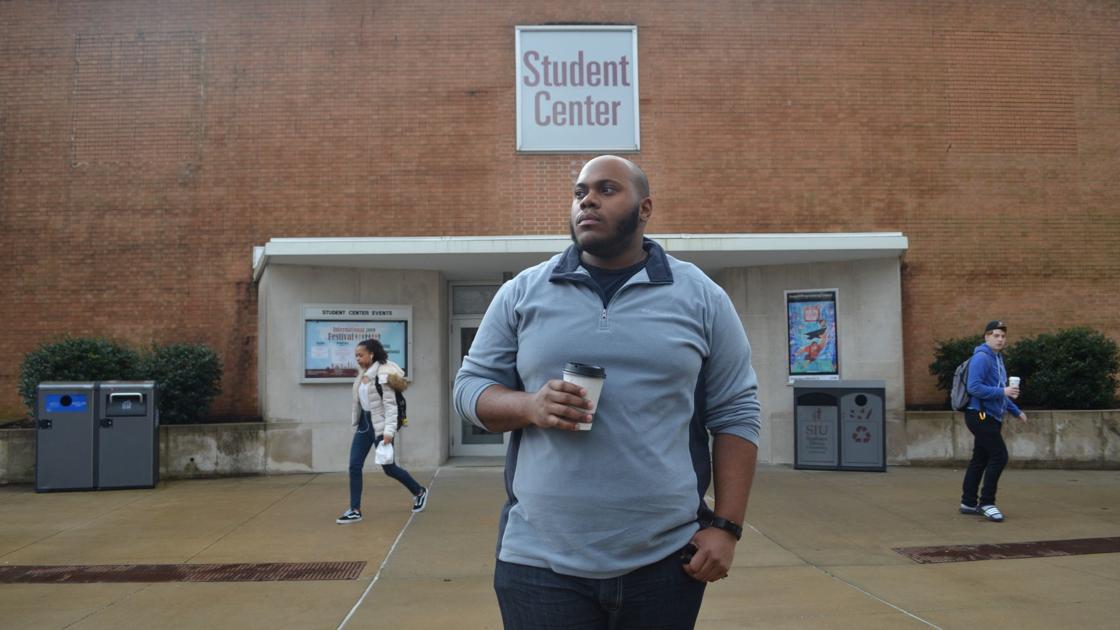
052219 JB nathan Reitz talking.jpg
Nathan Reitz, Democrat from Steeleville. Joe Bustos jbustos@bnd.com

Reitz, who does plan to run for election to the seat in 2020, conceded he has been lobbied on the progressive income tax issue.

“I’ve spoken to several people and told them I have to do what’s best for the people in the 116th district,” Reitz said. “They will be the people that ultimately have the decision to bring me back to Springfield in two years. If the fair tax is something that needs to happen to make that a possibility, we probably need to sit down and look at it.”

Legislative lobbying

Pritzker Press Secretary Jordan Abudayyeh said the governor has been meeting with lawmakers to convince them to support the plan the governor’s office has called the “fair tax.” Under rates that have been proposed, 97 percent of people would pay the same or less in income taxes. People making more than $250,000 would see an increase.

“The governor believes the fair tax is the best way to put the state back on firm fiscal footing while protecting the middle class,” Abudayyeh said. “He’s making the case to lawmakers from every part of the state because he knows lawmakers want to do what’s best for their constituents.”

If Reitz votes “yes” when the constitutional amendment came up, he would probably receive criticism back in his district, said state Sen. Paul Schimpf, R-Waterloo, whose senate district contains Reitz’s House district.

“I would expect that if Rep. Reitz were to vote ‘yes’ on that, he would get a lot of blowback,” Schimpf said. “I don’t know what he’s going to do, I haven’t had a conversation but I do know the governor’s proposal to change from a flat tax rate to a progressive tax rate is extremely unpopular in my district.”

Schimpf said he was lobbied to vote certain ways when Republican Bruce Rauner was governor.

“Sometimes I would agree with him, sometimes I disagreed with him,” Schimpf said. “Ultimately I voted my district, and that’s what we should all be doing, voting what’s best for our district regardless what pressure we get from the second floor.”

State Rep. Robert Martwick, D-Chicago, the sponsor of the constitutional amendment in the House, argues constituents in Reitz’s district would be helped by a progressive income tax as it would bring in more money for poorer school districts.

“No doubt his district would benefit,” Martwick said.

Martwick said there would be property tax relief and there would be income tax relief for Reitz’s constituents.

“It’s not massive, but it’s something,” Martwick said.

Still unclear is when representatives may vote on the progressive income tax amendment as proponents work to get the 71 votes needed. Martwick said many members are meeting with him to discuss details of the bills and to make sure they get the best for their constituents.

“We’re close to 71. I’m confident we’ll get to 71,” Martwick said.

Southern Illinois values

As Reitz mulls over a vote on the graduated income tax, he has worked on issues to show his southern Illinois values.

The first bill he co-sponsored dealt with Second Amendment rights. The legislation, among other things works to ensure the World Shooting Complex in Sparta is not impacted by recently passed gun restriction laws, and restructures the validity of concealed carry licenses by stating that licenses may expire five years from the expiration date of the prior license rather than five years from the renewal application date.

“I’m sponsoring a commonsense, pro-gun bill to defend Southern Illinois from the one-dimensional Chicago assault on legal gun ownership,” Reitz said.

052219 JB Reitz speaks.jpg
Nathan Reitz, Democrat from Steeleville. Joe Bustos jbustos@bnd.com

On Wednesday, Reitz presented his first bill to the full House chamber, which passed unanimously.

The legislation, if it becomes law, would require the Illinois State Board of Education and the Illinois Board of Higher Education to create the Agricultural Education Pre-Service Teacher Internship Program and award grants to pre-service teaching students who are involved in the program.

“The goal of my first bill is to expand access to agricultural education by investing in those with an interest in teaching it,” Reitz said. “I am committed to working with the education advocates, the agriculture community, as well as other stakeholders that share Southern Illinois’ most core values.”

Joseph Bustos is the state affairs and politics reporter for the Belleville News-Democrat, where he strives to hold elected officials accountable and provide context to decisions they make. He has won multiple awards from the Illinois Press Association for coverage of sales tax referendums.


16-Econ,19-Legal,26-Delivered,25-Working,AllPolGA

Region: Metro East,Feeds,News,City: Belleville

via Metro East Breaking News, Sports & Crime | https://www.bnd.com/

May 24, 2019 at 10:39AM

Rep. Moeller, Local Officials Unite to Discuss Aurora Shooting

http://bit.ly/2JXX3hZ

This post was contributed by a community member. The views expressed here are the author’s own.

Rep. Moeller, Local Officials Unite to Discuss Aurora Shooting

This local event organized and hosted by First Presbyterian Church in Elgin hopes to find answers in tragedy.

ELGIN – After the horrific workplace shooting in nearby Aurora, State Rep. Anna Moeller and local officials are coming together for a public conversation to address these serious problems.

Moeller, D-Elgin, will join a panel of distinguished law enforcement and elected officials for the discussion titled "Responding to Aurora: A Conversation with Illinois Leaders," from 7 to 9 p.m. on Thursday, June 6, at First Presbyterian Church (240 Standish Street in Elgin). The event will feature a moderated panel discussion followed by Q&A and is free to the public.

A disgruntled worker opened fire at the Henry Platt Company office in Aurora on Feb. 15, killing himself and five others and injuring six others.

Area legislators and law enforcement will use this discussion to update the public on what they are doing to address the problems that led to the shooting. Other panelists are:
· State Rep. Kathleen Willis, D-Addison
· Illinois State Police Assistant Director David Byrd
· Kane County Sheriff Ron Hain
· Kane County State’s Attorney Joe McMahon
· Aurora Police Chief Kristen Ziman
· Elgin Police Chief Ana Lalley

"The Aurora shooting is one of many tragedies that we must work harder to end," Moeller said. "I look forward to updating the public on our efforts in Springfield to reduce gun violence and to discuss what more we can do with Rep. Willis and other area leaders."

Questions? Contact Rep. Moeller’s district office at 847-841-7130 or staterepmoeller@gmail.com.

The views expressed in this post are the author’s own. Want to post on Patch?

More from Elgin
Up next on Elgin Patch

25-Working,26-Delivered,01-All No Sub,RK Client,02-Pol,06-RK Email 11,19-Legal,24-ILGA,010-Inoreader Saves

via Elgin, IL Patch

May 23, 2019 at 09:15AM

SIU Board could soon be among most student-dominated in higher education

http://bit.ly/2w9SU2z

CARBONDALE — The governing board of Southern Illinois University could soon become one of the most student-dominated in the country, as a long-debated issue nears resolution.

Legislation introduced by state Rep. Katie Stuart, D-Edwardsville, to give votes to both student members on the SIU Board of Trustees — one from the Carbondale campus, one from SIU Edwardsville — is on Gov. J.B. Pritzker’s desk after clearing the House and Senate, Stuart announced Monday.

Under current law, the Illinois governor chooses one student representative to be the voting member each year, weighing in on many of the highest-level decisions at the university, from multimillion-dollar purchases and contracts to tuition hikes. The other student holds an advisory seat on the board.

Typically, the vote alternates between the two campuses each year, but the governor may use his or her authority to deny voting power to both student trustees, or to keep the vote at the same campus for consecutive years.

Giving both students a say, Stuart said in a news release, will ensure equal representation for both campuses and eliminate the the governor’s ability to meddle in student voting privileges to influence the board.

If approved, the measure will also make the student voice more than twice as influential at SIU as at most major Midwestern university systems, with students holding two out of nine board votes.

At University of Illinois, by comparison, there is one voting student out of 11 trustees, though two other students hold advisory seats on the board.

At the University of Missouri, there is one voting student out of 10 on its board of curators.

At Indiana University, there is one voting student out of nine. At the University of Tennessee, one out of 11. At the University of Kentucky, one out of 16.

“This legislation is important for establishing equity between the SIU institutions,” Stuart said, “Both the Edwardsville campus and the Carbondale campus deserve the opportunity for their student interests to be equally represented each year.”

From 2018 to 2019, the vote rested with SIUC student trustee Brione Lockett, who will relinquish it this summer.

“I love this,” Lockett said of the legislation. “I’d be remiss if I didn’t say it’s cool to have another year of a vote, but I think this makes nothing but sense. Right now you’re asking students to read all these documents and show up to meetings and not get a vote. The vote is the reward for that hard work.”

J. Phil Gilbert, chairman of the SIU board, has also endorsed the bill, HB 2239, as has SIU Interim President J. Kevin Dorsey.

“We’re looking forward to the governor signing this bill,” Dorsey said. “This gives both student trustees an equal place on the board and provides them with the full ability to represent their peers at their respective campuses.”

Continue reading your article with a digital subscription.

Thanks for being a subscriber.

Sorry, your subscription does not include this content.

Please call 866.735.5912 to upgrade your subscription.

However, former Gov. Bruce Rauner saw things differently.

In August of 2015, he vetoed a nearly identical piece of legislation, saying increasing students’ voting power would dilute “the insight gained from the other trustees’ years of professional experience.”

“Having two student voting members is not necessary or advisable,” read a statement explaining his decision. “The Board of Trustees must consider difficult budgetary issues, academic requirements, and student conduct and disciplinary issues. The long-term views of professionals must be given appropriate weight.”

Rauner did not award a vote to either student representative during the 2014-2015 school year, board records show.

For his part, Lockett said student trustees are often as prepared as their fellow trustees, and are capable of taking a “system approach” without bias toward their home campuses.

Each month, Lockett estimated, he spends between one and two weeks of his working hours on board matters: reviewing documents, doing research and holding meetings.

“At times has it affected my schoolwork? Oh definitely,” he said. “But that’s how much I cared about it.”

Since he took office last July, Lockett has hosted a series of “Campus Conversations,” providing a rare opportunity for students to speak directly with high-level university administrators.

Recently, Lockett and SIUE student trustee Molly Smith hosted one of Lockett’s signature conversations at Edwardsville, taking questions on controversial university issues like the ongoing fair funding allocation study.

“That was, ‘Let’s show we’re really about the system by the students getting together and sharing our perspective,’” Lockett said.

Lockett also acknowledged the change would place added responsibility on students to elect dedicated peer leaders.

“Often, these elections can be a popularity contest,” Lockett said. “Will there be someone who comes after me that feels as strongly as I do and is as open as I am? Probably. We’ll have to see.”

The Pritzker administration declined to take a public position on HB 2239, when asked Thursday.

“The administration is currently reviewing the bill,” confirmed Pritzker spokesperson Jordan Abudayyeh.

Subscribe to Daily Headlines

12-Coll,19-Legal,25-Working,26-Delivered,HE 2 Coalition,HE Blog,AllPolGA

Region: Southern,Local,City: Carbondale,Region: Carbondale

via thesouthern.com – RSS Results in news/local/siu of type article http://bit.ly/2Iw9JwI

May 22, 2019 at 07:41AM

The X Factor: Should Illinois Nix Algebra Requirment?

http://bit.ly/2EjnzPa

Pleasant Plains is a small but prosperous town about 15 minutes northwest of Springfield. Its schools are all rated “commendable,” and their test results outshine state averages in every subject.

And yet, in March, the high school principal, Luke Brooks, asked Illinois lawmakers to stop requiring algebra.

Speaking to a House education committee, Brooks said algebra “…is the number one failed course in my high school and most schools around; it’s the number one failed in community college.”


He said sure, 90 percent of his students would still opt for the traditional path of Algebra I, geometry, algebra II, pre-calculus. But what about the kid who just wanted to be a welder and got so frustrated he dropped out?

“We scream college and we whisper career,” Brooks told the committee. “And these kids who want to go into careers and have a skill set — we will give up financial literacy, statistics, construction math — and we basically, for lack of a better term, we just slide that away and say, ‘You must know this,’ even though most statistics will tell you less than maybe 7 percent of the working world uses algebra. I just think it’s disingenuous of a lot of adults to say ‘This is what human intelligence is.’ ”

State Rep. Katie Stuart (D-Edwardsville), who is on the committee, immediately asked to be listed as a chief co-sponsor of his bill. That might seem surprising considering her resume. She has a degree in mathematics from Rutgers University, a masters in mathematics from Southern Illinois University-Edwardsville, plus certification in mathematics education from Tulane University in New Orleans.

Stuart also taught math in grades six through 12. The Pleasant Plains principal’s plea to create a path for non-math kids really resonated with her.

“We need some other type of course,” Stuart says. “We need to offer our juniors and seniors more of these applied mathematics — financial mathematics, or a real in-depth look into probability issues, or anything like that — to give them an option, as opposed to what we think of as a traditional pre-calculus course.”

Stuart says although she personally “loves trigonometry,” she also understands that most people don’t.

“Trigonometry really puts the world together, if you understand what’s going on,” she says. “But you can understand the world without understanding trigonometry.”

In fact, at SIUE, Stuart helped create a course called Quantitative Reasoning, to replace the traditional math requirement that stymied so many students. Still, she’s not willing to grant Brooks’ wish to get rid of algebra altogether.

“I can’t see it being responsible in getting rid of any algebra requirement at all,” she says. “I think it’s important. So I’m not willing to just say three years of (any) math carte blanche.”


She negotiated an amendment that keeps the Algebra I requirement, but allows geometry to be taught as a component of an “integrated, applied, interdisciplinary or career and technical course,” such as carpentry.

Rep. Mike Murphy (R-Springfield) filed both the original bill and the amendment. Married to a school teacher who retired after 31 years in the classroom, Murphy obviously has empathy for his constituent, Principal Brooks.

“You know the number one reason kids drop out of college is they can’t pass math,” he says. “I saw this report online the other day: 27 percent [of dropouts] is because they fail, and math is the number one thing they fail.”

But Murphy also hopes to dig into the broader problem.

“One of my plans to do this summer is, I want to put together a little study group, task force, or whatever you want to call it, on why are we failing in math?” he says. “What are we doing as a country? What are we doing as a state? I don’t have that answer.”

Meanwhile, the amended bill won unanimous approval in the House, and is headed for a vote in the full Senate.


26-Delivered,25-Working,AllPolGA,AllSN

Schools,Politics,College

via Dusty Rhodes http://bit.ly/2VQNKnm

May 20, 2019 at 06:26AM

Bill suspending teacher basic skills test in Illinois heads to governor

http://bit.ly/2YFH6Bn

SPRINGFIELD — A test required for teacher licensing that many argue has contributed to the state’s teacher shortage might soon be suspended.

The Illinois Senate on Thursday passed and sent to Gov. J.B. Pritzker House Bill 423, which would put what is known as the “test of basic skills” on hold until July 1, 2025, while state officials try to determine whether that will help relieve the state’s teacher shortage.

The bill also calls on the Illinois State Board of Education to re-evaluate the method it uses to score another mandatory test that prospective teachers must pass, one that measures their mastery of the content area in which they want to teach.

Those tests are among three tests that applicants for teaching licenses in Illinois must pass. They also must pass a test covering their content area and a test covering teaching practices and standards, known as the edTPA.

A separate bill, House Bill 256, by Chicago Democratic state Rep. Will Guzzardi, would drastically overhaul that exam as well by removing a component requiring prospective Illinois teachers to video themselves in an actual classroom setting. That bill also passed the House in April, but has not yet been assigned to a Senate committee.

Those tests were the subject of extensive hearings in the Illinois House where state Rep. Sue Scherer, a Decatur Democrat and chief sponsor of the bill, questioned their value and effectiveness.

Scherer, a retired teacher, and others have also suggested that they deter many people from trying to enter the teaching profession and that they have a disproportionate impact on people of color, contributing to the state’s teacher shortage.

“We are at a crisis level in the teacher shortage,” Scherer said on the House floor during debate over the bill. “It’s affecting basically every region in every area across the state, which some people are unaware of. Many classrooms are sitting there without a qualified teacher. I know of a school district that right now has 50 open classrooms without a qualified teacher.”

The bill suspending the basic skills test until 2015 passed the House in April, 85-25. It passed the Senate on Thursday, 55-0.

25-Working,26-Delivered,AllPolGA,AllSN

State

via http://www.newsbug.info – RSS Results in news/national/illinois of type article http://bit.ly/2V4VWAc

May 17, 2019 at 06:12PM

Elder Abuse Task Force could come to IL

http://bit.ly/2LOUi5i

“The creation of the Elder Abuse Task force will ensure that we have a focused group seeking to strengthen the rights of our seniors,” Stuart said. “To continue to protect our seniors, we need to examine our current practices and look to other resources to guarantee that seniors have the best protections when it comes to elder abuse.”

25-Working,26-Delivered,01-All No Sub,02-Pol,24-ILGA,010-Inoreader Saves

via https://www.kfvs12.com

May 17, 2019 at 06:46AM

Ill. lawmaker introduces gun regulation legislation

http://bit.ly/2EdpPaG

“I’m sponsoring a commonsense, pro-gun bill to defend southern Illinois from the one-dimensional Chicago-assault on legal gun ownership. This proposal will protect our Second Amendment values by creating exceptions for law enforcement and military personnel,” Reitz said. “It also ensures the World Shooting Complex in Sparta is exempt from recently imposed gun regulations which negatively impact our vendors and small and locally owned businesses in the area.”

25-Working,26-Delivered,010-Inoreader Saves,AllPolGA

via https://www.kfvs12.com

May 15, 2019 at 08:42PM

Suburban double dippers hit taxpayers in the wallet

http://bit.ly/2VwWdjg

Several collar county board members are being paid salaries for their work at the same time they also are collecting pensions for the same county board work. Did you know that?

It’s true. And at the moment, it’s perfectly legal, though some Illinois lawmakers are trying to change that and fix what they see as other corruption problems in county governments.

OPINION

More than a dozen county board members in Lake, McHenry, Will and Kane County are being paid both salaries and pensions at the same time for their work as county commissioners. They’ve received as much as $82,124 in annual pension payouts from the Illinois Municipal Retirement Fund for jobs in which they’re also still getting salaries of between $21,000 and $43,018, according to an analysis by the Daily Herald’s Jake Griffin.

This is happening because of a 2016 law that says county commissioners cannot continue to work toward a pension unless they provide documentation they’re working at least 19 hours a week at that job. Elected officials who did not provide that proof were kicked out of the Illinois Municipal Retirement Fund but, because they had contributed previously to IMRF, they were able to start collecting their accumulated pensions even though they’re still working, and being paid, as commissioners.

Senate Bill 1236 aims to stop that, along with three other problems that have surfaced in county governments because of a lack of accountability and transparency. Sponsored by Democratic state Sen. Terry Link of Indian Creek, the bill passed the Senate 45-6 last month. It passed 13-3 out of a House committee last week and could get a full House vote soon.

“The pension is a retirement vehicle,” state Rep. Sam Yingling, a Round Lake Beach Democrat, said in an interview. “It’s not something for public officials to use to double dip at the taxpayer trough.”

If Link and Yingling succeed in getting their legislation enacted, elected local officials would be prohibited from receiving a salary or other compensation if they are collecting pension benefits from IMRF for the same job. An official’s salary would be zeroed out at the start of a new term if that official is collecting a pension for the same job.

Several Lake County board members, the Illinois Association of County Board Members, the Illinois State Association of Counties and the Illinois Municipal League all filed witness slips opposing passage of SB 1236 before last week’s committee hearing.

Some lawmakers questioned why the legislation didn’t cut off the pension rather than the salary for officials who are collecting both. Yingling noted people can defer their pension payments if they win re-election to a local office they once held.

Others wondered about scenarios in which a teacher could retire from full-time work, begin collecting a pension, but want to then work part-time or as a substitute.

State Rep. Daniel Didich, a Buffalo Grove Democrat, answered, noting those officials could begin collecting their pensions once they finally quit working at those jobs.

“I think the public is absolutely fed up with this type of behavior and practice in government,” Yingling added. “This is good government to install these protections and measures for taxpayers and I strongly believe in them.”

Other provisions in the legislation would allow for the removal of county board chairs, who are elected to that leadership role by their fellow commissioners by a four-fifths vote of the board. Yingling said that provision was needed after the revelation that former Lake County Board Chairman Aaron Lawlor had abused a county credit card and submitted fraudulent charges for reimbursement. Lawlor resigned after the abuses came to light and sought treatment for addiction.

SB 1236 also boosts transparency by requiring that vendors in line for a county contract of more than $30,000 must disclose any family relationships with county officials. Yingling said some vendors in Lake County have been awarded no-bid contracts and then it’s come to light they have relationships with officeholders.

Lastly, the legislation requires county boards to alert new countywide officials that they have the option to ask that a transitional audit be conducted at county expense when they take office.

Lake County Circuit Court Clerk Erin Cartwright Weinstein said she fought with a prior county administrator and board members for months after she took office to try to definitely determine what happened with contracts for an e-filing system that never was completed, even though $4.9 million had been spent on it over a five-year period by her predecessor. County officials since have agreed to pay for an assessment, a less formal form of a forensic audit.

“This bill is a huge step in the right direction to provide accountability and protections to the public against inappropriate spending of taxpayer funds,” she previously told state lawmakers.

Illinois leads the nation in numbers of governments, which makes it that much harder for taxpayers to hold them all accountable. SB 1236 should help if it becomes law.

The public, Yingling said, is “demanding that action be taken to stop rampant fraud and abuse.”

Madeleine Doubek is executive director of CHANGE Illinois, a nonpartisan nonprofit that advocates for political and government reforms.


16-Econ,25-Working,26-Delivered,AllPolGA

Feeds,Chi ST

via Chicago Sun-Times http://bit.ly/2xAxGgE

May 13, 2019 at 05:52PM

New State Representative Replaces Costello | Alton Daily News

http://bit.ly/2JA8e0n


Replacing Jerry Costello Jr., who resigned from state legislature last week to take a high ranking job at the state’s Department of Natural Resources, is state Rep. Nathan Reitz. Democratic party leaders made the selection and Reitz was sworn in on Thursday. Costello had publicly opposed a progressive income tax.

Ideas Illinois noted President Donald Trump carried that legislative district in 2016 and said Reitz must choose between siding with the progressive income tax or with “middle-class families.”

(Copyright WBGZ Radio / www.AltonDailyNews.com)

010-Inoreader Saves,26-Delivered,25-Working,AllPolGA

via Alton Daily News

May 12, 2019 at 07:27AM

Blog at WordPress.com.

Up ↑