Search

Working for Illinois Caucus

House Downstate Democrats work for the good people of Illinois

Tag

AllPol

St. Rep. Yednock to labor summit audience: unions are still relevant

https://ift.tt/30IF4Cz

St. Rep. Lance Yednock says raising minimum wage to $15 per hour will affect 1.4 million workers and help 200,000 of them rise from poverty. He told the audience at the labor summit in Ottawa over the weekend, it takes two full time minimum wage jobs to tread water in Illinois.

Yednock expects a $15 minimum wage to generate $19 billion per year in new economic activity in the state. The Ottawa Democrat says minimum wage jobs aren’t just for teenagers starting out in the workforce anymore. He says if you go to the businesses that employ minimum wage people, you see a lot of moms and dads.

Yednock says labor unions are still relevant and their future leaders need to get ready. He told the labor summit audience he has no doubt that unions boost the standard of living.

Yednock says he spent time away from his family and friends, and he put his career on hold to run for office. But he says he ran because of the challenges labor unions are facing.

16-Econ,19-Legal,22-Talk,24-ILGA,25-Working,26-Delivered,AllPol

Region: Northern,Feeds,News,Region: La Salle

via WCMY-AM http://www.1430wcmy.com

January 20, 2020 at 02:03PM

Representative Carol Ammons (103rd): Significant income disparities have to be addressed as a failure of government

https://ift.tt/36eVK5M

Representative Carol Ammons (103rd-Champaign) joins John Williams to explain why the city will be reinstating the suspended drivers licenses of 55,000 people who have not been able to pay their parking tickets. And she tells John what happens to the dues owed by those people.

25-Working,26-Delivered,22-Talk,19-Legal,24-ILGA,AllPol

Feeds,News,Region: Chicago,City: Chicago

via WGN Radio – 720 AM https://wgnradio.com

January 20, 2020 at 12:37PM

Local state lawmakers tout successful legislative session in 2019, set goals for 2020

https://ift.tt/30CyL3v

GENEVA – Area state lawmakers took a victory lap for last year’s legislative achievements in Springfield, but said they recognize there is plenty more work to get done in the spring session of the General Assembly, during a forum before local municipal officials.

Property tax relief and solving the state’s ongoing pension crisis will be at the top of the list, state senators and representatives told a gathering of the Metro West Council of Government, a lobbying group representing cities and villages in Kane, Kendall and DeKalb counties.

At the breakfast session Friday morning at Geneva’s Eaglebrook Country Club, the lawmakers found Metro West acknowledging last year’s successful effort to approve the first transportation infrastructure funding bill in 10 years.

“The last thing we need is another 10 years between capital bills,” said Sen. Linda Holmes, D-Aurora.

“I know that in the interim local government has been picking up the slack,” said Rep. Anna Moeller, D-Elgin. “That capital bill was landmark legislation,” Moeller said

But what the local officials wanted to know was how the state is going to deal with the staffing shortage at the Illinois Department of Transportation that has led to a bottleneck for approval of shovel-ready projects.

While applauding efforts to outsource some of IDOT’s administrative work, representatives from Metro West called on the lawmakers to allow local permitting for the projects in order to get them moving.

Moeller said she supports “more direct permitting” to clear the backlog.

Sen. Don DeWitte, R-St. Charles, said he has talked with Gov. J.B. Pritzker about the problem and that the governor said an ombudsman will be designated to expedite the IDOT approval process.

DeWitte indicated support for the use of outside engineering firms to help IDOT get existing applications approved and construction underway.

“If they don’t get caught up they’ll be overwhelmed with new projects,” DeWitte said.

Approval of last year’s capital bill was dependent on a doubling the state’s gasoline tax to 38 cents per gallon and earmarking the money for transportation projects.

“The indexing of Motor Fuel Tax funds was the key to that bill,” DeWitte said. “We all had to take some tough votes to get it done.”

Last year also saw lawmakers legalize recreational marijuana.

With legal sales underway since the start of the year, the local officials wanted to know what lawmakers will be doing to correct any unintended consequences.

The legislators essentially said they will be counting on local government officials to help guide them and bring problems to their attention.

“Cannabis was a very big piece of policy,” said Sen. Sue Rezin, R-Morris, noting that the legislature has already approved one clean-up bill and expects that another with eventually follow.

“We are all very intently watching if there are any issues we need to address,” said Sen. Cristina Castro, D-Elgin.

Another notable accomplishment last year was consolidating 650 downstate police and fire pension funds into just two funds, said Castro, chief sponsor of the legislation, creating better investment power and efficiencies.

Metro West is calling on the legislature to control the cost of local municipal public safety pensions.

A major concern to Metro West and local officials is the status of the Local Government Distributive Fund (LGDF), which is the municipal share of state income tax revenues, divvyed up to cities and villages on a per capital basis.

The state cut the local share by 10% several years ago but then restored 5%. The municipalities want the other 5% back.

“That reduction in the LGDF is what gets passed on to property owners in higher taxes,” said DeWitte, who served as mayor of St. Charles from 2005 to 2013.

“The distributive fund has been eroded,” St. Charles Mayor Ray Rogina said, adding that unfunded state mandates compound the problem.

“He dealt with that as mayor,” Rogina said, pointing to DeWitte. “He understands.”

Metro West Executive Director Lesli Melendy said full restoration of the local share of the LGDF is a major goal of the lobbying group.

Melendy also said that the state needs to fully fund public schools.

DeWitte put it more bluntly when he charged that the state government is not meeting is constitutional requirement to provide education funding.

Democrats contend that part of the solution is the proposed Fair Tax Amendment to the Illinois Constitution which is on the November ballot. The initiative would increase taxes on incomes of more than $250,000.

“We rely too heavily on the property tax to fund schools,” said Moeller, urging passage of the fair tax and arguing that 95% of income taxpayers would see no change.

“I was hoping we weren’t going to get into that,” said DeWitte, the next to speak.

While commending Castro for her pension reform efforts, DeWitte said much more needs to be done.

“Until we address the number one burden on taxpayers, we are all just wasting time,” DeWitte said.

After the forum, DeWitte explained his opposition to the Fair Tax Amendment.

“I am adamantly opposed to any scheme that gives a blank check to a simple majority of the legislature to change income brackets and rates,” DeWitte said.

The governor and Democratic leaders have refused to make any assurances that the brackets and rates will remain frozen, said DeWitte, who contends that if approved, tax increases could easily be extended to the middle class.

Rep. Dan Ugaste, R-Geneva, also opposes the plan, arguing that the increase on the higher earners will simply accelerate the exodus of businesses and residents from Illinois.

“There are other ways to grow revenues,” Ugaste said.

Prior to the forum, DeWitte predicted that property tax reform will need to be tied to a larger grand bargain involving taxes and revenues for both the state and local units of government.

Such a deal promises to be an all-or-nothing proposition, DeWitte said, because there will be so many interdependent components.

Geneva Mayor Kevin Burns welcomed the crowd, which included elected officials and top staffers from the three counties represented by Metro West.

For example, the Batavia contingent included Mayor Jeff Schielke, City Administrator Laura Newman, Assistant Administrator Anthony Isom and four aldermen.

“We are a team that is focused on results,” Burns told the lawmakers.

DeWitte is sponsoring legislation that he said would solve a technical problem for local government bodies, which often do not receive the exact property tax extension that they have levied, because of assessment fluctuations, tax appeal decisions or other factors.

When there is an over extension, local governments often are forced to go through a procedure to abate taxes. When there is an under extension, taxing bodies find themselves short of expected revenues.

DeWitte’s legislation would automatically adjust the extensions to guarantee that local governments receive the tax revenues they levied, and move the adjustments to the assessments for the following year.

The legislation, Senate Bill 1043, was approved in the Senate last year. Ugaste is sponsoring the bill in the House, but the legislation has been languishing in the Rules Committee.
14-Roads,16-Econ,19-Legal,24-ILGA,25-Working,26-Delivered,TFIC Blog,AllPol,AllTFIC

Feeds,News

via Kane County Chronicle https://ift.tt/2r32Acp

January 20, 2020 at 05:44AM

Pritzker, lawmakers look to end cash bail, mandatory minimums and expand deferred prosecution

https://ift.tt/2QXnOGy

Gov. J.B. Pritzker plans to make criminal justice reform a major focus in the years ahead.

The governor recently took part in a fireside chat about his administration’s Justice, Equity and Opportunity Initiative. Afterward, he laid out some of the things he wants to tackle over the next three years.

“One of those things is working on ending cash bail,” Pritzker said. “Also working on reducing or eliminating mandatory minimum sentences, giving judges more discretion to take into account circumstances in each case.”

There would be taxpayer savings from ending low-level cash bail, the governor said.

“The cost of putting people in jail and having them sit there because they don’t have the $200 or the $500 for cash bail,” Pritzker said. “That’s a cost to taxpayers that we ought to eliminate.”

Pritzker said such moves will help reduce the state’s prison and jail population, but he said they’ll take the time to maintain public safety and to get all stakeholders on the same page.

Members of the state legislature are evaluating expanding deferred prosecution programs in the state.

A committee of legislators earlier this week discussed such programs. State Rep. Maurice West, D-Rockford, said the goal is to provide alternatives to addressing wrongdoing other than criminal proceedings.

“A deferred prosecution program is an alternative justice program designed for first-time non-violent offenders,” West said. “It is an opportunity to keeping a conviction from being permanently entered onto their record.”

West said there are several counties in Illinois with such programs already.

Kane County State’s Attorney Joe McMahon said the Kane County program provides an opportunity for offenders to avoid prosecution while holding them fully accountable to the community.

“All programs provide access to mental health services, substance abuse evaluation and treatment and medical treatment when necessary,” McMahon said.

Lawmakers could take up various reforms when they return for spring session later this month.

19-Legal,24-ILGA,25-Working,26-Delivered,E Kristen,AllPol

Politics

via http://www.thecentersquare.com – RSS Results in illinois of type article https://ift.tt/2IOn4Q8

January 16, 2020 at 11:56AM

Lawmaker wants Capitol parking set aside for expectant mothers

https://ift.tt/3a3djcj

Within the Capitol Complex are reserved parking spaces for electric vehicles and disabled drivers, but Rep. Katie Stuart, D-Edwardsville, wants to add reserved spots for women expecting birth and parents with a newborn child.

Parents would not need a permit to hang from their interior mirror. Rather, Stuart assumes that people, “in the good nature of human beings wouldn’t take advantage of something like this.”

“A lot of these exist outside grocery stores and doctors’ offices and other buildings where people who, for whatever reason in their pregnancy, maybe need to park a little closer to access the buildings,” Stuart said. “A lot of times it’s a safety consideration, making sure that if something happens inside the building, they can get to their own vehicle quickly enough.”

A pregnant lobbyist approached Stuart amid the previous legislative session voicing her concern about the lack of such spaces.

Secretary of State Jesse White’s office arranges state parking and maintains the Capitol Complex; maternity parking spaces would be accommodated through its office.

“It’s a concept that we think is a very good idea,” said Dave Druker, a spokesman for White’s office. “It’s something we would like very much to work with Rep. Stuart on and some of the other governmental agencies involved.”

Stuart expects support from the General Assembly to get the bill (House Bill 4014) passed in the upcoming spring session.

“I spoke to the Secretary of State’s office prior to filing it to make sure we could be in agreement to how it would work,” Stuart said. “I have not reached out to the Governor’s office yet. I think given his support for maternal health care and other things makes me believe he’s going to be in favor of this.”

Druker also said the idea struck White as a “commonsense idea” that would be a continuation of his philosophy of giving pregnant women precedence, such as allowing them a special line at the Department of Motor Vehicles for priority service. He did, however, acknowledge that parking around the Statehouse is already at a premium.

Stuart would hope to see a maternal parking spot for all buildings within the Capitol Complex, but she admits that is not practical. “I want to make sure we have adequate parking for all people who need it,” Stuart said.

The Office of the Architect of the Capitol would evaluate where the most appropriate spaces would be, given the design of the Capitol Complex, she said.

The bill accompanies one of Stuart’s goals of protecting mothers in the workplace. She passed a bill that brought lactation rooms to the Statehouse, Stratton Building and Howlett Building, and another that requires employers to allow nursing mothers a reasonable paid break time to express milk.

Contact Kade Heather: kheather@sj-r.com, (630) 945-7376, twitter.com/@kade_heather.

19-Legal,24-ILGA,25-Working,26-Delivered,AllPol

Region: Springfield,Feeds,State,Politics,Central,City: Springfield,Region: Central

via State Government News – The State Journal-Register https://ift.tt/2rmLmH6

January 12, 2020 at 08:53PM

Bill would add ‘sexting’ to sex ed classes in Illinois

https://ift.tt/2QWAkFa

House Bill 4007, introduced by Rep. Maurice West, D-Rockford, would require sex education curriculum in grades 6-12 to include material on the legal and social risks of sharing sexually explicit images, messages and videos.

“This is something that a lot of our students are dealing with and are partaking in without really understanding what the consequences could be,” West said.

Issues surrounding sexting that would be required in curriculum include long-term consequences, bullying and harassment, resisting peer pressure and using the Internet safely. Lessons would also have to highlight school and community officials who students can reach out to with a problem.

“There’s no telling what our children are doing on their phones,” West said, “so instead of trying to intrude into their privacy, let’s just make sure they’re educated on even the things that make us adults uncomfortable.”

The bill defines sexting as “sending, sharing, receiving, or forwarding a sexually explicit or sexually suggestive image, video, or text message by a digital or electronic device, including, but not limited to, a mobile or cellular telephone or a computer.”

New Jersey’s law, signed in 2018, requires schools to teach the “social, emotional, and legal consequences” of sexting.

The Los Angeles Unified School District, America’s second-largest, added the risks and consequences of sexting to its curriculum in 2015.

Driver says including sexting in sex education is a “smart response” to a growing practice.

“Young people generally think short term, in the immediate, and so providing the education before it becomes punitive … is a very responsible way to address sexting,” she said.

A 2018 study of 110,000 teenagers published in the Journal of the American Medical Association found 15 percent had sent sexts and 27 percent had received them. Twelve percent also admitted to sending a sext of someone else without their consent.

Sexting between minors is illegal in 25 states including Illinois, according to a 2018 analysis by the Cyberbullying Research Center. Illinois law forbids minors from sharing sexual images and videos of themselves via any electronic method, such as texting, social media and smartphone apps. The penalty is usually community service or counseling.

Illinois is one of 24 states plus the District of Columbia that require sex education. School codes require sex education lessons in Illinois to be age-appropriate, evidence-based and medically accurate. Parents have the option to take their children out of class if they object to the material.

“It is my hope that schools will be understanding of this because this is one thing that we really can’t control,” West said.

Ben Schwarm, deputy executive director of the Illinois Association of School Boards, predicts his organization will oppose the bill once it is assigned to a committee.

“We oppose all new curricular mandates. It has just really grown out of control,” he said.

Schwarm calls the bill unnecessary because school codes already mandate instruction on related topics like Internet safety and cyberbullying.

West, however, said he does not believe it would be an unnecessary mandate.

“We’re just simply saying we need to acknowledge the elephant that’s in the room,” he said.

West said sexting has already come up among a group of middle school boys he mentors.

“I’m telling them the ramifications to it and telling them how, though you may feel that this is pretty cool now, it can be detrimental later,” he said.

“But that’s just with six boys that I mentor. There’s a lot more out there that may not be getting that same kind of guidance.”

Driver said she agrees that sex education should meet young people where they are.

“I think very much how we’re trying to keep up with technology, we need to be keeping up with sex education at the same time so that one doesn’t happen without the other,” she said.

West introduced the bill in December and is reaching out to fellow lawmakers from both sides of the aisle for support as the General Assembly prepares for its 2020 session beginning Jan. 28.


15 new laws in Illinois for 2020

19-Legal,24-ILGA,25-Working,26-Delivered,06-RK Email 13,AllPol,AllSN

Feeds,News

via http://www.newsbug.info – RSS Results in news,news/* of type article https://ift.tt/1dbWLZo

January 8, 2020 at 06:44PM

Bolingbrook resident to run for state representative in 85th District

https://ift.tt/32ZVmaJ

A Bolingbrook resident announced this week she is running for the state representative seat in the 85th District.

Dagmara Avelar, a 20-year Bolingbrook resident, said she’s running as a Democrat for the seat in light of the current representative’s announcement he’s running for the Illinois Senate, according to a news release.

State Rep. John Connor, D-Lockport, has represented the district since his appointment in 2017. Last month, he announced his candidacy to run for state Sen. Pat McGuire’s seat in 2020.

Dagmara, who’s known by friends as “Dee,” said she’ll bring 12 years of experience “promoting the civic engagement of new Americans in the southwest suburbs and throughout the state.”

“Bolingbrook and this district embraced me and my family when I first moved here at the age of 12,” Avelar said. “I want to continue and strengthen that legacy for the next generation.”

Avelar is a 2005 graduate of Bolingbrook High School, earned her bachelor’s degree in justice studies from Northeastern Illinois University and is pursuing a master’s in urban planning and policy at the University of Illinois at Chicago.

The day after McGuire, D-Joliet, announced he would not run for reelection, Connor announced his candidacy.

25-Working,26-Delivered,19-Legal,24-ILGA,AllPol

News,City: Joliet,Region: Joliet

via The Herald-News https://ift.tt/2SHQ4f3

October 30, 2019 at 11:25AM

Plainfield village trustee to run for state representative seat

https://ift.tt/35XJqbe

Harry Benton
Harry Benton

A Plainfield village trustee and union iron worker announced his candidacy for a state representative seat in the 97th District.

Benton, a Democrat, made his official campaign announcement at the Teamsters Local 179 building in Joliet on Tuesday.

In a news release, he called for "new leadership" for the district, which has been represented by Mark Batinick, R-Plainfield, since 2015.

"Politician Mark Batinick has failed our families," Benton said. "Time and time again, he has refused to vote on critical legislation or spoken out against measures that would protect the middle class and local families."

If elected, Benton said he’d fight for property tax relief, a balanced budget and more opportunities for local students and those wanting to enter skilled labor industries.

He was elected to the Plainfield Village Board in April. Batinick narrowly won reelection in 2018 against Plainfield Democrat Mica Freeman.

25-Working,26-Delivered,19-Legal,24-ILGA,010-Inoreader Saves,AllPol

via | The Herald-News

October 23, 2019 at 08:37PM

Clean Energy Jobs Act heads into smoke-filled veto session

https://ift.tt/2Pf5x7i

Legislators, activists say it smooths transition from fossil fuels to solar, wind

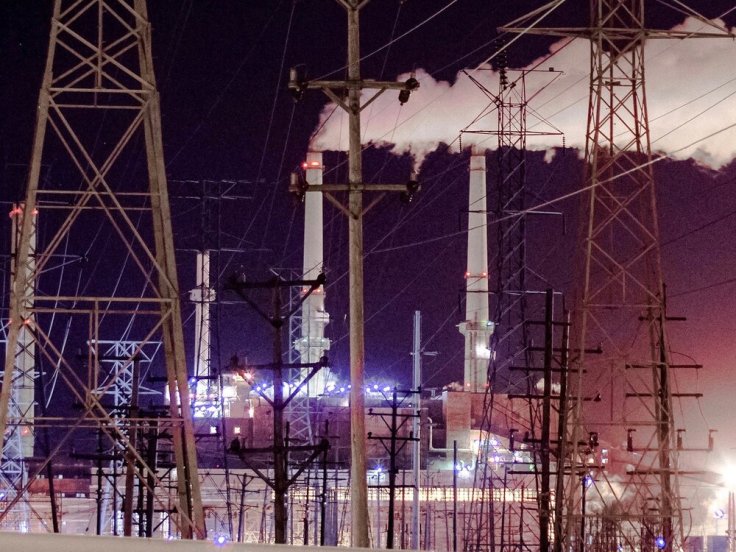
The Midwest Generation Power Plant: “The question isn’t if the Waukegan coal plant will close, but when,” says state Rep. Rita Mayfield. (Flickr/Cheepshot)

The Midwest Generation Power Plant: “The question isn’t if the Waukegan coal plant will close, but when,” says state Rep. Rita Mayfield. (Flickr/Cheepshot)

By Ted Cox

Prospects are cloudy for the Clean Energy Jobs Act as it heads toward the General Assembly’s fall veto session next week.

Legislators and activists held a teleconference call Wednesday to urge passage of “the only energy legislation that comprehensively tries to act on the climate, but also give real support to Illinois energy workers and the communities that depend on them,” in the words of state Sen. Scott Bennett of Champaign, one of the lead sponsors.

Gov. Pritzker has been iffy about the bill’s immediate prospects, however, saying earlier this month, “I don’t know that we’ll be able to get to it during the veto session.”

“It is not lost on us that it has not been scheduled for a committee vote,” said Tracy Fox, of the Central Illinois Healthy Community Alliance and Illinois People’s Action. “I find it very disappointing, as does the coalition, that the veto session may pass without action on CEJA.”

Fox said, “There is a true urgency” to pass the bill, given that Vistra Energy has already announced plans to close coal power plants in Peoria, Canton, Havana, Hennepin, and Coffeen, while Peabody is pulling out of a mining complex in Saline County, which she called “one of the most depressed areas in southern Illinois.”

Bennett said that, without a “proactive” transition program, “the cost and impact of these closures fall on Illinois families and taxpayers.” He added that the purpose of CEJA is to “try to make sure that polluting energy corporations are the ones responsible for supporting this transition” from fossil fuels to clean energy sources like wind and solar.

Under CEJA, he said, fossil-fuel companies closing up shop would have to clear several hurdles. “They have to support local communities,” Bennett said. “They have to replace the lost tax revenue. And they have to bring in new investments” in the form of businesses creating new jobs to replace the old ones lost.

Bennett said it would make Illinois “a national leader in climate action,” adding, “It also revitalizes the economy while providing 100 percent clean energy.”

Renner Barsella, of the Sierra Club’s Beyond Coal Campaign, said CEJA “establishes a robust climate and economic transition plan that specifically helps workers and communities adapt and forge resilient, economic futures.” He added that, in the past, “systematic problems have created too few opportunities in growing industries like wind and solar for new workforce development from impacted communities and populations previously undertapped by the energy industry.”

Bennett pointed to coal ash in the Vermillion River as a primary reason CEJA is necessary. Pritzker signed a bill into law this summer dealing with coal ash, but CEJA would build on the bipartisan Future Energy Jobs Act enacted under the Rauner administration to take a more comprehensive approach to retraining workers in new fields and providing relief to communities as they make the transition.

State Rep. Rita Mayfield of Waukegan said she wanted the new law in place to deal with the inevitable closure of the Midwest Generation Power Plant in her community. “This plant has been operating for decades without a permit,” she said. “The question isn’t if the Waukegan coal plant will close, but when.

“We need to ensure that Waukegan isn’t left with an environmental mess on our hands,” she added. “Lands need to be reusable after the plant closes.

“It is absolutely essential that we have a transitional plan for energy and this coal plant that’s in my district,” Mayfield said. “We don’t want the taxpayers to have to pay for the cleanup.

“They’re polluting our air. They’re polluting our water. We need them to close, and we need a transition plan in place.”

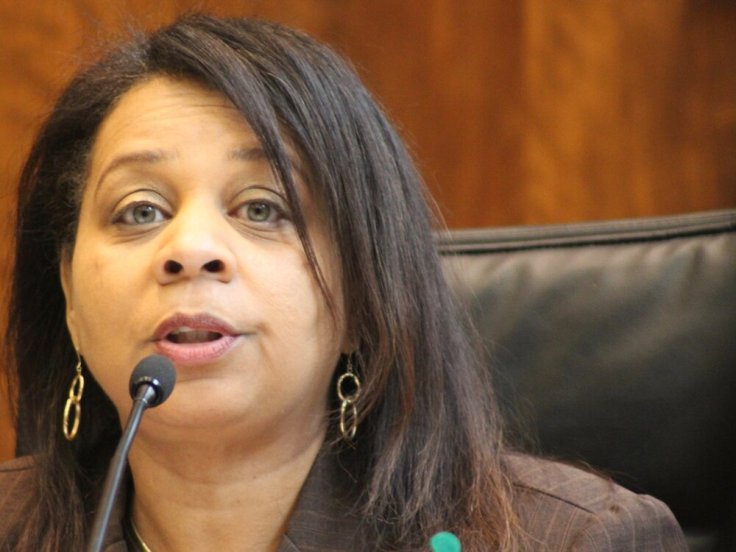
IMG_8248.jpg

“They’re polluting our air. They’re polluting our water. We need them to close, and we need a transition plan in place.”

State Rep. Rita Mayfield (One Illinois/Ted Cox)

Juliana Pino of the Little Village Environmental Justice Organization said solutions under CEJA would be “localized and community-driven,” as in training programs moving people into clean-energy jobs in wind, solar, electric cars and trucks, and general energy efficiency. “As we know, these industries are burgeoning,” she added.

A $20 million program on energy entrepreneurship and a contractor incubator would help generate new businesses and potentially move workers into their own clean-energy companies.

Fox said it would also create a Displaced Worker Bill of Rights, including demands for advanced notice of impending plant closures beyond the relatively short times the Vistra Energy communities have been given to confront life after the plants close. She said a $22.5 million part of the bill, on energy-empowerment zones and tax credits, would grant tax breaks to companies that hire displaced energy workers, while attracting clean-energy companies to those enterprise zones.

The bill, including a $210 million Energy Community Reinvestment Act, would be paid for in part through additional taxes on coal and gas power plants.

“We don’t just throw money at the problem,” Fox said. “We ensure that there are jobs at the end of the pipeline.”

Mayfield echoed the notes on urgency. “I think it is imperative that the Clean Energy Jobs Act gets called during the veto session,” she said. “We cannot hold this bill up while ComEd and Exelon work out their legal troubles. That is just not fair to the citizens of Illinois.”

Mayfield added that it was not the higher vote threshold required during the veto session that was snagging the bill. “I’ve talked with several of my colleagues,” she said. “I can confidently say that we have the votes in the House to pass the bill.”

Fox pointed to the Illinois Youth Climate Strike student protesters who’ve adopted CEJA as a key issue. “We saw the passion of our youth and their concern about their future with the climate strikes,” she said, “and we know the climate can’t wait.”

25-Working,26-Delivered,17-Energy,06-RK Email 13,19-Legal,24-ILGA,16-Econ,AllPol

Feeds,Politics

via Stories – 1IL https://ift.tt/2HT1Ql1

October 23, 2019 at 05:47PM

Blog at WordPress.com.

Up ↑