Search

Working for Illinois Caucus

House Downstate Democrats work for the good people of Illinois

Tag

19-Legal

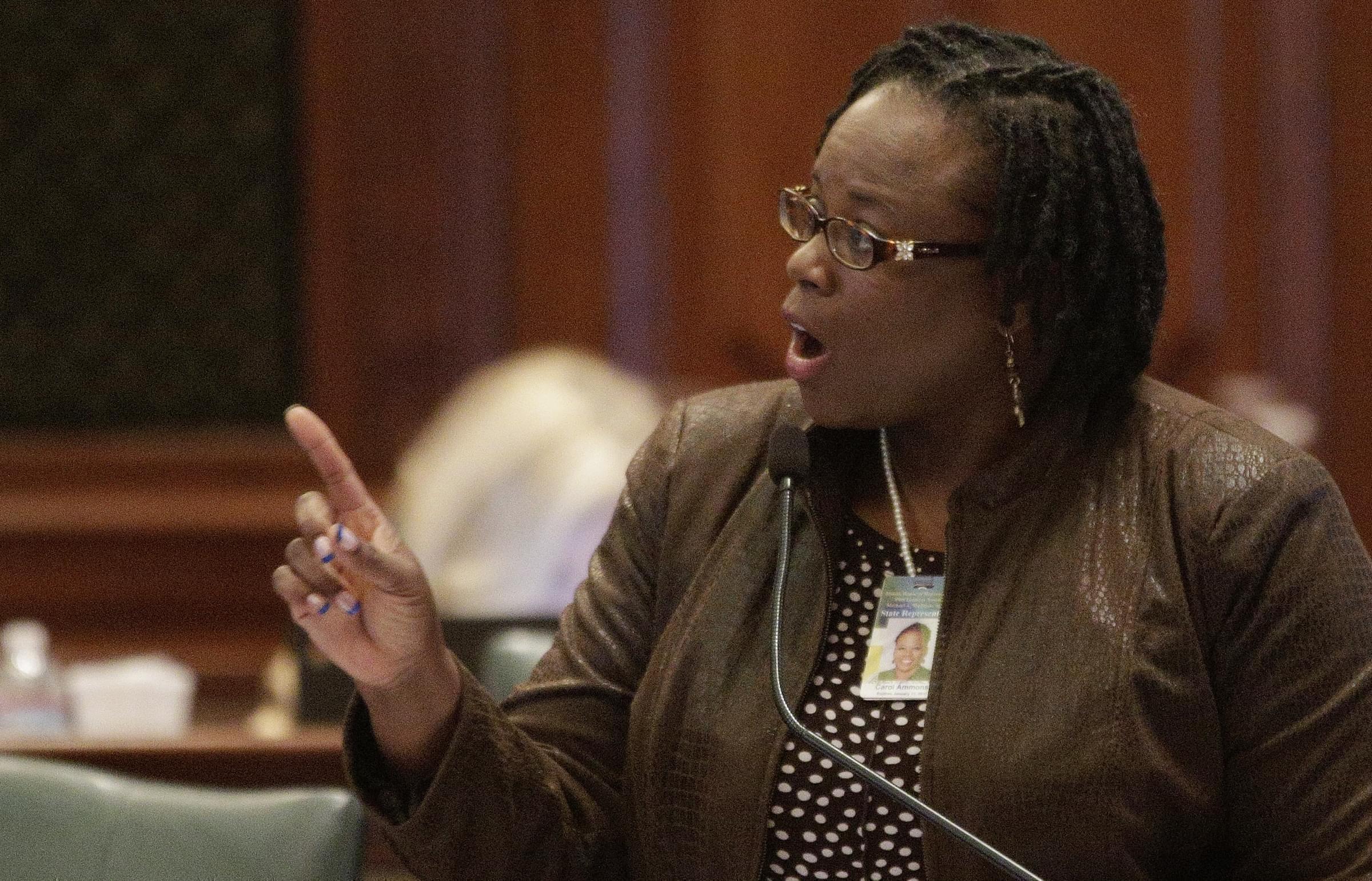
State Rep. Carol Ammons Wants More State Funding For Illinois Higher Ed

http://bit.ly/2RnTrpM

State Representative Carol Ammons wants to provide more state funding to Illinois universities and colleges. Ammons was recently appointed chair of the state’s Higher Education Committee.

She previously served as the vice-chair of the committee. Ammons spoke with Illinois Public Media about her top priorities for higher ed policy moving forward and how she’d like Illinois colleges and universities to spend any extra state dollars they receive on. She also weighed in on the recent sexual harassment scandals that have erupted at several colleges campuses across the state.  

This interview has been lightly edited for clarity and length. 

What are your top priorities as chair of this committee?

We have a few things that the (University of Illinois) and I have been working on, certainly to get more resources to the students of our university, to get those dollars from the state to help offset and to help lower the tuition — the tuition gap that keeps so many students from attending (the University of) Illinois. We’re going to work on that this session. I believe that the partnership with our new medical center and Carle (Foundation Hospital), there a few things that we need to do legislatively — I can’t speak to what they are at this point — but we’ll continue to work on making that a smooth transition so that the medical school can really grow and get up and running here in Champaign-Urbana. And then we want to look at the systems. We have a few problems with a couple of our systems that will come to the (Higher Education Committee) again this session. Southern Illinois University — they have some arguments between Carbondale and Edwardsville that have kind of been going on for some time. We hope to solve that this session and bring that system back together so that we can work together positively for the students that attend those schools.

The State Board of Higher Education has asked for a funding increase of 16 percent, and the justification for this is that state universities and colleges are underfunded and want to provide more opportunity for low-income students to attend. Do you support that kind of funding increase?

It’s difficult to say at this point because we’ve just begun to start our budget. We haven’t had team meetings yet as far as what’s available in our revenue streams. I do support an increase for higher education, and I have since I’ve been a member of the General Assembly. We’ve continued to try to increase the resources for MAP grants and other granting programs to help students come to those universities. Will we be able to meet a threshold of 15 percent in a budget? I can’t say at this point, but we will try to do our best to get as high as we can in the budget cycle this term.

It sounds like you do support a funding increase of some sort — maybe not 16 percent. Do you have a feeling or an opinion about how those funds should be used?

If there is an increase, I certainly want to see those funds going to the classrooms, to the students, to the professors to make sure that they can provide the resources that the students need. I also want to see some investment into the retention programs at the university. We have a really big push to bring more Illinois students to Illinois universities and part of that is the retention part for the universities, and we really need to invest money into the student services and into student access points. So if I were able to say that, I would certainly want those higher education institutions to drive that money to those really needed areas of student achievement of student support, of professors support, so that we can really continue to bring great minds to Illinois and not lose great scholarship. Those are really important focal points for me.

And are you concerned about excess spending on state college and university administration?

I am always concerned about that. If we are talking about improving the conditions for people, I believe that it shouldn’t be a pyramid. I think it should be a reverse triangle. We should always invest in those in the most difficult positions. We want to invest in students. We want to invest into faculty and we want to make sure we can invest into resources like student support organizations. Those are really, really important. And of course the institutions will hear that from me as the chair of (the Higher Education Committee), and never believe that we’re not paying them at the top enough.

And state universities, notably UIUC, have been dealing with sexual harassment allegations and investigations. Do you think campus sexual harassment policies need to change so that professors who have been found to exhibit clearly inappropriate behavior don’t just get a slap on the wrist?

Unfortunately, I just have absolutely no information on what the university’s policies are around sexual harassment. I hope that the university is reviewing what their policies are in light of so many allegations that have been taking place because we want to have a fair and equitable system to address these issues as they arise. But I will certainly be seeking to know as we go forward in the Higher Education Committee how the university is reviewing its policies and making the appropriate changes that protect the students as well as the faculty.

And I want to ask you about Discovery Partners Institute. Are you in support of this given that private investment in the venture is still kind of uncertain?

I am supportive of the DPI as it has been presented to us as local representatives. I do believe that the overarching principle of the DPI is to connect and fuse the Urbana-Champaign campus to the Chicago campus and to bring investment into central Illinois as well as into the northern part of the state. I hope that as we’ve talked over the last several meetings that those commitments from the private sector will remain true because the state has offered its commitment and given its resources to DPI, and hopefully within the next several months we can get the deal closed and continue to move on the ability to grow not only our technology industry at research park, but to grow our technology across the board so that we will have more and more access points at the University of Illinois Urbana-Champaign.

And, finally, I’m really interested in whether or not you and Gov. Pritzker are generally on the same page when it comes to higher education policy moving forward.

I’ll be meeting with the staff when we get back to Springfield on the objectives and the interests of the new governor. At this point, I’m not totally clear on what their objective is and where they’d like to go. Certainly, I know what mine is. I know what kind of work that we’re trying to do here from Urbana-Champaign, and hopefully those things align. I’ll have a better picture of that once we get back to session.

Follow Lee Gaines on Twitter: @LeeVGaines

010-Inoreader Saves,01-All No Sub,02-Pol,12-Coll,16-Econ,19-Legal,HE 2 Coalition,HE Blog,24-ILGA,25-Working,26-Delivered

via Illinois Public Media

January 29, 2019 at 07:01AM

State Rep. Carol Ammons Wants More State Funding For Illinois Higher Ed

http://bit.ly/2RnTrpM

State Representative Carol Ammons wants to provide more state funding to Illinois universities and colleges. Ammons was recently appointed chair of the state’s Higher Education Committee.

She previously served as the vice-chair of the committee. Ammons spoke with Illinois Public Media about her top priorities for higher ed policy moving forward and how she’d like Illinois colleges and universities to spend any extra state dollars they receive on. She also weighed in on the recent sexual harassment scandals that have erupted at several colleges campuses across the state.  

This interview has been lightly edited for clarity and length. 

What are your top priorities as chair of this committee?

We have a few things that the (University of Illinois) and I have been working on, certainly to get more resources to the students of our university, to get those dollars from the state to help offset and to help lower the tuition — the tuition gap that keeps so many students from attending (the University of) Illinois. We’re going to work on that this session. I believe that the partnership with our new medical center and Carle (Foundation Hospital), there a few things that we need to do legislatively — I can’t speak to what they are at this point — but we’ll continue to work on making that a smooth transition so that the medical school can really grow and get up and running here in Champaign-Urbana. And then we want to look at the systems. We have a few problems with a couple of our systems that will come to the (Higher Education Committee) again this session. Southern Illinois University — they have some arguments between Carbondale and Edwardsville that have kind of been going on for some time. We hope to solve that this session and bring that system back together so that we can work together positively for the students that attend those schools.

The State Board of Higher Education has asked for a funding increase of 16 percent, and the justification for this is that state universities and colleges are underfunded and want to provide more opportunity for low-income students to attend. Do you support that kind of funding increase?

It’s difficult to say at this point because we’ve just begun to start our budget. We haven’t had team meetings yet as far as what’s available in our revenue streams. I do support an increase for higher education, and I have since I’ve been a member of the General Assembly. We’ve continued to try to increase the resources for MAP grants and other granting programs to help students come to those universities. Will we be able to meet a threshold of 15 percent in a budget? I can’t say at this point, but we will try to do our best to get as high as we can in the budget cycle this term.

It sounds like you do support a funding increase of some sort — maybe not 16 percent. Do you have a feeling or an opinion about how those funds should be used?

If there is an increase, I certainly want to see those funds going to the classrooms, to the students, to the professors to make sure that they can provide the resources that the students need. I also want to see some investment into the retention programs at the university. We have a really big push to bring more Illinois students to Illinois universities and part of that is the retention part for the universities, and we really need to invest money into the student services and into student access points. So if I were able to say that, I would certainly want those higher education institutions to drive that money to those really needed areas of student achievement of student support, of professors support, so that we can really continue to bring great minds to Illinois and not lose great scholarship. Those are really important focal points for me.

And are you concerned about excess spending on state college and university administration?

I am always concerned about that. If we are talking about improving the conditions for people, I believe that it shouldn’t be a pyramid. I think it should be a reverse triangle. We should always invest in those in the most difficult positions. We want to invest in students. We want to invest into faculty and we want to make sure we can invest into resources like student support organizations. Those are really, really important. And of course the institutions will hear that from me as the chair of (the Higher Education Committee), and never believe that we’re not paying them at the top enough.

And state universities, notably UIUC, have been dealing with sexual harassment allegations and investigations. Do you think campus sexual harassment policies need to change so that professors who have been found to exhibit clearly inappropriate behavior don’t just get a slap on the wrist?

Unfortunately, I just have absolutely no information on what the university’s policies are around sexual harassment. I hope that the university is reviewing what their policies are in light of so many allegations that have been taking place because we want to have a fair and equitable system to address these issues as they arise. But I will certainly be seeking to know as we go forward in the Higher Education Committee how the university is reviewing its policies and making the appropriate changes that protect the students as well as the faculty.

And I want to ask you about Discovery Partners Institute. Are you in support of this given that private investment in the venture is still kind of uncertain?

I am supportive of the DPI as it has been presented to us as local representatives. I do believe that the overarching principle of the DPI is to connect and fuse the Urbana-Champaign campus to the Chicago campus and to bring investment into central Illinois as well as into the northern part of the state. I hope that as we’ve talked over the last several meetings that those commitments from the private sector will remain true because the state has offered its commitment and given its resources to DPI, and hopefully within the next several months we can get the deal closed and continue to move on the ability to grow not only our technology industry at research park, but to grow our technology across the board so that we will have more and more access points at the University of Illinois Urbana-Champaign.

And, finally, I’m really interested in whether or not you and Gov. Pritzker are generally on the same page when it comes to higher education policy moving forward.

I’ll be meeting with the staff when we get back to Springfield on the objectives and the interests of the new governor. At this point, I’m not totally clear on what their objective is and where they’d like to go. Certainly, I know what mine is. I know what kind of work that we’re trying to do here from Urbana-Champaign, and hopefully those things align. I’ll have a better picture of that once we get back to session.

Follow Lee Gaines on Twitter: @LeeVGaines

010-Inoreader Saves,01-All No Sub,02-Pol,12-Coll,16-Econ,19-Legal,HE 2 Coalition,HE Blog,24-ILGA,25-Working,26-Delivered

via Illinois Public Media

January 29, 2019 at 07:01AM

State Rep. Carol Ammons Wants More State Funding For Illinois Higher Ed

http://bit.ly/2RnTrpM

State Representative Carol Ammons wants to provide more state funding to Illinois universities and colleges. Ammons was recently appointed chair of the state’s Higher Education Committee.

She previously served as the vice-chair of the committee. Ammons spoke with Illinois Public Media about her top priorities for higher ed policy moving forward and how she’d like Illinois colleges and universities to spend any extra state dollars they receive on. She also weighed in on the recent sexual harassment scandals that have erupted at several colleges campuses across the state.  

This interview has been lightly edited for clarity and length. 

What are your top priorities as chair of this committee?

We have a few things that the (University of Illinois) and I have been working on, certainly to get more resources to the students of our university, to get those dollars from the state to help offset and to help lower the tuition — the tuition gap that keeps so many students from attending (the University of) Illinois. We’re going to work on that this session. I believe that the partnership with our new medical center and Carle (Foundation Hospital), there a few things that we need to do legislatively — I can’t speak to what they are at this point — but we’ll continue to work on making that a smooth transition so that the medical school can really grow and get up and running here in Champaign-Urbana. And then we want to look at the systems. We have a few problems with a couple of our systems that will come to the (Higher Education Committee) again this session. Southern Illinois University — they have some arguments between Carbondale and Edwardsville that have kind of been going on for some time. We hope to solve that this session and bring that system back together so that we can work together positively for the students that attend those schools.

The State Board of Higher Education has asked for a funding increase of 16 percent, and the justification for this is that state universities and colleges are underfunded and want to provide more opportunity for low-income students to attend. Do you support that kind of funding increase?

It’s difficult to say at this point because we’ve just begun to start our budget. We haven’t had team meetings yet as far as what’s available in our revenue streams. I do support an increase for higher education, and I have since I’ve been a member of the General Assembly. We’ve continued to try to increase the resources for MAP grants and other granting programs to help students come to those universities. Will we be able to meet a threshold of 15 percent in a budget? I can’t say at this point, but we will try to do our best to get as high as we can in the budget cycle this term.

It sounds like you do support a funding increase of some sort — maybe not 16 percent. Do you have a feeling or an opinion about how those funds should be used?

If there is an increase, I certainly want to see those funds going to the classrooms, to the students, to the professors to make sure that they can provide the resources that the students need. I also want to see some investment into the retention programs at the university. We have a really big push to bring more Illinois students to Illinois universities and part of that is the retention part for the universities, and we really need to invest money into the student services and into student access points. So if I were able to say that, I would certainly want those higher education institutions to drive that money to those really needed areas of student achievement of student support, of professors support, so that we can really continue to bring great minds to Illinois and not lose great scholarship. Those are really important focal points for me.

And are you concerned about excess spending on state college and university administration?

I am always concerned about that. If we are talking about improving the conditions for people, I believe that it shouldn’t be a pyramid. I think it should be a reverse triangle. We should always invest in those in the most difficult positions. We want to invest in students. We want to invest into faculty and we want to make sure we can invest into resources like student support organizations. Those are really, really important. And of course the institutions will hear that from me as the chair of (the Higher Education Committee), and never believe that we’re not paying them at the top enough.

And state universities, notably UIUC, have been dealing with sexual harassment allegations and investigations. Do you think campus sexual harassment policies need to change so that professors who have been found to exhibit clearly inappropriate behavior don’t just get a slap on the wrist?

Unfortunately, I just have absolutely no information on what the university’s policies are around sexual harassment. I hope that the university is reviewing what their policies are in light of so many allegations that have been taking place because we want to have a fair and equitable system to address these issues as they arise. But I will certainly be seeking to know as we go forward in the Higher Education Committee how the university is reviewing its policies and making the appropriate changes that protect the students as well as the faculty.

And I want to ask you about Discovery Partners Institute. Are you in support of this given that private investment in the venture is still kind of uncertain?

I am supportive of the DPI as it has been presented to us as local representatives. I do believe that the overarching principle of the DPI is to connect and fuse the Urbana-Champaign campus to the Chicago campus and to bring investment into central Illinois as well as into the northern part of the state. I hope that as we’ve talked over the last several meetings that those commitments from the private sector will remain true because the state has offered its commitment and given its resources to DPI, and hopefully within the next several months we can get the deal closed and continue to move on the ability to grow not only our technology industry at research park, but to grow our technology across the board so that we will have more and more access points at the University of Illinois Urbana-Champaign.

And, finally, I’m really interested in whether or not you and Gov. Pritzker are generally on the same page when it comes to higher education policy moving forward.

I’ll be meeting with the staff when we get back to Springfield on the objectives and the interests of the new governor. At this point, I’m not totally clear on what their objective is and where they’d like to go. Certainly, I know what mine is. I know what kind of work that we’re trying to do here from Urbana-Champaign, and hopefully those things align. I’ll have a better picture of that once we get back to session.

Follow Lee Gaines on Twitter: @LeeVGaines

010-Inoreader Saves,01-All No Sub,02-Pol,12-Coll,16-Econ,19-Legal,HE 2 Coalition,HE Blog,24-ILGA,25-Working,26-Delivered

via Illinois Public Media

January 29, 2019 at 07:01AM

Legislator proposes letting residents elect Aurora library board

http://bit.ly/2Sa1oU2

State Rep. Stephanie Kifowit thinks Aurora voters should decide if they want more direct control of the Aurora Public Library board.

The Aurora Democrat has proposed a bill that would allow residents to have a referendum question on whether to elect the board, or continue having members appointed by the mayor.


“It just seems over time the library board has become less and less responsive to the taxpaying residents,” Kifowit said Monday.

But Mayor Richard Irvin said that since taking office in 2017 he has taken measures to move the library toward greater self-sufficiency, including managing its own payroll and insurance services.

And he called Kifowit’s bill “incomplete.”

It “doesn’t reflect what a true autonomous taxing body should be. Had she taken the time to speak with the city or the library, a comprehensive bill could have been drafted based on simple communication and clear intention,” Irvin said in a prepared statement.

Recent turmoil over a proposal to move the library’s West Branch to a different site is part of the reason Kifowit is sponsoring the bill.

Residents did not know about the plans “until the mayor let it slip” last fall, Kifowit said. Irvin mentioned the idea at 5th Ward alderman’s meeting.

“That’s not proper representative government,” Kifowit said.

The library board has nine members, who are appointed by the mayor, with the approval of the city council. Board President John Savage has been on the board since November 2010; his appointment expires June 30, 2020, as do thee other members’ appointments. Four appointments expire June 30; and the last on June 30, 2021.

The board develops the library’s budget and tax levy, but it’s the city council that has the final vote on both. It appears from state law that even if the board was elected, the city would still get to vote on the budget and levy.


State Rep. Linda Chapa LaVia of Aurora has signed on as co-sponsor. Kifowit said she believes state Sen. Linda Holmes of Aurora will sponsor the bill in the Senate.

To get a referendum question on the ballot, residents would either have to collect signatures equivalent to 10 percent of the number of people who vote in a consolidated election or persuade the city council to put the question on the ballot.

The referendum could be held during a general-election primary. The next such primary is in March 2020.

If voters decide they want to elect board members, they would then vote for candidates in the 2021 consolidated election. They would choose one representative each from every city ward, and an at-large member, according to House Bill 910

In 2014, Kifowit enacted a law to allow residents of the Fox Valley Park District to elect its board. But last year, Gov. Bruce Rauner vetoed her bill to elect members of the Fox Metro Water Reclamation District board.


01-All No Sub,02-Pol,19-Legal,24-ILGA,25-Working,26-Delivered,E SSAI

Feeds,News,DuPage,Region: AH,Region: Suburbs,City: Arlington Heights

via DailyHerald.com > Top News http://bit.ly/174gVno

January 28, 2019 at 05:04PM

Legislator proposes letting residents elect Aurora library board

http://bit.ly/2Sa1oU2

State Rep. Stephanie Kifowit thinks Aurora voters should decide if they want more direct control of the Aurora Public Library board.

The Aurora Democrat has proposed a bill that would allow residents to have a referendum question on whether to elect the board, or continue having members appointed by the mayor.


“It just seems over time the library board has become less and less responsive to the taxpaying residents,” Kifowit said Monday.

But Mayor Richard Irvin said that since taking office in 2017 he has taken measures to move the library toward greater self-sufficiency, including managing its own payroll and insurance services.

And he called Kifowit’s bill “incomplete.”

It “doesn’t reflect what a true autonomous taxing body should be. Had she taken the time to speak with the city or the library, a comprehensive bill could have been drafted based on simple communication and clear intention,” Irvin said in a prepared statement.

Recent turmoil over a proposal to move the library’s West Branch to a different site is part of the reason Kifowit is sponsoring the bill.

Residents did not know about the plans “until the mayor let it slip” last fall, Kifowit said. Irvin mentioned the idea at 5th Ward alderman’s meeting.

“That’s not proper representative government,” Kifowit said.

The library board has nine members, who are appointed by the mayor, with the approval of the city council. Board President John Savage has been on the board since November 2010; his appointment expires June 30, 2020, as do thee other members’ appointments. Four appointments expire June 30; and the last on June 30, 2021.

The board develops the library’s budget and tax levy, but it’s the city council that has the final vote on both. It appears from state law that even if the board was elected, the city would still get to vote on the budget and levy.


State Rep. Linda Chapa LaVia of Aurora has signed on as co-sponsor. Kifowit said she believes state Sen. Linda Holmes of Aurora will sponsor the bill in the Senate.

To get a referendum question on the ballot, residents would either have to collect signatures equivalent to 10 percent of the number of people who vote in a consolidated election or persuade the city council to put the question on the ballot.

The referendum could be held during a general-election primary. The next such primary is in March 2020.

If voters decide they want to elect board members, they would then vote for candidates in the 2021 consolidated election. They would choose one representative each from every city ward, and an at-large member, according to House Bill 910

In 2014, Kifowit enacted a law to allow residents of the Fox Valley Park District to elect its board. But last year, Gov. Bruce Rauner vetoed her bill to elect members of the Fox Metro Water Reclamation District board.


01-All No Sub,02-Pol,19-Legal,24-ILGA,25-Working,26-Delivered,E SSAI

Feeds,News,DuPage,Region: AH,Region: Suburbs,City: Arlington Heights

via DailyHerald.com > Top News http://bit.ly/174gVno

January 28, 2019 at 05:04PM

Aurora area women in Springfield focus on mentoring, leadership

https://trib.in/2FRHLu5

Linda Chapa LaVia has come a long way from that young mom considering a run for public office back in 2001, who tried to hide in the corner at a hoity-toity fundraiser featuring U.S. Sen. Dick Durbin.

That’s the evening the long-time Illinois politician learned the Aurora woman was not only a small business owner and bilingual but also a United States Army veteran.

“Run, you will win,” Chapa LaVia recalls Durbin telling her point blank.

And she did — becoming the first female Latina outside Cook County to be elected to the Illinois House of Representatives.

With Democrats now holding a super majority, “there’s nowhere else to point the blame,” she rightfully noted. “We need to proceed with caution because with greater power comes greater responsibility.”

As does leadership.

“When we leave,” Holmes said, “we need to make sure other women are prepared to step into that role.”

Chapa LaVia said when she called her mother to tell her that her peers overwhelmingly voted her in as assistant majority leader, “I was so excited that I was crying … but I’m not sure she understood it all. For her, it was just another first.”

“I hope I can live up to her expectations,” Chapa LaVia said. “My most important role is to help women see their full potential.”

dcrosby@tribpub.com

Twitter @dencrosby

01-All No Sub,02-Pol,19-Legal,24-ILGA,26-Delivered,25-Working

City: Aurora,Region: W Suburbs,Opinion

via Beacon News Opinion – Aurora Beacon-News https://trib.in/2D6gBgz

January 28, 2019 at 06:06AM

Illinois House bill seeks more updates on closed nuclear facilities, including lakefront plant in Zion

https://trib.in/2sPPJv3

In what she describes as an effort to ensure protections for residents and the environment from residual radioactivity, state Rep. Joyce Mason, D-Gurnee, has introduced legislation to require biannual reports on nuclear power plants going through decommissioning.

Mason, whose district includes the former nuclear reactor facility in Zion that is currently being decommissioned, is sponsoring a bill that would require the Illinois Commerce Commission to provide a biannual report to the Illinois General Assembly on the issue.

“As a state representative whose district contains a decommissioning nuclear power plant, it is especially important for me to take extra precautions for the safety of my constituents,” Mason said in a statement released Friday.

“The process of decommissioning nuclear power plants can be complex and complicated, and requiring biannual reports is one more way for us as legislators to make sure that our communities are protected,” Mason added.

01-All No Sub,02-Pol,17-Energy,19-Legal,24-ILGA,E-NRG,25-Working,26-Delivered

Feeds,News,Region: Chicago,City: Chicago,Opinion

via Home – Chicago Tribune https://trib.in/1LjWzdx

January 27, 2019 at 07:18AM

Jehan Gordon-Booth Elected Deputy Majority Leader

http://bit.ly/2Hxpcge

State representative Jehan Gordan-Booth has a new job title. The Peoria democrat was recently elected Deputy Majority Leader for the Illinois House of Representatives.

01-All No Sub,02-Pol,19-Legal,24-ILGA,25-Working,26-Delivered

Feeds,News,Region: Peoria,City: Peoria,Region: Central

via http://bit.ly/22nyrPZ

January 25, 2019 at 07:27AM

Scherer to chair education committee

http://bit.ly/2RFl02G

Scherer to chair education committee MGN

ILLINOIS (WCIA) — State Rep. Sue Scherer, D-Decatur, will draw on her experience from 34 years as a public school teacher and legislative efforts to expand access to quality education as the new chair of the House Elementary & Secondary Education: Administration, Licensing & Charter School Committee.

“In order to provide a world-class education to our students, we need the best and brightest teachers to guide them and properly run schools to help them grow,” Scherer said. “This committee will be responsible for implementing policies that bring more qualified teachers to Illinois and help improve the way our schools function.”

Scherer previously served as vice-chair of the Elementary & Secondary Education: Licensing Administration & Oversight Committee. In her new role, Scherer will be responsible for heading the newly created committee to address education issues related to public school administration, licensing as well as charter school policies. Prior to serving in the General Assembly, Scherer was a public school teacher for more than 30 years in Central Illinois.

Throughout her tenure as a legislator, Scherer has worked to bring her experience in the classroom to the Statehouse. During her first term, Scherer championed legislation emphasizing the need for early childhood education by lowering the mandatory school attendance age. In her roles on various House education committees, Scherer also worked closely with Sen. Andy Manar on education funding reform.

“As a teacher, I saw firsthand how state policies impacted the way educators and administrators educate our children and operate our schools,” Scherer said. “I’m committed to working with members of this committee to support new laws that improve our schools here in Central Illinois and across the state.”

010-Inoreader Saves,02-Pol,09-ILSN,19-Legal,24-ILGA,25-Working,26-Delivered,XHLSN 3

via ILLINOISHOMEPAGE

January 22, 2019 at 10:07PM

Blog at WordPress.com.

Up ↑