Search

Working for Illinois Caucus

House Downstate Democrats work for the good people of Illinois

Tag

16-Econ

State Rep. Carol Ammons Wants More State Funding For Illinois Higher Ed

http://bit.ly/2RnTrpM

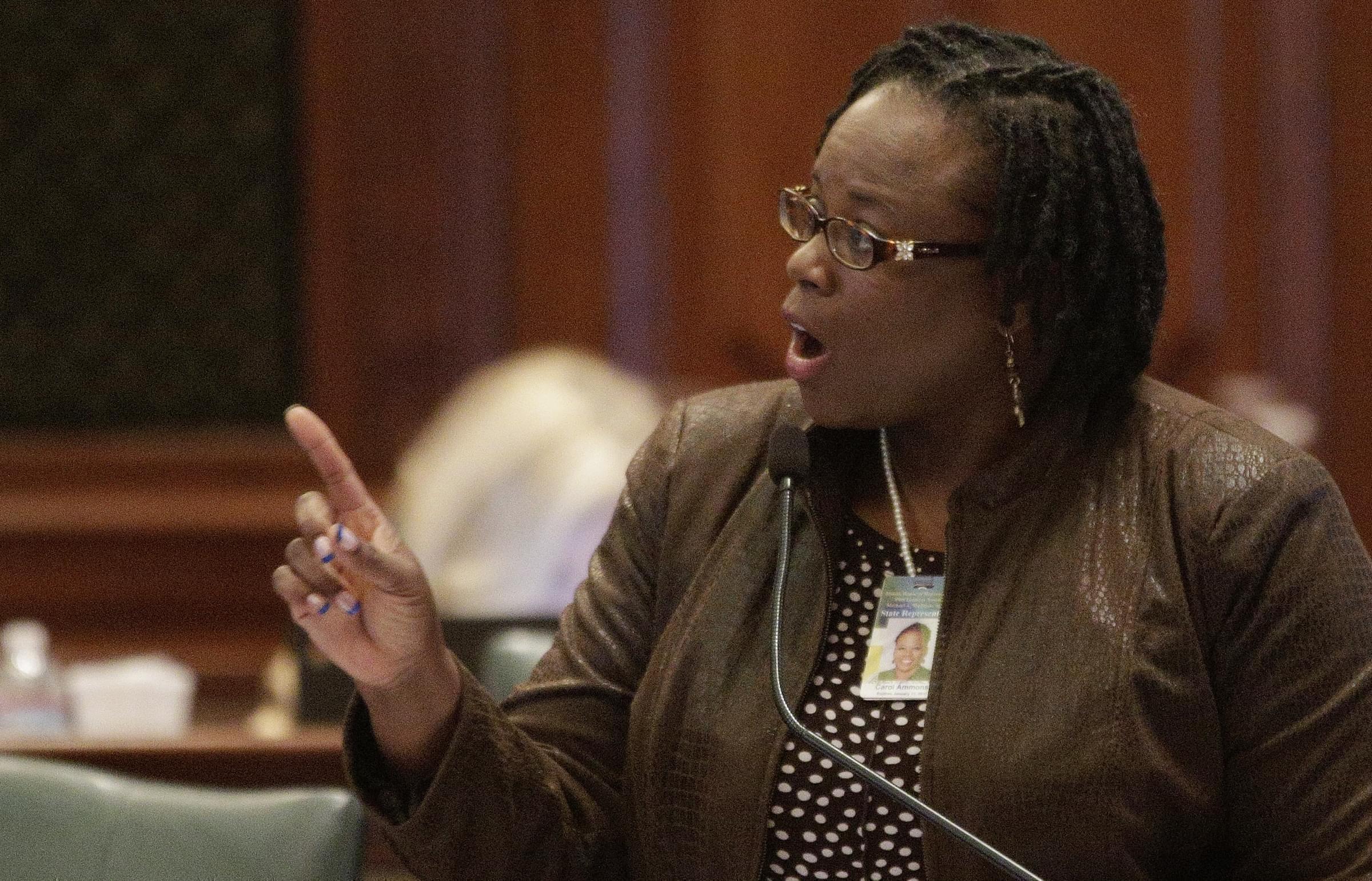
State Representative Carol Ammons wants to provide more state funding to Illinois universities and colleges. Ammons was recently appointed chair of the state’s Higher Education Committee.

She previously served as the vice-chair of the committee. Ammons spoke with Illinois Public Media about her top priorities for higher ed policy moving forward and how she’d like Illinois colleges and universities to spend any extra state dollars they receive on. She also weighed in on the recent sexual harassment scandals that have erupted at several colleges campuses across the state.  

This interview has been lightly edited for clarity and length. 

What are your top priorities as chair of this committee?

We have a few things that the (University of Illinois) and I have been working on, certainly to get more resources to the students of our university, to get those dollars from the state to help offset and to help lower the tuition — the tuition gap that keeps so many students from attending (the University of) Illinois. We’re going to work on that this session. I believe that the partnership with our new medical center and Carle (Foundation Hospital), there a few things that we need to do legislatively — I can’t speak to what they are at this point — but we’ll continue to work on making that a smooth transition so that the medical school can really grow and get up and running here in Champaign-Urbana. And then we want to look at the systems. We have a few problems with a couple of our systems that will come to the (Higher Education Committee) again this session. Southern Illinois University — they have some arguments between Carbondale and Edwardsville that have kind of been going on for some time. We hope to solve that this session and bring that system back together so that we can work together positively for the students that attend those schools.

The State Board of Higher Education has asked for a funding increase of 16 percent, and the justification for this is that state universities and colleges are underfunded and want to provide more opportunity for low-income students to attend. Do you support that kind of funding increase?

It’s difficult to say at this point because we’ve just begun to start our budget. We haven’t had team meetings yet as far as what’s available in our revenue streams. I do support an increase for higher education, and I have since I’ve been a member of the General Assembly. We’ve continued to try to increase the resources for MAP grants and other granting programs to help students come to those universities. Will we be able to meet a threshold of 15 percent in a budget? I can’t say at this point, but we will try to do our best to get as high as we can in the budget cycle this term.

It sounds like you do support a funding increase of some sort — maybe not 16 percent. Do you have a feeling or an opinion about how those funds should be used?

If there is an increase, I certainly want to see those funds going to the classrooms, to the students, to the professors to make sure that they can provide the resources that the students need. I also want to see some investment into the retention programs at the university. We have a really big push to bring more Illinois students to Illinois universities and part of that is the retention part for the universities, and we really need to invest money into the student services and into student access points. So if I were able to say that, I would certainly want those higher education institutions to drive that money to those really needed areas of student achievement of student support, of professors support, so that we can really continue to bring great minds to Illinois and not lose great scholarship. Those are really important focal points for me.

And are you concerned about excess spending on state college and university administration?

I am always concerned about that. If we are talking about improving the conditions for people, I believe that it shouldn’t be a pyramid. I think it should be a reverse triangle. We should always invest in those in the most difficult positions. We want to invest in students. We want to invest into faculty and we want to make sure we can invest into resources like student support organizations. Those are really, really important. And of course the institutions will hear that from me as the chair of (the Higher Education Committee), and never believe that we’re not paying them at the top enough.

And state universities, notably UIUC, have been dealing with sexual harassment allegations and investigations. Do you think campus sexual harassment policies need to change so that professors who have been found to exhibit clearly inappropriate behavior don’t just get a slap on the wrist?

Unfortunately, I just have absolutely no information on what the university’s policies are around sexual harassment. I hope that the university is reviewing what their policies are in light of so many allegations that have been taking place because we want to have a fair and equitable system to address these issues as they arise. But I will certainly be seeking to know as we go forward in the Higher Education Committee how the university is reviewing its policies and making the appropriate changes that protect the students as well as the faculty.

And I want to ask you about Discovery Partners Institute. Are you in support of this given that private investment in the venture is still kind of uncertain?

I am supportive of the DPI as it has been presented to us as local representatives. I do believe that the overarching principle of the DPI is to connect and fuse the Urbana-Champaign campus to the Chicago campus and to bring investment into central Illinois as well as into the northern part of the state. I hope that as we’ve talked over the last several meetings that those commitments from the private sector will remain true because the state has offered its commitment and given its resources to DPI, and hopefully within the next several months we can get the deal closed and continue to move on the ability to grow not only our technology industry at research park, but to grow our technology across the board so that we will have more and more access points at the University of Illinois Urbana-Champaign.

And, finally, I’m really interested in whether or not you and Gov. Pritzker are generally on the same page when it comes to higher education policy moving forward.

I’ll be meeting with the staff when we get back to Springfield on the objectives and the interests of the new governor. At this point, I’m not totally clear on what their objective is and where they’d like to go. Certainly, I know what mine is. I know what kind of work that we’re trying to do here from Urbana-Champaign, and hopefully those things align. I’ll have a better picture of that once we get back to session.

Follow Lee Gaines on Twitter: @LeeVGaines

010-Inoreader Saves,01-All No Sub,02-Pol,12-Coll,16-Econ,19-Legal,HE 2 Coalition,HE Blog,24-ILGA,25-Working,26-Delivered

via Illinois Public Media

January 29, 2019 at 07:01AM

State Rep. Bristow to partner with Treasurer’s Office to help residents find unclaimed property | RiverBender.com

http://bit.ly/2FwBFPx

ALTON – State Rep. Monica Bristow, D-Alton, is collaborating with the office of the Illinois State Treasurer to host an I-Cash event to help residents find lost or unclaimed property on Tuesday, January 22, from 1 p.m. to 5 p.m. in the History Room of the Six Mile Regional Library, located at 2001 Delmar Ave. in Granite City.
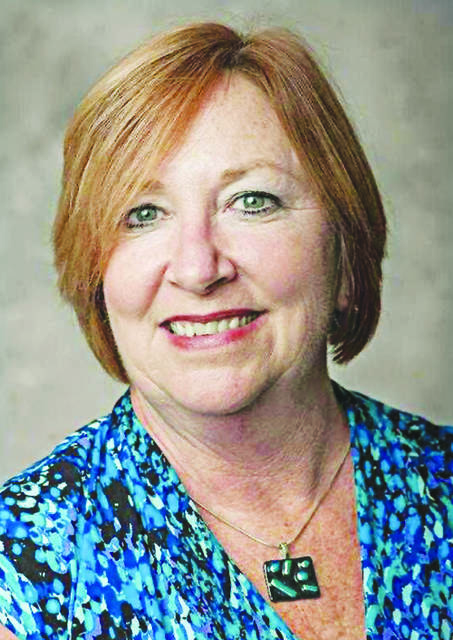
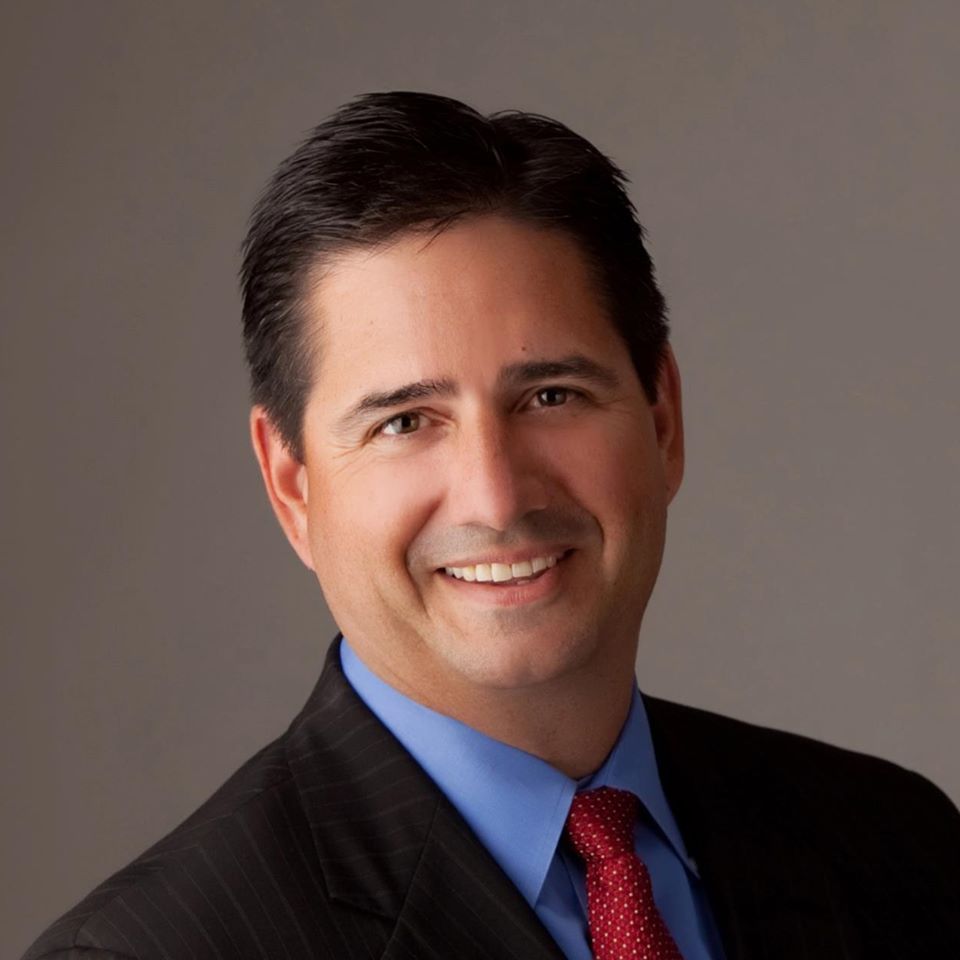
“Many people don’t even realize that they may have unclaimed property waiting for them in the treasurer’s office. If someone fails to collect a payroll or is owed a refund and does not collect it, these funds are held by the treasurer’s office until the rightful owner can claim them,” said Bristow. “To aide in this process, I am hosting an I-Cash event to help my constituents find any unclaimed property they may have.”

A representative from the Illinois State Treasurer’s office will be available to help residents search the state’s ICash system for unclaimed property owed to them by the state. The State Treasurer’s office holds $2.9 billion in unclaimed property, which can include checking and savings accounts, uncashed wage and payroll checks, uncashed stock dividends and stock certificates, insurance payments, utility deposits, customer deposits, accounts payable, credit balances, refund checks, money orders, traveler’s checks, mineral proceeds, court deposits, uncashed death benefit checks and life insurance proceeds.

“This program is a quick and simple process for anyone to check if they have unclaimed or forgotten property, and reservations are not required,” continued Bristow. “If you are unable to attend, you can check if you or any member of your family has unclaimed property in the Treasurer’s Office by visiting https://icash.illinoistreasurer.gov/.”

For more information, please call Rep. Bristow’s constituent service office at 618-465-5900 or email repmbristow@gmail.com.

Print Version

Submit a News Tip

010-Inoreader Saves,01-All No Sub,02-Pol,16-Econ,19-Legal,24-ILGA,25-Working,26-Delivered

via RiverBender.com

January 17, 2019 at 07:10AM

Salary history, teacher wage bills to come back next year

https://ift.tt/2TLnycU

SPRINGFIELD — During the first week of the Illinois General Assembly’s veto session, lawmakers voted to override Gov. Bruce Rauner’s vetoes or amendatory vetoes on dozens of bills.

At least two high-profile bills didn’t get override votes the first week: a bill to set a new minimum salary for Illinois school teachers and legislation to prohibit employers from asking for a salary history from job applicants.

Lawmakers can no longer take action on those bills during the remainder of the veto session, which wraps up next week. Here’s what’s in store for them as Democratic Gov.-elect JB Pritzker prepares to take office next year.

Minimum teacher salary

Sen. Andy Manar, D-Bunker Hill, said he’s not giving up on the idea of increasing the minimum salary that every school district in the state will have to pay their teachers.

“There have been ongoing conversations that haven’t stopped since going back to May when we passed the bill,” Manar said. “Those are going to continue. I would expect to re-file, if not a bill that’s exactly the same, something that’s very similar to what was filed and already passed in the General Assembly.”

The bill that already passed, Senate Bill 2892, gradually raises the minimum salary for teachers to $40,000 starting with the 2022-2023 school year. The current minimum salary for teachers is $9,000, a level set in law 38 years ago.

The bill set a minimum salary for teachers at $32,076 for the 2019-2020 school year. The delayed start of the bill was intended to give school districts time to adjust their budgets to accommodate the higher wage. Manar said that since a new law couldn’t be adopted until next year, he is open to discussing a further extension in the start date for raising the wage.

The bill also called for the minimum wage to be increased each year after reaching the $40,000 threshold to account for inflation.

The bill passed with bipartisan support in both the House and Senate. In the Senate, it got 37 “yes” votes, enough to override a veto. In the House, though, it only got 65 “yes” votes, significantly short of what is needed for an override.

And veto the bill outright is exactly what Rauner did. In his veto message, Rauner said the bill would amount to a “significant unfunded mandate” on school districts and take away local control over salaries. He said that alternatives like pay-for-performance and pay incentives for teachers with prior work experience could increase teacher compensation while preserving local control.

Manar said he’s heard concerns from superintendents about the potential cost.

“They are also at the same time concerned with the crisis of having a teacher shortage in the state,” Manar said.

Manar believes that setting a higher minimum teacher salary will entice more students into the profession.

Manar also said the costs of a higher minimum salary can be offset by the increased funding districts are receiving from the new school aid formula. The formula directs more state money to the neediest districts, the same ones that could face financial pressures from higher teacher salaries.

“I’m simply saying let’s not dismiss the idea that teachers have to be paid well,” Manar said. “Let’s not dismiss the idea that we have to find a reasonable way to pay for it. Let’s try to bring everyone together to get this accomplished.”

Salary history

Twice lawmakers approved a bill that prohibits employers from asking the salary history of an applicant. Twice Rauner used his amendatory veto powers to make changes to it.

Both times, there were not enough votes in the legislature to override Rauner’s changes, but neither did supporters want to accept his changes. Consequently, the bills died.

Rep. Anna Moeller, D-Elgin, said she’s probably going to try again, only this time with someone in the Governor’s Mansion who supports the idea.

“I think we’ll still have substantial support for it; it won’t need as many (votes) to override,” Moeller said.

The bill got 87 “yes” votes in the House, but squeaked by in the Senate with just 31 “yes” votes, just one more than the minimum needed to pass it.

Supporters said the idea was a way to combat gender pay inequality. Women often are paid less than their male counterparts, and allowing an employer to ask for a wage history is seen as a way to perpetuate that wage gap.

Rauner said he agreed that gender pay inequality is an issue that needs to be addressed but said a better way to do it was the way Massachusetts did it. He rewrote the Illinois bill to reflect that.

However, Moeller said she thinks the changes diluted the effectiveness of the bill as Illinois lawmakers wrote it and also weakened existing pay equity laws in the state.

“We don’t want to weaken what we’ve got; we want to strengthen what we’ve got,” she said.

She said supporters want to work with the business community to come to a compromise, but efforts have failed so far.

The Illinois Chamber of Commerce is opposed to the bill, but is willing to talk about it.

“Every time you have a new General Assembly coming in and new leadership in the governor’s office we’re always willing to take a fresh look at things and see if there is some flexibility,” said Chamber president and CEO Todd Maisch. “The reality is there are legitimate reasons to ask for someone’s wage history.”

Maisch said it is “more reasonable” to just ask for a wage history rather than use other methods to obtain the same information.

“There is a marketplace for salary,” he said. “Employers are always going to be interested to make sure that they’re putting a competitive offer on the table, but also not overpaying for a particular skill set.”

Moeller said she expects a new version of the bill next year will mirror what’s been tried before.

“We feel we have a very strong bill, a very good bill,” she said.


Contact Doug Finke: doug.finke@sj-r.com, 788-1527, twitter.com/dougfinkesjr.


00-Pol RT,16-Econ,19-Legal,XHLSN 3,26-Delivered,25-Working,E Moeller,RK Client

Feeds,State

via State News – Journal Star https://ift.tt/2q50IQ5

November 25, 2018 at 06:34PM

Bristow encourages area residents to shop local for Small Business Saturday

https://ift.tt/2QdRGyW

Bristow encourages area residents to shop local for Small Business Saturday

ALTON – As families begin shopping for the holiday season, state Rep. Monica Bristow, D-Godfrey, is encouraging area residents to support the Riverbend region’s local economy by shopping locally on Small Business Saturday, Nov. 24.

“During my time as President of the Riverbend Growth Association, I saw firsthand the meaningful influence that small businesses have in our community,” Bristow said. “Small businesses benefit our local economy and provide employment for our friends and neighbors.”

Saturday, Nov. 24 marks the 9th Annual Small Business Saturday, which was created to help small businesses compete with large retailers between the busy shopping days of Black Friday and Cyber Monday. Bristow is encouraging local residents to shop locally at small businesses this holiday season, as they offer unique goods for gifts, jobs for local residents, and support to local charities and organizations.

In her time as state representative, Bristow has made it a priority to make Illinois more business-friendly by cutting burdensome regulations and developing plans to encourage new businesses to start. One measure Bristow spearheaded, the Illinois Home Grown Business Opportunity Act, was recently signed into law by the governor.

“With my background in business, I made it my mission to come to Springfield and pass policies to reignite our state’s economic engines,” Bristow said. “I encourage local residents to return the enormous support small businesses provide to our community by shopping locally, not just on Small Business Saturday, but throughout the year as well.”

For more information, please contact Bristow’s full time constituent office at 618-465-5900 or RepMBristow@gmail.com.

00-Pol RT,25-Working,16-Econ,26-Delivered

Region: Metro East,City: Alton,News

via News RSS Feed https://ift.tt/2GriCHc

November 21, 2018 at 10:38AM

Newsradio WJPF interview with Jerry Costello II

https://ift.tt/2PXIwGI

Newsradio WJPF interview with Jerry Costello II


November 15, 2018
Robert Thies

Illinois State Representative Jerry Costello II (D, 116th House District) joins The Morning Newswatch.

00-Pol RT,16-Econ,17-Energy,19-Legal,25-Working,26-Delivered

Shows,Politics

via WJPF Morning Newswatch https://www.wjpf.com

November 15, 2018 at 09:37AM

Advocates, legislators make case to hike teacher’s salaries

https://ift.tt/2ykn1Vz

Connie Charlesworth, a supervising professor of student-teachers at Illinois College in Jacksonville, said Illinois college students are not going into teaching because of the low pay in many districts in the state. Charlesworth is a former teacher herself, who after 30 years of experience and having a master’s degree made $45,000. (BlueRoomStream.com)

State Rep. Sue Scherer (D-Decatur) remembers her time as a public school teacher and the continual issue she had with classroom supplies.

Early one school year, she broke the stapler that was in her classroom. She went to the main office to get a new one, but was turned away empty-handed.

“‘You should have anticipated that when you did your budget last May, There’s not enough money to buy you a new stapler,’” Scherer remembers being told. “I said, ‘I only got $110 and that doesn’t go very far to run an entire classroom for an entire year and my stapler wasn’t broke so I didn’t buy a new stapler.’”

The response was “‘Well, you’ll just have to wait till next year,’” Scherer recalled.

She said she wound up with a box of “everybody’s half-way-don’t-work staplers” as a way to get by.

When teachers dig into their own pocket to buy classroom supplies, clothe children and even get them eyeglasses, Scherer said at a Sept. 26 press conference in Springfield, it is unconscionable that Gov. Bruce Rauner vetoed a proposal that would have raised the minimum salary for teachers in Illinois to $40,000.

“This is about the last straw,” Scherer said. “… His veto was a slap in the face to educators.”

State Rep. Christian Mitchell (D-Chicago) and state Sen. Andy Manar (D-Bunker Hill) said they will lead the effort to override the governor’s veto.

Scherer said she remembers being told by one teaching colleague, “I spend more on my garden than we are allowed in teacher supplies.”

Scherer said that state will not attract young people, leaving college with mountains of student debt, to the teaching profession without competitive salaries. She noted that she knows of one school district that is short 34 teachers and the school year has already started.

“We have a severe teaching shortage in every area from Pre-K to eighth grade in every single subject,” Scherer said.

Connie Charlesworth, a longtime teacher at Triopia Junior/Senior High School in Morgan County, agreed.

Charlesworth, who now works as a supervising professor of student-teachers at Illinois College in Jacksonville, said that in some subject areas the number of licensed teachers is down one-third to one-half from what it was five years ago.

State Rep. Sue Scherer (D-Decatur) tells of her struggles with having adequate classroom supplies as a teacher. She said the lack of support and good pay for all teachers is gripping the state. “We have a severe teaching shortage in every area from Pre-K to eighth grade in every single subject,” Scherer said. (BlueRoomStream.com)

Having 30 years of classroom experience and a master’s degree, Charlesworth said she topped out at $45,000 before retiring from Triopia. At 43 years of age, Charlesworth became the sole bread winner for her family when her husband was killed in a farming accident.

She said the lack of livable wages is keeping many young people from entering the teaching profession.

“Our college students are not stupid. They know how to do the math,” Charlesworth said. “They’re taking a look at how much their education is costing them. They’re also taking a look at their starting salary as teachers and they have decided in great numbers not to go into the profession.

“Young people are voting with their feet,” she added. “I don’t think any of us want our children and grandchildren going to schools without highly qualified teachers … If we are going to doom them to gentile poverty, then kiss goodbye quality education in the state of Illinois.”

Manar said the teacher shortage is most greatly affecting underfunded school districts as determined by the State Board of Education’s new Evidence-Based Funding formula. The formula measures what an adequate funding target is for each school district in the state based on enrollment numbers, region of the state it is in and nearly three dozen other factors. Districts listed at 100 percent have enough money through state dollars and local taxes to adequately cover educational needs for all their students, according to the State Board of Education.

Manar said that in Metro East communities near St. Louis, teachers “can drive 15 miles and make five figures more,” noting that that has caused some “poaching” of top teachers.

Mitchell said the funding disparity between Illinois school districts needs to still be addressed. He noted a school library in his district had no books until donations came in while in Winnetka students are given free Chromebook computers.

In his veto of the legislation that would have ensured all teachers in Illinois made at least $40,000 per year by 2022-23, Governor Rauner said minimum pay legislation is neither the most efficient nor the most effective way to compensate teachers.

“This approach to teacher compensation both limits a school district’s local control and imposes a significant unfunded mandate on school districts,” Rauner said. “… Legislative action is not the most efficient way to maintain relevance.”

Rauner said there are innovative teacher compensation strategies that, if adopted and implemented, would preserve local control and protect districts from the burden of even more unfunded mandates.

“Things like pay-for-performance, diversified pay for teachers in hard-to-staff schools or subjects, or pay incentives for teachers with prior work experience are all viable options to provide greater compensation for teachers,” the governor said. “I highly encourage local school districts to adopt and implement the compensation structures that best suit their local needs.”


kbeese@chronicleillinois.com

00-Pol RT,09-ILSN,16-Econ,19-Legal,26-Delivered,25-Working,XHLSN 3

State,Region: Statewide,Politics

via State News – Chronicle Media https://ift.tt/2nXDppq

October 7, 2018 at 10:28AM

Yednock outraises Long 20-1 since GOP cutoff

https://ift.tt/2Qu6Ah4


Republican donors halted campaign donations to state Rep. Jerry Long (R-Streator) after a harassment allegation. Predictably, he’s now losing ground to Democratic challenger Lance Yednock.

Since the Sept. 13 announcement that the House Republican Office would stop financially supporting him, Long’s financial support has slowed to a trickle. As of Tuesday, he has one contribution of $7,500 on file since the HRO cut him off.

Meanwhile, Democrats have pounced on Long’s intra-party woes and poured money into Yednock’s coffers. Yednock has amassed $160,000 in 19 days and was sitting on $100,000 in reserves headed into Election Day.

Long, reached by cellular telephone, issued a brief reply and expressed no surprise with the now-lopsided figures.

“Well, of course, the Republican Party is not donating to my campaign and the Democratic Party is fully funding my opponent,” Long said. “You’ll see the quarterly report when it comes out. Thank you.”

A complete financial picture was not yet in hand because quarterly statements through Sept. 30 are beginning to trickle in. As of this morning, Yednock’s quarterly statement was on file but Long’s wasn’t.

Messages left for Yednock were not returned before press time today.


Tom Collins can be reached at (815) 220-6930 or courtreporter@newstrib.com. Follow him on Twitter @NT_Court.

00-Pol RT,16-Econ,19-Legal,26-Delivered,25-Working

La Salle,Feeds

via http://www.newstrib.com – RSS Results of type article https://ift.tt/2jxCixM

October 3, 2018 at 11:07AM

The push is on to override the veto of House Bill 4163

https://ift.tt/2zu8BUC

Podcasts

The push is on to override the veto of House Bill 4163

Photo: Newsradio 1240 & 93.5 FM WTAX


The push is on to override the veto of House Bill 4163

Posted on by joeym

Joey McLaughlin talks with Illinois State Representative Anna Moeller about the move to override the veto of the wage equity act.


More Podcasts

Tuesday, September 25, 201809/25/2018

Joey McLaughlin talks with Illinois State Representative Anna Moeller about the move to override the veto of the wage equity act.

Tuesday, September 25, 201809/25/2018

Joey McLaughlin talks with Illinois Department of Public Health Chief Medical Officer Dr. Jennifer Layden about flu shots.

Tuesday, September 25, 201809/25/2018

Colleges and universities are wrestling with a rise in sexual assault claims, lawsuits brought by those accused of assault and conflicting direction by courts and the federal government on how to handle them.

Monday, September 24, 201809/24/2018

Lawmakers vow to override governor’s salary history bill veto

https://ift.tt/2N093xe

SPRINGFIELD, Ill. (WLS) —

Governor Bruce Rauner is under fire for his veto of a bill that would have tightened up the state’s equal pay law by prohibiting companies from asking someone salary history

Some Democratic lawmakers said that decision will cost the governor a lot of support come Election Day.

The governor vetoed a similar bill last year but this time used an amendatory veto to rewrite the bill.

HB4163 bill is intended to help women narrow the wage gap that pays them, on average in Illinois, 79 cents for every dollar a man earns. The governor’s veto was seen by some as a slap in the face.

"Governor Rauner, in vetoing this bill a second time in two years, has shown who he really is: an out of touch and failed governor who cares very little about the economic welfare of women and families in Illinois," said State Rep. Anna Moeller (D-43rd District), one of the bill’s sponsors.

She and other lawmakers vowed to override the governor’s veto in November.

In his veto message Rauner said, "I am committed to eliminating the gender wage gap and I strongly support wage equality. I noted in my prior veto message that Massachusetts already has established a best-in-the-country approach to the issue of employers inquiring about salary history. I recommended that Illinois model its legal regime on Massachusetts’ model. Unfortunately, legislators again refused to push forward a bipartisan approach that properly balanced the interests of the business community."

"What I can tell you as a small business owner in the hiring process, the only time I’ve ever asked for prior salary is when I’m trying to negotiate paying somebody less," said Alexandra Eidenberg, small business owner.

An attorney who does work for the Illinois Chamber of Commerce, which opposed the bill, said it was too restrictive on businesses in the factors that can be used to set someone’s salary.

"So if you wanted to say a bachelor’s degree is a requirement for this job, since education is not one of the listed items in the bill, that would have to be the only basis for setting the pay. So you couldn’t use seniority or someone’s experience or years and ability you could only use education," said Sara Zorich, partner at Smith Amundsen.

But critics said the governor’s veto makes it easier for employers to get away with discrimination as long as they are working to make progress in eliminating the wage gap.

"There is no defined ‘what is progress,’ there is no defined ‘what is that self evaluation, what does it look like,’ there is none of that defined," said State Sen. Cristina Castro, (D) bill sponsor.

The original bill had plenty of support in the House to override the governor’s veto, but was five vote shy in the Senate.

(Copyright ©2018 WLS-TV. All Rights Reserved.)

010-Inoreader Saves,00-Pol RT,16-Econ,19-Legal,26-Delivered,25-Working,06-RK Email 11,RK Client

via ABC7 Chicago

September 24, 2018 at 05:12PM