Search

Working for Illinois Caucus

House Downstate Democrats work for the good people of Illinois

Tag

16-Econ

Prescription drug reform in Illinois

https://ift.tt/2Uf3nnJ

Prescription drug reform in Illinois

Posted on by joeym

Joey McLaughlin talks with Illinois state Representative Anna Moeller about the  House Prescription Drug Affordability and Access Committee and the House Democrats pushing their legislative package for prescription drug reform.

15-Health,25-Working,26-Delivered,01-All No Sub,RK Client,E Moeller,02-Pol,19-Legal,24-ILGA,16-Econ,HL,HL New,RKPRS HL

Shows,Politics

via Podcasts – Newsradio 1240 & 93.5 FM WTAX https://wtax.com

March 1, 2019 at 12:00PM

Prescription drug reform in Illinois

https://ift.tt/2Uf3nnJ

Prescription drug reform in Illinois

Posted on by joeym

Joey McLaughlin talks with Illinois state Representative Anna Moeller about the  House Prescription Drug Affordability and Access Committee and the House Democrats pushing their legislative package for prescription drug reform.

15-Health,01-All No Sub,02-Pol,19-Legal,16-Econ,E Moeller,RK Client,24-ILGA,25-Working,26-Delivered,HL,HL New,RKPRS HL

Shows,Politics

via Podcasts – Newsradio 1240 & 93.5 FM WTAX https://wtax.com

March 1, 2019 at 12:00PM

State Rep. Lance Yednock gives reaction to Gov. J.B Pritzker’s budget address

https://ift.tt/2Slv6l3

State Rep. Lance Yednock gives reaction to Gov. J.B Pritzker’s budget address

Illinois State Capitol Building- Springfield – Studstill Media Photo

OTTAWA – State Rep. Lance Yednock gave his reactions to Gov. J.B Pritzker’s budget address, Wednesday. Rep. Yednock says digging our state out of the financial mess left by former governors will take tough decisions and work from both parties to find solutions that put middle-class families first. In his budget address to the general assembly, Gov. Pritzker laid out options to fix the state’s budget deficit including rejecting imposing additional income, retirement and sales taxes on the middle class and instead enact a fair income tax. Pritzker says it would lift some of the tax burden off of middle income earners and instead ask the wealthiest to pay a little more.


Prizker addressed a built-in multi-billion-dollar deficit of funding for schools and universities and human services that most families rely upon and asks to put an end to hallowing out vital government services.

01-All No Sub,02-Pol,16-Econ,19-Legal,24-ILGA,25-Working,26-Delivered

Region: Northern,Feeds,News,Region: La Salle

via WSPL https://ift.tt/2Jv81bQ

February 21, 2019 at 05:50PM

State Rep. Stuart highlights her economic priorities following Gov. Pritzker’s budget address

https://ift.tt/2SPJW88

SPRINGFIELD, Ill. – After J.B. Pritzker delivered his first budget address as governor today, state Rep. Katie Stuart, D-Edwardsville, highlighted her economic priorities to help improve Illinois’ fiscal health.

“After four years of failed leadership, it is important that as we move forward in budget negotiations we ensure everyone has a seat at the table. We need both Democrats and Republicans to be ready to compromise and do what is best for Illinois,” said Stuart. “I am ready to compromise and craft a state budget that protects essential services, and pays down the enormous backlog of unpaid bills.”

Throughout her time in Springfield, Stuart has been a strong opponent to any new taxes on middle-class families, committing to fighting proposals like a mileage tax and a retirement income tax, and she voted against the 32 percent income tax increase that took effect in 2017.

“We still have a lot to negotiate in terms of what the budget will look like. The recent proposal of implementing a mileage tax to solve the state’s budgetary woes is concerning to me, especially in the Metro East and southern Illinois where we do not have public transit options readily available. Living in a rural community often requires families to drive long distances for work, school or just to buy groceries,” continued Stuart. “Paying down the backlog of unpaid bills is one of my top priorities to get our financial house in order, but I believe we must do so by asking millionaires and billionaires to pay their fair share and responsibly controlling state spending, not by increasing taxes on those who are already struggling to make ends meet.”

For more information, contact Stuart’s full-time constituent service office at 618-365-6650.


Print Version


Submit a News Tip


01-All No Sub,02-Pol,16-Econ,19-Legal,24-ILGA,25-Working,26-Delivered

Region: Metro East,City: Alton,Feeds,News,Southern

via RiverBender.com News https://ift.tt/20GIkqu

February 20, 2019 at 03:05PM

Bill would require faster reporting of opioid dispensing

http://bit.ly/2t62Kku

Pharmacies in Illinois would have less time to report dispensing opioid medications and other controlled substances under a bill making its way through the General Assembly.

The House Human Services Committee on Wednesday advanced a bill that would require pharmacies to file those reports by the end of the business day on which controlled substances are dispensed. Current law gives them until the end of the following business day.

“It ensures that medical providers have a complete picture of what their patients are taking so that they’re not over-prescribing opioids to patients who misuse or, actually, frequently then sell the fraudulent medication,” Rep. Katie Stuart, D-Edwardsville, the bill’s sponsor, told the committee during testimony.

She said the bill is an attempt to prevent what she called “doctor shopping.” Under current law, she said, people trying to obtain illicit doses can visit multiple doctors over a 48-hour period and receive multiple prescriptions before any of those prescriptions are reported.

In an interview after the hearing, Stuart said the nation’s opioid epidemic has affected nearly every community, including her home community of Edwardsville.

“Some areas in my district and the surrounding area have really been hit hard, so I’ve been just talking to folks, trying to approach it from every angle that we can and look at every way we can stop this,” she said.

Although the bill passed out of the committee unanimously, some members suggested it might need technical amendments to define what constitutes a business day, and how that would apply to pharmacies that are open 24 hours a day.

E-ISVMA All,15-Health,01-All No Sub,17-Energy,02-Pol,19-Legal,24-ILGA,010-Inoreader Saves,16-Econ,25-Working,26-Delivered,RKPRS HL,HL,HL New

via Effingham Daily News

February 6, 2019 at 10:28PM

Bill would require faster reporting of opioid dispensing

http://bit.ly/2t62Kku

Pharmacies in Illinois would have less time to report dispensing opioid medications and other controlled substances under a bill making its way through the General Assembly.

The House Human Services Committee on Wednesday advanced a bill that would require pharmacies to file those reports by the end of the business day on which controlled substances are dispensed. Current law gives them until the end of the following business day.

“It ensures that medical providers have a complete picture of what their patients are taking so that they’re not over-prescribing opioids to patients who misuse or, actually, frequently then sell the fraudulent medication,” Rep. Katie Stuart, D-Edwardsville, the bill’s sponsor, told the committee during testimony.

She said the bill is an attempt to prevent what she called “doctor shopping.” Under current law, she said, people trying to obtain illicit doses can visit multiple doctors over a 48-hour period and receive multiple prescriptions before any of those prescriptions are reported.

In an interview after the hearing, Stuart said the nation’s opioid epidemic has affected nearly every community, including her home community of Edwardsville.

“Some areas in my district and the surrounding area have really been hit hard, so I’ve been just talking to folks, trying to approach it from every angle that we can and look at every way we can stop this,” she said.

Although the bill passed out of the committee unanimously, some members suggested it might need technical amendments to define what constitutes a business day, and how that would apply to pharmacies that are open 24 hours a day.

E-ISVMA All,15-Health,01-All No Sub,17-Energy,02-Pol,19-Legal,24-ILGA,010-Inoreader Saves,16-Econ,25-Working,26-Delivered,RKPRS HL,HL,HL New

via Effingham Daily News

February 6, 2019 at 10:28PM

Bill would require faster reporting of opioid dispensing

http://bit.ly/2t62Kku

Pharmacies in Illinois would have less time to report dispensing opioid medications and other controlled substances under a bill making its way through the General Assembly.

The House Human Services Committee on Wednesday advanced a bill that would require pharmacies to file those reports by the end of the business day on which controlled substances are dispensed. Current law gives them until the end of the following business day.

“It ensures that medical providers have a complete picture of what their patients are taking so that they’re not over-prescribing opioids to patients who misuse or, actually, frequently then sell the fraudulent medication,” Rep. Katie Stuart, D-Edwardsville, the bill’s sponsor, told the committee during testimony.

She said the bill is an attempt to prevent what she called “doctor shopping.” Under current law, she said, people trying to obtain illicit doses can visit multiple doctors over a 48-hour period and receive multiple prescriptions before any of those prescriptions are reported.

In an interview after the hearing, Stuart said the nation’s opioid epidemic has affected nearly every community, including her home community of Edwardsville.

“Some areas in my district and the surrounding area have really been hit hard, so I’ve been just talking to folks, trying to approach it from every angle that we can and look at every way we can stop this,” she said.

Although the bill passed out of the committee unanimously, some members suggested it might need technical amendments to define what constitutes a business day, and how that would apply to pharmacies that are open 24 hours a day.

E-ISVMA All,15-Health,01-All No Sub,17-Energy,02-Pol,19-Legal,24-ILGA,010-Inoreader Saves,16-Econ,25-Working,26-Delivered,RKPRS HL,HL,HL New

via Effingham Daily News

February 6, 2019 at 10:28PM

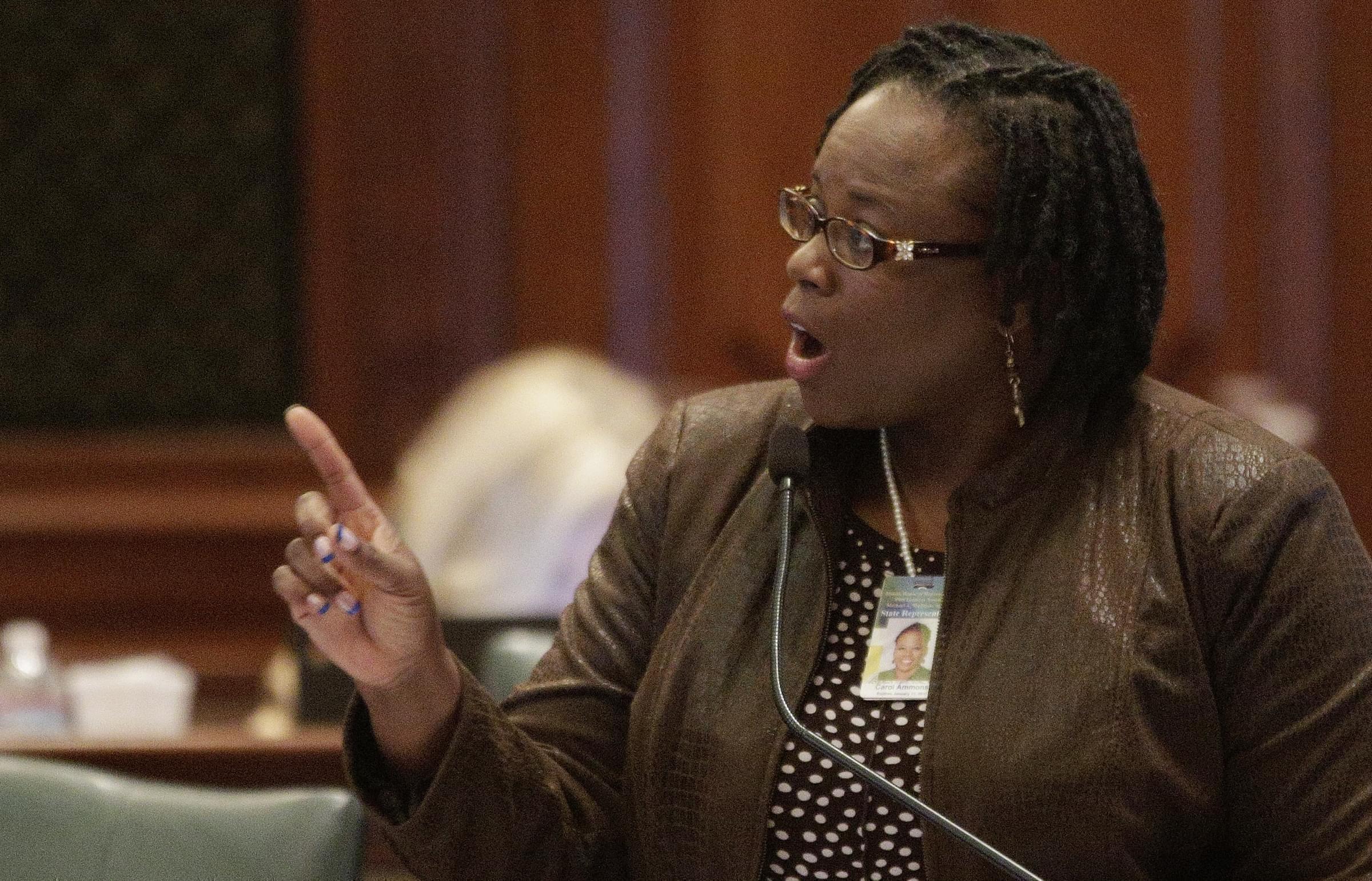
State Rep. Carol Ammons Wants More State Funding For Illinois Higher Ed

http://bit.ly/2RnTrpM

State Representative Carol Ammons wants to provide more state funding to Illinois universities and colleges. Ammons was recently appointed chair of the state’s Higher Education Committee.

She previously served as the vice-chair of the committee. Ammons spoke with Illinois Public Media about her top priorities for higher ed policy moving forward and how she’d like Illinois colleges and universities to spend any extra state dollars they receive on. She also weighed in on the recent sexual harassment scandals that have erupted at several colleges campuses across the state.  

This interview has been lightly edited for clarity and length. 

What are your top priorities as chair of this committee?

We have a few things that the (University of Illinois) and I have been working on, certainly to get more resources to the students of our university, to get those dollars from the state to help offset and to help lower the tuition — the tuition gap that keeps so many students from attending (the University of) Illinois. We’re going to work on that this session. I believe that the partnership with our new medical center and Carle (Foundation Hospital), there a few things that we need to do legislatively — I can’t speak to what they are at this point — but we’ll continue to work on making that a smooth transition so that the medical school can really grow and get up and running here in Champaign-Urbana. And then we want to look at the systems. We have a few problems with a couple of our systems that will come to the (Higher Education Committee) again this session. Southern Illinois University — they have some arguments between Carbondale and Edwardsville that have kind of been going on for some time. We hope to solve that this session and bring that system back together so that we can work together positively for the students that attend those schools.

The State Board of Higher Education has asked for a funding increase of 16 percent, and the justification for this is that state universities and colleges are underfunded and want to provide more opportunity for low-income students to attend. Do you support that kind of funding increase?

It’s difficult to say at this point because we’ve just begun to start our budget. We haven’t had team meetings yet as far as what’s available in our revenue streams. I do support an increase for higher education, and I have since I’ve been a member of the General Assembly. We’ve continued to try to increase the resources for MAP grants and other granting programs to help students come to those universities. Will we be able to meet a threshold of 15 percent in a budget? I can’t say at this point, but we will try to do our best to get as high as we can in the budget cycle this term.

It sounds like you do support a funding increase of some sort — maybe not 16 percent. Do you have a feeling or an opinion about how those funds should be used?

If there is an increase, I certainly want to see those funds going to the classrooms, to the students, to the professors to make sure that they can provide the resources that the students need. I also want to see some investment into the retention programs at the university. We have a really big push to bring more Illinois students to Illinois universities and part of that is the retention part for the universities, and we really need to invest money into the student services and into student access points. So if I were able to say that, I would certainly want those higher education institutions to drive that money to those really needed areas of student achievement of student support, of professors support, so that we can really continue to bring great minds to Illinois and not lose great scholarship. Those are really important focal points for me.

And are you concerned about excess spending on state college and university administration?

I am always concerned about that. If we are talking about improving the conditions for people, I believe that it shouldn’t be a pyramid. I think it should be a reverse triangle. We should always invest in those in the most difficult positions. We want to invest in students. We want to invest into faculty and we want to make sure we can invest into resources like student support organizations. Those are really, really important. And of course the institutions will hear that from me as the chair of (the Higher Education Committee), and never believe that we’re not paying them at the top enough.

And state universities, notably UIUC, have been dealing with sexual harassment allegations and investigations. Do you think campus sexual harassment policies need to change so that professors who have been found to exhibit clearly inappropriate behavior don’t just get a slap on the wrist?

Unfortunately, I just have absolutely no information on what the university’s policies are around sexual harassment. I hope that the university is reviewing what their policies are in light of so many allegations that have been taking place because we want to have a fair and equitable system to address these issues as they arise. But I will certainly be seeking to know as we go forward in the Higher Education Committee how the university is reviewing its policies and making the appropriate changes that protect the students as well as the faculty.

And I want to ask you about Discovery Partners Institute. Are you in support of this given that private investment in the venture is still kind of uncertain?

I am supportive of the DPI as it has been presented to us as local representatives. I do believe that the overarching principle of the DPI is to connect and fuse the Urbana-Champaign campus to the Chicago campus and to bring investment into central Illinois as well as into the northern part of the state. I hope that as we’ve talked over the last several meetings that those commitments from the private sector will remain true because the state has offered its commitment and given its resources to DPI, and hopefully within the next several months we can get the deal closed and continue to move on the ability to grow not only our technology industry at research park, but to grow our technology across the board so that we will have more and more access points at the University of Illinois Urbana-Champaign.

And, finally, I’m really interested in whether or not you and Gov. Pritzker are generally on the same page when it comes to higher education policy moving forward.

I’ll be meeting with the staff when we get back to Springfield on the objectives and the interests of the new governor. At this point, I’m not totally clear on what their objective is and where they’d like to go. Certainly, I know what mine is. I know what kind of work that we’re trying to do here from Urbana-Champaign, and hopefully those things align. I’ll have a better picture of that once we get back to session.

Follow Lee Gaines on Twitter: @LeeVGaines

010-Inoreader Saves,01-All No Sub,02-Pol,12-Coll,16-Econ,19-Legal,HE 2 Coalition,HE Blog,24-ILGA,25-Working,26-Delivered

via Illinois Public Media

January 29, 2019 at 07:01AM

State Rep. Carol Ammons Wants More State Funding For Illinois Higher Ed

http://bit.ly/2RnTrpM

State Representative Carol Ammons wants to provide more state funding to Illinois universities and colleges. Ammons was recently appointed chair of the state’s Higher Education Committee.

She previously served as the vice-chair of the committee. Ammons spoke with Illinois Public Media about her top priorities for higher ed policy moving forward and how she’d like Illinois colleges and universities to spend any extra state dollars they receive on. She also weighed in on the recent sexual harassment scandals that have erupted at several colleges campuses across the state.  

This interview has been lightly edited for clarity and length. 

What are your top priorities as chair of this committee?

We have a few things that the (University of Illinois) and I have been working on, certainly to get more resources to the students of our university, to get those dollars from the state to help offset and to help lower the tuition — the tuition gap that keeps so many students from attending (the University of) Illinois. We’re going to work on that this session. I believe that the partnership with our new medical center and Carle (Foundation Hospital), there a few things that we need to do legislatively — I can’t speak to what they are at this point — but we’ll continue to work on making that a smooth transition so that the medical school can really grow and get up and running here in Champaign-Urbana. And then we want to look at the systems. We have a few problems with a couple of our systems that will come to the (Higher Education Committee) again this session. Southern Illinois University — they have some arguments between Carbondale and Edwardsville that have kind of been going on for some time. We hope to solve that this session and bring that system back together so that we can work together positively for the students that attend those schools.

The State Board of Higher Education has asked for a funding increase of 16 percent, and the justification for this is that state universities and colleges are underfunded and want to provide more opportunity for low-income students to attend. Do you support that kind of funding increase?

It’s difficult to say at this point because we’ve just begun to start our budget. We haven’t had team meetings yet as far as what’s available in our revenue streams. I do support an increase for higher education, and I have since I’ve been a member of the General Assembly. We’ve continued to try to increase the resources for MAP grants and other granting programs to help students come to those universities. Will we be able to meet a threshold of 15 percent in a budget? I can’t say at this point, but we will try to do our best to get as high as we can in the budget cycle this term.

It sounds like you do support a funding increase of some sort — maybe not 16 percent. Do you have a feeling or an opinion about how those funds should be used?

If there is an increase, I certainly want to see those funds going to the classrooms, to the students, to the professors to make sure that they can provide the resources that the students need. I also want to see some investment into the retention programs at the university. We have a really big push to bring more Illinois students to Illinois universities and part of that is the retention part for the universities, and we really need to invest money into the student services and into student access points. So if I were able to say that, I would certainly want those higher education institutions to drive that money to those really needed areas of student achievement of student support, of professors support, so that we can really continue to bring great minds to Illinois and not lose great scholarship. Those are really important focal points for me.

And are you concerned about excess spending on state college and university administration?

I am always concerned about that. If we are talking about improving the conditions for people, I believe that it shouldn’t be a pyramid. I think it should be a reverse triangle. We should always invest in those in the most difficult positions. We want to invest in students. We want to invest into faculty and we want to make sure we can invest into resources like student support organizations. Those are really, really important. And of course the institutions will hear that from me as the chair of (the Higher Education Committee), and never believe that we’re not paying them at the top enough.

And state universities, notably UIUC, have been dealing with sexual harassment allegations and investigations. Do you think campus sexual harassment policies need to change so that professors who have been found to exhibit clearly inappropriate behavior don’t just get a slap on the wrist?

Unfortunately, I just have absolutely no information on what the university’s policies are around sexual harassment. I hope that the university is reviewing what their policies are in light of so many allegations that have been taking place because we want to have a fair and equitable system to address these issues as they arise. But I will certainly be seeking to know as we go forward in the Higher Education Committee how the university is reviewing its policies and making the appropriate changes that protect the students as well as the faculty.

And I want to ask you about Discovery Partners Institute. Are you in support of this given that private investment in the venture is still kind of uncertain?

I am supportive of the DPI as it has been presented to us as local representatives. I do believe that the overarching principle of the DPI is to connect and fuse the Urbana-Champaign campus to the Chicago campus and to bring investment into central Illinois as well as into the northern part of the state. I hope that as we’ve talked over the last several meetings that those commitments from the private sector will remain true because the state has offered its commitment and given its resources to DPI, and hopefully within the next several months we can get the deal closed and continue to move on the ability to grow not only our technology industry at research park, but to grow our technology across the board so that we will have more and more access points at the University of Illinois Urbana-Champaign.

And, finally, I’m really interested in whether or not you and Gov. Pritzker are generally on the same page when it comes to higher education policy moving forward.

I’ll be meeting with the staff when we get back to Springfield on the objectives and the interests of the new governor. At this point, I’m not totally clear on what their objective is and where they’d like to go. Certainly, I know what mine is. I know what kind of work that we’re trying to do here from Urbana-Champaign, and hopefully those things align. I’ll have a better picture of that once we get back to session.

Follow Lee Gaines on Twitter: @LeeVGaines
010-Inoreader Saves,01-All No Sub,02-Pol,12-Coll,16-Econ,19-Legal,HE 2 Coalition,HE Blog,24-ILGA,25-Working,26-Delivered

via Illinois Public Media

January 29, 2019 at 07:01AM

Blog at WordPress.com.

Up ↑