Aurora area residents can have their say coming up concerning the legislative redistricting process in Illinois.
via chicagotribune.com
April 2, 2021 at 12:04PM
Aurora area residents can have their say coming up concerning the legislative redistricting process in Illinois.
via chicagotribune.com
April 2, 2021 at 12:04PM
A number of universities in Illinois didn’t require standardized test scores when students applied for the upcoming fall semester given the disruption COVID-19 had on high schools.
One state lawmaker is looking to extend this policy indefinitely for all public universities throughout the state.
State Rep. LaToya Greenwood (D-East St. Louis) said the inspiration for her proposal, HB 226 , was watching her son applying to colleges last year.
Greenwood said for many Illinois students, including her son, the scores they receive on standardized tests do not holistically represent their level of intelligence, nor their ability to handle college-level work.
By requiring SAT and ACT test scores as a part of the undergraduate admissions process, Greenwood said it acts as a barrier to postsecondary education and can even discourage students from applying at all.
“I just felt like there were more students like [my son],” Greenwood said. “The admissions process needs to be reflective of the whole student and not just focus on one aspect of the student.”
In addition to students who experience test anxiety, Greenwood said an overreliance on standardized test scores can disadvantage groups of students, including those who attend low-income schools or students who do not have regular access to broadband internet.
But Dr. Daniel Koretz, a professor at Harvard University’s Graduate School of Education, says throwing standardized tests to the wayside may not be the best path forward.
Koretz, who researches educational assessments and high stakes testing policies, said it’s important to frame the discussion around the quality of education students receive in K-12 schools as opposed to claiming standardized tests scores pose a bias in the admissions process.
“There are people who say, ‘Well, higher [socioeconomic status] kids have higher scores, so they’re more likely to get in,’” Koretz said. “That’s true; higher SES kids also go to better high schools. But that doesn’t mean [standardized test scores] don’t predict.”
Koretz said research indicating standardized test scores give admissions officers biased assumptions isn’t terribly strong.
“If you look at whether disadvantaged kids do better in college than their test scores predict, the answer is on average, no, they don’t,” Koretz said “That doesn’t mean there aren’t cases where it’s biased, but there isn’t evidence that it’s biased wholesale.”
Koretz said one purpose of achievement tests like the SAT and ACT is to assess a student’s level of understanding of content and skills they hopefully learned in their K-12 education in order to determine their ability to master college-level work. Another advantage, Koretz said, is using a universal metric that can evaluate scores from millions of students from across the country.
“High school grading standards are quite inconsistent. That’s why some admissions officers want test scores, because there are 13,000 school districts in the United States,” Koretz said. “If you’re getting applications from, let’s say, 7,500 high schools around the country, you have no way of knowing whether a 3.5 from high school ‘A’ means the same thing as the 3.5 from high school ‘B’.”
However, Koretz also notes although a student may be able to demonstrate through a high standardized test score that they are capable of taking a college-level math or science course, it does not necessarily mean the student is “college ready”.
Koretz said it’s important for college admissions officers to be able to determine whether a student applicant will be able to succeed once they come to campus, and hopefully stay enrolled.
Some institutions — like the University of California system which has questioned the effectiveness of standardized test scores for at least two decades — are advocating for the development of new assessments that not only measure a student’s understanding of linguistic and logical skills, but also creative thinking and multiple intelligences.
Last May, the University of California system decided to go test-optional and is in the process of designing a new college entrance test. If the system is unable to develop and adopt a new assessment by the 2025-2026 school year, standardized test scores will be eliminated entirely from the admissions process.
Some colleges in Illinois have already adopted a test-optional policy, including Southern Illinois University and the University of Chicago.
Meera Komarraju, the provost and vice chancellor of academic affairs at SIU Carbondale, said one reason her school decided to go test-optional was a recognition that some applicants have greater advantages when taking standardized tests compared to others, such as access to study guides or expensive tutors.
“By going test-optional, I think we are reducing the equity gaps and increasing the accessibility of a public education to a larger portion of the citizens,” Komarraju said.
Although the university still sees value in standardized test scores, they also find merit in evaluating non-test factors like a student’s GPA or their involvement in extracurricular activities.
Komarraju said SIU isn’t concerned its decision to go test-optional will negatively affect their ranking by U.S. News and World Report, and that they have consistently received praise from high school counselors.
“There are so many criteria that influence your ranking in U.S. News and World Report,” Komarraju said. “I think that one of those variables is your retention and your graduation rate. And I think that we already looked at the data before we made this decision. So we are not worried about that. ”
If passed in current form, Rep. Greenwood’s proposal would become effective on Jan. 1. Because there may be students who plan to send in standardized test scores this year in preparation for the Fall 2022 semester — students who perhaps wouldn’t do so if they knew they had an option — Greenwood said some universities may need to start adapting to the new policy ahead of the effective date, if the bill is signed into law.
Although Greenwood’s proposal would make submitting standardized test scores optional for college admissions, high school students would still be required to take assessments like the SAT for graduation purposes.
In December 2015, former President Barack Obama signed into law the Every Student Succeeds Act. This new federal education measure replaced the No Child Left Behind model enacted by former President George W. Bush.
Included in the federal mandates outlined in ESSA was a provision which allowed state governments to use college entrance exams, like the SAT and ACT, as their federal accountability requirement for high schools.
Since 2017, Illinois has used the SAT as its federal accountability assessment for high school juniors and seniors. Additionally, the state has also decided to administer the P-SAT exam to high school freshmen and sophomores since 2019. A school’s failure to administer said tests could jeopardize access to federal funding, such as Title I dollars.
“In addition to the administration of the SAT being a federal accountability requirement for districts, taking the SAT is also a statutory graduation requirement for all Illinois public school students,” Illinois State Board of Education spokeswoman Jackie Matthews said. “If a district did not administer the SAT, they would be putting their students’ ability to receive a high school diploma at risk.”
ISBE attempted to receive a test waiver this year from the U.S. Department of Education given the difficulties created by pandemic-necessitated distance learning. Although a similar waiver was granted in spring 2020, the Biden Administration has decided certain standardized tests, like the SAT and ACT, will still be required this spring.
ISBE has requested a separate accountability waiver from the Education Department which would allow schools to not be negatively affected by potentially low test scores.
via NPR Illinois
April 2, 2021 at 07:17AM
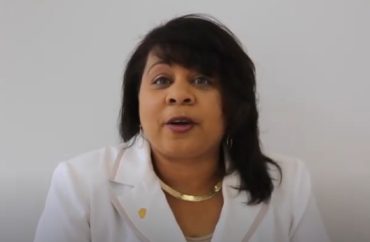
Most property taxes go to education funding
Bipartisan legislation in the Illinois General Assembly could help consolidate school districts and lower property taxes. It faces opposition from administrators, some of whom could be out of a job if the bill goes through.
The Classrooms First Act would create the “School District Efficiency Commission.” The commission would have the mandate to create “specific propositions to reduce the statewide total number of school districts by no less than 25% through the reorganization of school districts into unit districts,” according to the summary of the legislation.
The state has 852 school districts, and almost 50 percent serve only one or two schools, according to the Illinois Policy Institute, a conservative think tank that supports the legislation. Its intention is not to close schools but to reduce duplicative layers of bureaucrats. Districts slated for elimination would be put up for a vote, allowing residents to vote on the consolidation plan.
A Democratic co-sponsor of the legislation said there are several reasons to support the legislation, including better access to resources for students.
“A consolidated school district provides continuity in education and ensures that all students are receiving the same,” Rita Mayfield (above) told The College Fix via email. It would also provide access to “more resources such as school counselors, nurses, and other support staff.”
Mayfield also said a reduction in school districts could help lower property taxes in Illinois.
“Property taxes are the biggest issue that homeowners face,” Mayfield said. Most property taxes go to local school districts.
“Many of the districts with the highest property taxes have multiple school districts versus a unit school district,” the Democratic sponsor told The Fix. “By consolidating the schools under one administration homeowners will only be taxed once for schools in their districts rather than twice.”
Administrators association opposes the legislation
While the bill has bipartisan support, an organization representing school administrators is opposed to the bill.
“We are opposed as we just went through this exercise in 2012 and our belief is that the findings will not differ much today,” Michael Jacoby, the executive director of the Illinois Association of School Business Officials, told The College Fix via email.
Jacoby previously worked as a teacher, school business official and a school superintendent, according to his bio.
His group, which represents principals, business managers and other administrators, said the legislation could lead to higher costs, which it warned against in 2012 when there were similar attempts to consolidate districts.
“The dual district consolidation concept is extremely costly,” Jacoby said. “Elementary districts typically pay less than high school districts and upgrading to one salary schedule would be an enormous new cost.”
He said that a reduction in school districts could hurt small towns. “Consolidation in small communities often poses a serious question about the longevity of the community,” Jacoby said.
He said consolidation questions should happen only after a “deep study” at the local, community level.
Conservative education analysts say legislation would save money
The Illinois Policy Institute, a think tank that focuses on education, budgetary and pension issues in the Land of Lincoln, said the legislation would help put more tax dollars into schools and not into the hands of bureaucrats.
“It’s time to do what’s best for students, teachers and residents across the state: ensure education dollars make it into the classroom,” Adam Schuster said in support of the legislation.
“Illinois’ excessive layers of wasteful and duplicative district bureaucracy are a barrier to this goal,” the conservative group’s director of budget and tax research, said in comments shared on the think tank’s website.
“Illinois spent $1.19 billion on district-level administration in 2018,” Brad Weisenstein, an editor with the policy group said
MORE: Parent-Teacher Association sold out students
IMAGE: Chicago Sun-Times/YouTube
via The College Fix
April 1, 2021 at 06:31AM
SPRINGFIELD, Ill. — Before you toss trash out the car window while cruising down an Illinois highway, think of this: Taxpayers pay $6 million a year to clean it up.
The Illinois Department of Transportation says proper disposal of waste saves in other ways too.
RELATED: Volunteers clean up Chicago River as biologists examine effect of trash on wildlife
"Trash is more than just an eyesore," says Transportation Secretary Omer Osman. "It has real, negative impacts on both the environment and our communities."
The $6.1 million IDOT spent last year to pick up litter could pay for resurfacing 30 miles of road or 40 maintenance trucks that could double as snowplows.
Litter on the road causes distractions and crashes and workers who have to pick it up are at risk of injury along busy highways, Osman said. And litter kills plants and animals.
ALSO SEE: Bottle tossed from car nearly kills girl, 5, walking home from school
Osman notes that littering carries a fine of up to $1,500 and in addition to other penalties, the perpetrator could be required to control litter over a portion of the highway for 30 days as well.
IDOT officials also said that the agency’s Adopt-A-Highway program is gearing back up after limited activity because of the COVID-19 pandemic. Volunteer groups may register to adopt and keep clean two-mile sections of non-interstate roadsides.
Copyright © 2021 by The Associated Press. All Rights Reserved.
via ABC7 Chicago
March 28, 2021 at 02:54PM
SPRINGFIELD, Ill. (WCIA) — The final tab on back to school shopping can get pretty big.
One lawmaker in Springfield, is trying to cut that down as much as they can. Representative Katie Stuart proposed a bill that would decrease the state sales tax for one week in August from 6.25 percent to 1.25 percent.
The idea would be to create on big back to school shopping week in order to save parents and students money before they go to the classroom, and parents like the sound of it.
"I definitely see it bein a bonus for folks that are struggling and trying to make it through the year," Victor Mahler, a local parent said. "And I also see a lot of college students who are trying to save some money before going back to school. It’s just an opportunity to save some money."
Stuart represents the metro-east area of the state. She also believes the bill will keep shoppers at local stores instead of going across the state border for their shopping
Champ,Feeds,News
via News | WCIA.com https://www.wcia.com
March 27, 2021 at 06:53PM
Should gun owners be on the hook to pay for training, counseling and other programs that help schools prepare for and deal with traumatic events like on-campus shootings?
That’s the idea behind new legislation in Springfield that would impose an additional 1% tax on all ammunition sales and direct the revenue to a trauma response fund for schools.
Among the co-sponsors of House Bill 238 is freshman state Rep. Maura Hirschauer, a Democrat from Batavia.
A former teacher and member of the gun control advocacy group Moms Demand Action, Hirschauer said seeing two more mass shootings in recent days — March 16 near Atlanta and Monday in Boulder, Colorado — further illustrates that gun violence is a public health crisis.

State Rep. Maura Hirschauer
“So when I saw Rep. (Sonya) Harper’s bill, it spoke to me,” she told us Thursday. “The creation of a trauma response fund I think is really necessary for our schools to make sure that we’re protecting students and that we’re prepared for traumatic events, which, unfortunately, seem to be happening more and more often these days.”
Why should an ammunition tax pay for it?
“I think it goes to the heart of gun violence, and that is the guns themselves,” Hirschauer said. “I think we’re trying to find some creative new ways to raise the funds we need for the programs we think are important.”
As you would expect for any firearms-related legislation, HB238 has its share of opponents. They include a pair of statewide gun owners rights organizations.
Richard Pearson, executive director of the Illinois State Rifle Association, said the measure unfairly singles out gun owners to fund programs that should be everyone’s responsibility.
“This is something that should come out of the state’s general fund because it addresses a problem for everybody, not just a person who buys shotgun shells,” Pearson told us.
John Boch, executive director of Savoy-based Guns Save Life, said the organization will fight the proposal. Placing a special tax on ammunition is different from taxes that target specific items like cigarettes or hotel stays, he said.
“There’s not a constitutional right to smoke a pack of cigarettes or spend a night in a hotel, but there is a right to keep and bear arms,” he said.
Boch’s organization is suing Cook County over a similar tax. Under the county’s 2013 ordinance, a $25 fee is added onto any firearm purchase, and ammunition sales are taxed at 1% or 5%, depending on the type.
Both a Cook County judge and state appeals court have sided with the county, but Boch hopes to fare better before the Illinois Supreme Court, which is expected to hear arguments next month and rule this summer.
In the meantime, HB238 is for now at the committee level in the House. Hirschauer said it’s not clear when or if it will get a floor vote in the General Assembly’s current session.
The story goes like this: Rebellious teenager Dave Hamm goes to a movie with a friend one night. Afterward, they go to a closed used-car lot to look at a car Hamm wants to buy. The friend starts stealing wheel covers. The teens are arrested and as Hamm sits in the Wheaton Police Department jail, a friendly officer strikes up a conversation.
And that’s how Hamm began a 52-year career in law enforcement.
Hamm died last Sunday at age 84.
A photo of Jeanine Nicarico hangs in the office of DuPage County state’s attorney investigator Dave Hamm at the DuPage County Courthouse in Wheaton. Hamm investigated the claim made by Brian Dugan that he was Nicarico’s murderer, not two other men who had been previously convicted.
– Daily Herald File Photo, 2009
From his first job as a DuPage County sheriff’s deputy to his last, as an investigator for the DuPage County state’s attorney’s office, Hamm relished going after bad guys — and doing it with integrity, in an era where that could be hard to find.
In his 64-page memoir, Hamm recalled how his first job as deputy was as a patronage hire. His first night on patrol, he learned how tow-truck drivers were paying deputies $10 for each vehicle they towed from a crash, and how local restaurants didn’t charge officers for their meals.
When he joined the Wheaton force, he reported a partner who broke into an auto repair shop and stole items. As a member of the new Illinois Bureau of Investigation in the 1970s, he led an investigation that uncovered a suburban police officer selling dope — while on duty and in uniform.
In his third stint with the DuPage County sheriff, Hamm worked as a courtroom deputy, providing security during the third trial of Rolando Cruz. Cruz was charged with raping and murdering 10-year-old Jeanine Nicarico of Naperville in 1985, but he was ultimately exonerated.
After the acquittal, the DuPage state’s attorney’s hired Hamm to investigate claims by another man, Brian Dugan, that he had killed Jeanine. While authorities had long known of the claim, Dugan would not make a full confession unless it was guaranteed that he would not receive the death penalty.
But Hamm’s investigation uncovered evidence proving Dugan’s guilt. Dugan ended up pleading guilty in 2009 and Hamm retired, for the last time, a year later.
This is getting to be a trend.
A few weeks after a pair of Barrington Hills police officers won praise for helping to deliver a baby on the side of a village road, an Illinois State Police trooper repeated the feat Wednesday morning along I-55 in Darien.
A photo of Jeanine Nicarico hangs in the office of DuPage County state’s attorney investigator Dave Hamm at the DuPage County Courthouse in Wheaton. Hamm investigated the claim made by Brian Dugan that he was Nicarico’s murderer, not two other men who had been previously convicted.
– Daily Herald File Photo, 2009
State police said Trooper Lanny Finn, who works out of ISP District 2 in Elgin, responded to a medical emergency at about 7:40 a.m. in the southbound lanes of I-55 near Cass Avenue.
Finn arrived to find a mother who had just given birth, state police said. He quickly wrapped the baby in a blanket to keep the child warm, and mom and baby were taken to the hospital.
“I am happy to hear the baby and mother are doing well,” Finn said.
Finn is a 17-year state police veteran and a first responder instructor with the ISP. In 2017, he retired as a major in the U.S. Army National Guard after serving 20 years.
State police did not provide any additional information on the mother and baby out of respect for their privacy.
• Have a question, tip or comment? Email us at copsandcrime@dailyherald.com.
Feeds,Region: AH,Local,Region: Suburbs,City: Arlington Heights,Suburbs
via DailyHerald.com > Local News https://ift.tt/174gVno
March 26, 2021 at 05:27AM
State lawmakers are proposing an expansion of the Earned Income Tax credit to extend a tax break to more low and middle income people.
At a press conference Thursday, State Rep. Carol Ammons, D-Urbana, said House Bill 2792 that expands the Earned Income Credit to more groups and removes some qualifications for the credit is a “popular and powerful anti-poverty policy.”
“The Earned Income Credit is a solution that works and we know it works because it also works on the national level. The only problem is that not enough people in Illinois are eligible,” Ammons said.
Under the legislation, which has a duplicate bill in the Senate sponsored by state Sen. Elgie Sims, D-Chicago, anyone older than 65 and between the ages of 18 and 24 become eligible by removing requirements about having qualified children under their care. The tax credit will be at least $600 for each taxpayer. Other federal rules about income levels and sources will still apply.
The Earned Income Tax credit is part of the federal tax code that gives tax credits to low and middle income people with an income source and generally takes caring for a dependent into account.
“Families, disproportionately Black and Latinx families are scrambling to balance budgets while navigating caregiver responsibilities,” Ammons said.
Humu Issifu, a caregiver from Chicago, said expanding the tax credit will be a big help for those with strained incomes.
“We need to expand the EIC to make life a little bit easier, not only for me, but every caregiver. With more money, I can by meals for my children who are currently learning remotely from home. I can save money for emergencies and potentially pay off some debt.
The bill has a significant number of Democratic co-sponsors. Dixon Republican Tom Demmer is also a co-sponsor of the legislation.
Ammons planned to present the bill in the House revenue committee Thursday and move it to the House floor.
Feeds,News
via http://www.newsbug.info – RSS Results in news,news/* of type article https://ift.tt/2FTKLHY
March 26, 2021 at 06:12AM
EDWARDSVILLE – State Rep. Katie Stuart, D-Edwardsville, has introduced legislation to lower the sales tax on clothing and school supplies for a designated week in August.
“The cost of school supplies can be significant for families with multiple children, as well as for teachers who often spend their own money on classroom materials,” said Stuart. “My bill would make school supplies more affordable by creating a sales tax holiday for certain items, helping ensure students have what they need to learn.”
House Bill 603 would temporarily lower the sales tax on clothing and school supplies from 6.25% to 1.25% during the week of Aug. 1, 2021. While helping families save money as they get ready for the upcoming school year, all Illinois shoppers would be eligible for the savings.
“As families look forward to what’s hopefully a more normal school year this fall, my bill will help them save on back-to-school expenses,” said Stuart. “It will also put more money back into our local economy by encouraging residents to shop in the Metro East rather than Missouri, which has a similar tax break already in place.”
via Alton Telegraph
March 25, 2021 at 05:31PM
(The Center Square) – A bill that proposes to free up more money for classrooms across the state by consolidating the number of school districts in Illinois advanced Wednesday.
State Rep. Rita Mayfield, D-Waukegan, sponsored House Bill 7. If approved, it would reduce the state’s 852 school districts by 25%. Illinois has far more school districts than most states in the nation. Supporters say House Bill 7 could save more than $700 million per year by reducing administrative spending to the national average per student. The Illinois Policy Institute said that money could be reinvested in classrooms or be used to reduce property taxes. A committee approved the bill unanimously on Wednesday.
The bill would create the School District Efficiency Commission. The commission would then make recommendations on consolidation with a goal of reducing the total number of school districts by 25%. The recommendations would go directly to voters on the ballot, meaning parents, teachers and taxpayers living within any affected school districts’ boundaries would make the final decision. Past efforts at school consolidation in Illinois have stumbled.
In Illinois, district-level general administration costs $598 per student; higher than all neighboring states and 2.5 times the national average of $237 per student. In the past four years, both student enrollment and teacher employment at Illinois K-12 public school districts fell by 2%, while the number of administrators grew 1.5%, according to the Illinois Policy Institute.
Adam Schuster, senior director of budget and tax research for Illinois Policy, said the bill would make sure money goes to the classroom rather than overhead.
“It’s time to do what’s best for students, teachers and residents across the state: ensure education dollars make it into the classroom," he said. "Illinois’ excessive layers of wasteful and duplicative district bureaucracy are a barrier to this goal."
The bill faces opposition from school districts and the Illinois Association of School Boards, according to witness slips.
Politics
via The Center Square
March 25, 2021 at 07:03AM
 Working for Illinois Caucus