
SPRINGFIELD — During the first week of the Illinois General Assembly’s veto session, lawmakers voted to override Gov. Bruce Rauner’s vetoes or amendatory vetoes on dozens of bills.
At least two high-profile bills didn’t get override votes the first week: a bill to set a new minimum salary for Illinois school teachers and legislation to prohibit employers from asking for a salary history from job applicants.
Lawmakers can no longer take action on those bills during the remainder of the veto session, which wraps up next week. Here’s what’s in store for them as Democratic Gov.-elect JB Pritzker prepares to take office next year.
Minimum teacher salary
Sen. Andy Manar, D-Bunker Hill, said he’s not giving up on the idea of increasing the minimum salary that every school district in the state will have to pay their teachers.
“There have been ongoing conversations that haven’t stopped since going back to May when we passed the bill,” Manar said. “Those are going to continue. I would expect to re-file, if not a bill that’s exactly the same, something that’s very similar to what was filed and already passed in the General Assembly.”
The bill that already passed, Senate Bill 2892, gradually raises the minimum salary for teachers to $40,000 starting with the 2022-2023 school year. The current minimum salary for teachers is $9,000, a level set in law 38 years ago.
The bill set a minimum salary for teachers at $32,076 for the 2019-2020 school year. The delayed start of the bill was intended to give school districts time to adjust their budgets to accommodate the higher wage. Manar said that since a new law couldn’t be adopted until next year, he is open to discussing a further extension in the start date for raising the wage.
The bill also called for the minimum wage to be increased each year after reaching the $40,000 threshold to account for inflation.
The bill passed with bipartisan support in both the House and Senate. In the Senate, it got 37 “yes” votes, enough to override a veto. In the House, though, it only got 65 “yes” votes, significantly short of what is needed for an override.
And veto the bill outright is exactly what Rauner did. In his veto message, Rauner said the bill would amount to a “significant unfunded mandate” on school districts and take away local control over salaries. He said that alternatives like pay-for-performance and pay incentives for teachers with prior work experience could increase teacher compensation while preserving local control.
Manar said he’s heard concerns from superintendents about the potential cost.
“They are also at the same time concerned with the crisis of having a teacher shortage in the state,” Manar said.
Manar believes that setting a higher minimum teacher salary will entice more students into the profession.
Manar also said the costs of a higher minimum salary can be offset by the increased funding districts are receiving from the new school aid formula. The formula directs more state money to the neediest districts, the same ones that could face financial pressures from higher teacher salaries.
“I’m simply saying let’s not dismiss the idea that teachers have to be paid well,” Manar said. “Let’s not dismiss the idea that we have to find a reasonable way to pay for it. Let’s try to bring everyone together to get this accomplished.”
Salary history
Twice lawmakers approved a bill that prohibits employers from asking the salary history of an applicant. Twice Rauner used his amendatory veto powers to make changes to it.
Both times, there were not enough votes in the legislature to override Rauner’s changes, but neither did supporters want to accept his changes. Consequently, the bills died.
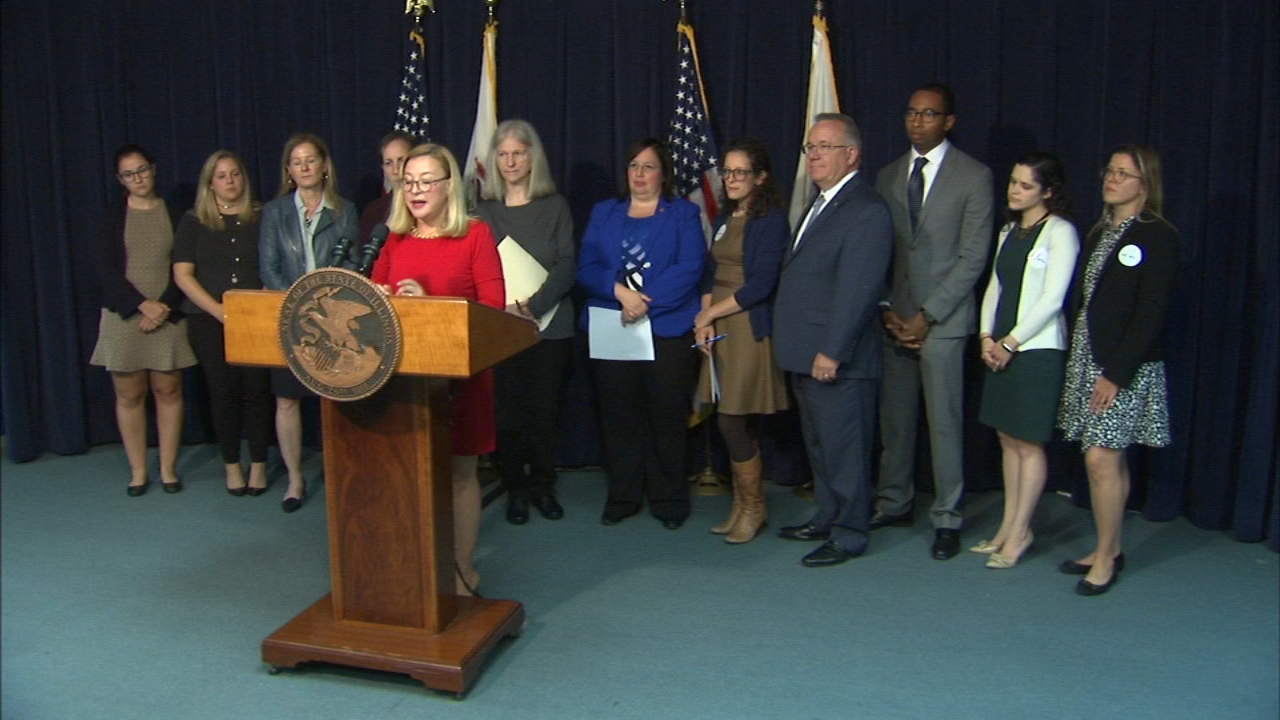
Rep. Anna Moeller, D-Elgin, said she’s probably going to try again, only this time with someone in the Governor’s Mansion who supports the idea.
“I think we’ll still have substantial support for it; it won’t need as many (votes) to override,” Moeller said.
The bill got 87 “yes” votes in the House, but squeaked by in the Senate with just 31 “yes” votes, just one more than the minimum needed to pass it.
Supporters said the idea was a way to combat gender pay inequality. Women often are paid less than their male counterparts, and allowing an employer to ask for a wage history is seen as a way to perpetuate that wage gap.
Rauner said he agreed that gender pay inequality is an issue that needs to be addressed but said a better way to do it was the way Massachusetts did it. He rewrote the Illinois bill to reflect that.
However, Moeller said she thinks the changes diluted the effectiveness of the bill as Illinois lawmakers wrote it and also weakened existing pay equity laws in the state.
“We don’t want to weaken what we’ve got; we want to strengthen what we’ve got,” she said.
She said supporters want to work with the business community to come to a compromise, but efforts have failed so far.
The Illinois Chamber of Commerce is opposed to the bill, but is willing to talk about it.
“Every time you have a new General Assembly coming in and new leadership in the governor’s office we’re always willing to take a fresh look at things and see if there is some flexibility,” said Chamber president and CEO Todd Maisch. “The reality is there are legitimate reasons to ask for someone’s wage history.”
Maisch said it is “more reasonable” to just ask for a wage history rather than use other methods to obtain the same information.
“There is a marketplace for salary,” he said. “Employers are always going to be interested to make sure that they’re putting a competitive offer on the table, but also not overpaying for a particular skill set.”
Moeller said she expects a new version of the bill next year will mirror what’s been tried before.
“We feel we have a very strong bill, a very good bill,” she said.
Contact Doug Finke: doug.finke@sj-r.com, 788-1527, twitter.com/dougfinkesjr.
00-Pol RT,16-Econ,19-Legal,XHLSN 3,26-Delivered,25-Working,E Moeller,RK Client
Feeds,State
via State News – Journal Star https://ift.tt/2q50IQ5
November 25, 2018 at 06:34PM

 Working for Illinois Caucus