ROCKFORD, Ill. (WIFR) – State Representative Maurice West of the 67th District opens up about the critical need for blood supply in Illinois and discusses a House resolution to encourage community members to give back.
State Rep. Sharon Chung is looking for ways to balance the Illinois 2027 fiscal budget, while also making healthcare more affordable and passing an energy bill to improve the reliability of renewable energy.
The Clean and Reliable Grid Act [CRGA] is intended to expand the state’s energy capacity in hopes of lowering energy prices. Opponents say it’s unclear if the measure will do that.
CRGA created a commission called Integrated Resource Planning [IRP] to research lowering energy prices and making a more efficient grid. The bill will also lift the moratorium on new large-scale nuclear power plants.
CRGA will invest in solar and wind energy and battery storage. This is a continuation of Illinois’ goal to use more renewable energy, and aims to meet the goals of the Climate and Equitable Jobs Act [CEJA]. The 2021 law set a goal using only clean energy in the Illinois electrical grid by 2050 and investing more in clean energy jobs.
State Rep. Sharon Chung, a Democrat from Bloomington, said there is a finite amount of coal and natural gas, and CRGA will make Illinois less reliant on non-renewable energy.
“It’s just trying to figure out the balance between looking forward … maybe also balancing that with past technologies, trying to figure out how we can also, at the same time, keep costs down,” Chung said.
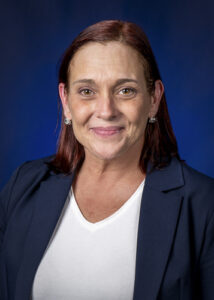
State Rep. Sharon Chung, a Democrat from Bloomington.
She said the bill might not bring down costs for consumers but it will prevent more price increases.
Chung said McLean County has been at the forefront of building wind farms and battery storage that can help distribute energy more efficiently.
“Taking that energy that we’re getting from wind and solar, harnessing it and then to be able to use it to meet higher demand periods,” she said.
Chung said she supports an expansion of nuclear energy and she still has concerns about the power usage of data centers.
Chung said there is only so much Illinois can do to lower energy costs and it is up to the federal government to also provide relief for consumers.
Pritzker, when signing the bill, said soaring energy prices in Illinois are directly attributable to President Trump’s tariffs on products needed for clean energy construction.
“More fossil fuels will be used to produce electricity, and that drives property insurance bills up. It threatens our agriculture industry. It pollutes the air that we breathe. It’s a reckless energy agenda that’s taking us backward,” Pritzker said.
State Sen. Sally Turner, R-Beason, who voted "no" on CRGA, said she is concerned about the reliability of wind energy, solar energy and battery storage technology.
“There’s going to be shortages and reliability risks, and those risks are out there, and they’re not going to be met with what we presently have and it’s not going to be met with simply wind, solar and battery power backup,” Turner said.
Turner said Illinois should invest more into natural gas because it is more reliable and cost effective.
Republican State Sen. Sally Turner on the Senate floor.
Turner said this bill will give money to energy companies instead of lowering energy costs for families.
“When it comes to ‘I need assistance with my energy bill,’ because we know that’s out of control right now, a lot of what I think we see that it’s going to special interests,” Turner said.
She said the creation of a research process to help slow rising costs is a good idea but thinks it might be too late for it to effectively lower energy costs.
Turner said the legislature should look to increase taxes on solar, wind and data centers. She said they are not paying their fair share now.
Sen. Chris Balkema, R-Channahon, also voted against CRGA. He said the Illinois government should not be giving incentives to any energy companies.
“I would support energy providers being able to provide energy on their own dime, investing their own capital, and then being able to turn a profit,” Balkema said.
Balkema said since CEJA is moving toward only relying on clean energy by 2050, there is no incentive for companies to build new coal or natural gas plants.
State Sen. Chris Balkema on the Senate floor.
“I think that we are in an OK spot in that we have to be careful to not regulate ourselves back to the point where we drive prices even higher than we anticipate now,” Balkema said.
Turner and Balkema said they agreed with allowing more nuclear plants to be built.
“The opportunity to install small nuclear power plants, or micro plants, to provide additional energy around the state is a wonderful thing,” Balkema said.
Turner and Senate Republicans want to give more local control when building energy infrastructure.
The Senate GOP is pushing to repeal the state’s self-imposed mandate to be 100% reliant on renewable energy, in hopes that the state would see more investment by all energy companies, which could lower prices.
They also introduced a measure to get data on how current energy laws are affecting energy prices.
An environmental advocate who supports the energy bill pointed out there is no stipulation preventing fossil fuels from being factored into the state’s short-term energy plan, as the state ramps up investment in renewables.
“What is the right grid mix to ensure both reliability, so that the lights are staying on for folks and not creating an outage front, but also that utility bills are manageable and not skyrocketing?” said Samira Hanaessian, director of policy for the Illinois Environmental Council.
Hanaessian said the process can lower costs for consumers and continue building on Illinois’ climate goals.
She said the next step is to regulate data centers by making them build their own electrical infrastructure.
PEORIA, Ill. (WMBD) — A member of the Illinois House of Representatives urged people within Central Illinois to continue to document and track reported sightings of Immigration and Customs agents within the area.
State Rep. Sharon Chung, a Bloomington Democrat, issued a statement on Thursday after she said she received “confirmed reports of ICE presence in Bloomington.”
“We have received confirmed reports of ICE presence in Bloomington, as well as several unconfirmed allegations of ICE sightings. Thank you to those who documented and shared these sightings, keeping our community informed and aware. I urge you to continue to document any potential ICE activity you see, while prioritizing your own personal safety.”
Chung said she was a proud daughter of immigrants and stood with others to support the “constitutionally protected rights of immigrants in Bloomington-Normal and throughout our state.
“We own businesses, work and participate in our community; we raise our children to be kind and compassionate,” she said. “We are not a demographic to be used as a political ploy for the Trump Administration or anyone else.”
Last month, Chung-backed House Bill 1312 was signed into law by Gov. JB Pritzker. The measure barred ICE from targeting hospitals, public higher education institutions, courthouses and daycares, she said. Additionally, the bill allows for lawsuits against ICE agents impeding someone’s rights.
“I vehemently condemn the violence committed by ICE officers and vow to continue to fight for everyone in our community— no matter their immigration status,” she said.
OTTAWA, Ill. — State Rep. Amy “Murri” Briel, D-Ottawa, will hold her first Neurodivergent Council meetings of 2026 on Saturday, Jan. 17 to collaborate and discuss with community members how policy can support those who are on the spectrum and connect them to resources.
“The last time we met, we had an engaging time talking about our experiences and improvements we envisioned for members of the neurodivergent community,” Briel said. “We want to continue having those conversations and working together to bring change and amplify neurodivergent voices.”
Briel will host her Neurodivergent council in both Ottawa and Dekalb communities. Meetings will take place this Saturday, Jan. 17 at 9 a.m. at Reddick Library in Ottawa (Community Room 9), followed by a second council meeting at 2:30 p.m. at Dekalb Public Library (Zimmerman Room.)
Any adult on the spectrum is welcome to participate on the council. For more information, call or text Briel’s district office at 815-587-7912.
“We’ve started a great outlet for the community, and we’re seeing encouraging traction. I encourage all those interested to come on out and share your thoughts with us this Saturday,” Briel said.
The public is invited by State Representative Murri Briel to join Safe Journeys training about Human Trafficking Prevention Month.
The training is planned for Wednesday, Jan. 14 at Briel’s Ottawa office at 5:30 p.m.
Safe Journeys will explain what human trafficking is, how to prevent it and what to do if you are aware of a trafficking situation. The organization is a safe atmosphere where domestic and sexual violence survivors are offered support, resources and strength as they journey toward healing and thriving in La Salle County.
State Rep. Amy “Murri” Briel, D-Ottawa, recently announced that select Illinois community colleges are eligible to apply for a grant funding advanced workforce training facilities.
The facilities will equip students for high-demand manufacturing and clean-energy production jobs.
“Community colleges offer academic lifelines for students seeking affordable, quality education,” Briel said in a news release. “It’s exciting that these local schools now have an opportunity to build out modern workforce facilities that meet the moment for today’s in-demand jobs.
“This type of investment will open doors for the intellectually curious who can’t or don’t want to travel far for college. I hope that the community colleges in our local area take advantage of this wonderful opportunity and apply.”
The Department of Commerce and Economic Opportunity made $24 million available for community colleges outside the Chicago area to create six manufacturing training academies. The goal is to foster development and expand training for high-demand jobs in food processing, advanced manufacturing, life sciences, quantum computing and microelectronics, and ag tech.
“With technology ever changing, it’s more important than ever that we give our next workforce the tools they need to succeed,” Briel said. “When we invest in our community colleges here at home, we’re directly investing in the success of that next generation.”
Community colleges can receive grants ranging from $3 million to $6 million. Cook and the collar county colleges will not be eligible. A technical assistance session for interested applicants is set for 2 p.m. Jan. 28.
In 2023, the State of Illinois appropriated $25 million (SB 250; page 1024) to Collinsville Community Unit School District #10 (the governing board of …
Aurora State Representative Stephanie Kifowit is calling the fatal shooting of a woman by ICE in Minnesota unacceptable, saying it flies in the face of proper training.
In a statement, Kifowit, who is a Marine Corps Veteran, calls the incident a profound failure of accountability and says it is a moment that demands national action.
“Whether you serve in the military or in law enforcement, the training on when to use deadly force is absolute. It is a last resort. What happened in Minnesota is devastating and unacceptable and flies in the face of proper training. It is a complete disregard for human life. A U.S. citizen, a mother, lost her life during an ICE operation by someone who drew their weapon and fired without hesitation. This is not self defense. It should never have happened,” Kifowit said.
Kifowit says she wants a full and transparent investigation into the shooting and supports federal legislation to hold Department of Homeland Security Secretary Kristi Noem accountable.
She also says she has seen firsthand the devastating impact ICE can have on communities and says the shooting in Minnesota strikes close to home.


 Working for Illinois Caucus